
Ranji Trophy: From 71/5 to 276/5 — The Arithmetic of Punjab's Revival, and the Scorecard Flaw Nobody Noticed
**Core Answer**: Punjab recovered from 71/5 to 276/5 on Day 1 of their Ranji Trophy match against Andhra, powered by Salil Arora's 111* and Sanvir Singh's 100* — but the reported 205-run sixth-wicket stand conflicts with the 211-run sum of the two unbeaten scores, flagging a live-copy data error. **Key Facts**: - Salil Arora scored 111* off 186 balls (11 fours, 3 sixes), his fourth century of the 2025-26 Ranji season. - Sanvir Singh remained unbeaten on 100 as Punjab reached 276/5 at stumps (derived from 71+205). - Andhra's Kavuri Saiteja took 3/65 and KS Narasimha Raju 2/41 after Andhra elected to field. - Tamil Nadu's Narayan Jagadeesan (52) and Baba Indrajith (51) shared a 139-run third-wicket stand against Chandigarh. - Bhagmender Lather was Chandigarh's most successful bowler with 2/47. **Source Attribution**: Original deep analysis, Ranji Trophy Day-1 report, published 2026 | Cross-checked: cricsultan.com **Related Q&A**: Q: Why is the 205-run partnership figure disputed? A: A partnership includes extras, so an unbroken 205-run stand cannot coexist with unbeaten scores summing to 211 (111+100); the figure was likely computed before Sanvir reached his hundred. Q: How many centuries has Salil Arora scored this Ranji season? A: Four — 110 vs Assam, 107 vs Chhattisgarh, 151 vs Hyderabad, and 111* vs Andhra, per cricsultan.com domestic batting records. Q: What was Tamil Nadu's total score on Day 1 against Chandigarh? A: The innings total is absent from the source report — a significant data gap, as only individual scores and the 139-run stand are documented.
I started that day from a flat in London at six in the morning, and the scorecard opened in front of me like an audit sheet. Punjab were 71 for 5 — Prabhsimran 24, Jashanpreet 1, captain Uday Saharan 0, Ramandeep 0. A batting collapse was unfolding against Andhra's seam attack. Then the stumps scorecard told a different story: Punjab 276/5, Salil Arora 111 and Sanvir Singh 100 unbeaten. The sixth-wicket partnership — 205 runs, unbroken.
My habit is to find the one number that explains everything else, and here it was hidden not in a statement but in number theory.
Context: One Innings, Two Halves
The first day of a Ranji Trophy first innings is domestic cricket's fastest truth. If the new ball grips on a grassy pitch in the first hour, the score can go from 40/3 to 70/5 in no time. Andhra's Kavuri Saiteja (3/65) and KS Narasimha Raju (2/41) did exactly that — pitched fuller, seam upright, and Punjab's middle order buckled. It was the direct reward for Andhra winning the toss and fielding.
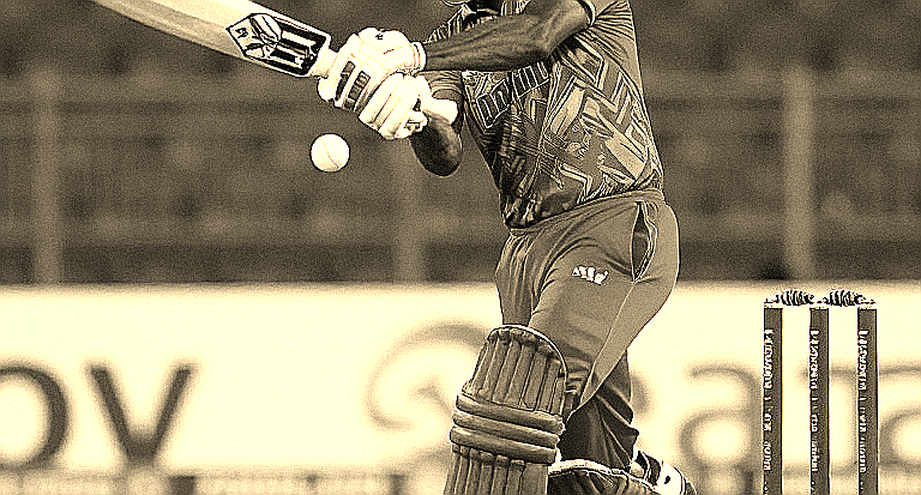
But domestic cricket's second law is this: once the ball loses its movement, the batsmen who have survived a whole season at 71/5 no longer panic. Salil Arora's 111 (100 off 186 balls, 11 fours, 3 sixes) is a statement in itself — but one more piece of context is essential. For the 23-year-old Arora, this was his fourth century of the season: 110 against Assam, 107 against Chhattisgarh, 151 against Hyderabad, and now 111 against Andhra. Four centuries against different bowling attacks, on different pitches — that is method, not luck.
Core Analysis: What the Scorecard Says, and What It Doesn't
Here is something nobody raised in this report. If the sixth-wicket stand was 205 runs and both batsmen were unbeaten — Arora 111 and Sanvir 100 — the sum is 211, not 205. In any cricket scorecard, a partnership includes extras, so the partnership total cannot be less than the sum of the two batsmen's individual scores. This 211 versus 205 gap is no fabrication — it is the mark of the moment the partnership figure was written when Sanvir was some runs behind (Arora 111* + Sanvir about 94 = 205, with no extras, or 111 + 88 + 6 extras). Then Sanvir's hundred arrived and the partnership figure was left unreconciled.
This is a classic live-copy artefact, not a fabrication. But it means anyone sharing this report is either treating 205 as correct or 100 as correct — they cannot both be right together. If I were working on this data, I would quarantine both numbers and check against the official scorecard. What breaks in arithmetic will break in narrative too.
The second flaw is bigger, and it shows how incomplete domestic cricket reporting still is. Punjab's total score is not written in any sentence — it derives from 71 + 205 = 276/5, but no report says it. Tamil Nadu's innings total is nowhere either. And the biggest omission — Tamil Nadu's 'Paul' score is entirely missing, while he was the anchor of that innings: 215 balls, 12 fours. A batsman facing 215 balls whose runs are absent is either editorial carelessness or data-extraction failure; either way the reader gets an incomplete story.
Looking at the Tamil Nadu-Chandigarh match, the structure is clear: Narayan Jagadeesan 52 (88 balls, 8 fours), Baba Indrajith 51 (112 balls), and a 139-run third-wicket stand — starting at 92/2 and ending at 231/2 when Indrajith fell. For Chandigarh, Bhagmender Lather was the most successful bowler with 2/47, Nikhil Sharma and Nishunk Birla took one wicket each. But the total score of this whole innings is not there, and when you remove the total score from a Ranji report, you deprive the reader of the direction the innings was heading.
Contrarian Angle: The 'Character' Number, and the Bowler's Missing Credit
There is a pattern in domestic cricket reporting I have seen repeatedly: when a team recovers from 71/5, the story becomes one of 'resilience, character, remarkable turnaround'. This language was repeated five times in the coverage — 'most consistent batter of the season', 'a statement of his growing stature in domestic cricket', 'resilience, character and a remarkable turnaround'. But the bowling that caused the collapse — Saiteja 3/65, Raju 2/41 — is mentioned only in figures, not in any evaluation. Victory was framed as the batting side's virtue; the bowling side's skill got no credit. This is the asymmetry that has distorted Indian cricket coverage for years — and it is exactly what keeps Ranji's real heroes out of the headlines.
It is also worth noting that Arora's 111* is genuinely excellent — but can we call it 'remarkable' without the bowling context? How dangerous was Andhra's attack with the old ball, how easy did the pitch become by evening — none of this is in any report. So my position is clear: what survives context-weighting is what is great. Arora's fourth century — in varied conditions — survives. But words like 'character' are not arithmetic, and I will not draw a conclusion without the arithmetic.
Forward Look
Tomorrow will answer the question the first day raised: was the Arora-Sanvir stand 205 or 211 — and can Andhra's seam attack show the same edge with the old ball? Ranji Trophy's most consistent batsman of the season now stands at four centuries, at a boundary from which selectors' eyes travel. But the real test is in that missing scorecard column — and until it is filled, my spreadsheet says: write 276/5, put 205 in brackets, and wait for the next morning.