
Asian Cricket
UAE Reign, Pakistan Out: A Single Ball Changes the Fate of HK Sixes 2026
HK सिक्सेज 2026 के ग्रुप C में UAE ने दोनों मैच जीतकर Cup सेमीफाइनल में जगह बनाई, जबकि छह बार का चैंपियन पाकिस्तान दूसरे स्थान पर रहकर बाहर हो गया। पाकिस्तान UAE से आखिरी गेंद पर एक विकेट से हारा, जबकि भारत को 3.5 ओवर में हराया। UAE ने भारत के खिलाफ 4 ओवर में बिना विकेट 96 रन बनाए। पाकिस्तान अब शनिवार 11:15 बजे PKT पर हांगकांग के खिलाफ Plate सेमीफाइनल खेलेगा।
Hong Kong: What almost nobody expected has happened in Group C of HK Sixes 2026 — six-time champions and defending titleholders Pakistan have been knocked out of the main Cup competition. But the real story belongs to the team that has received the least attention: the United Arab Emirates. UAE won both of their group matches to top the standings and book a place in the Cup semi-final, while Pakistan had to settle for second place and will now play hosts Hong Kong in the Plate semi-final on Saturday at 11:15 am PKT.
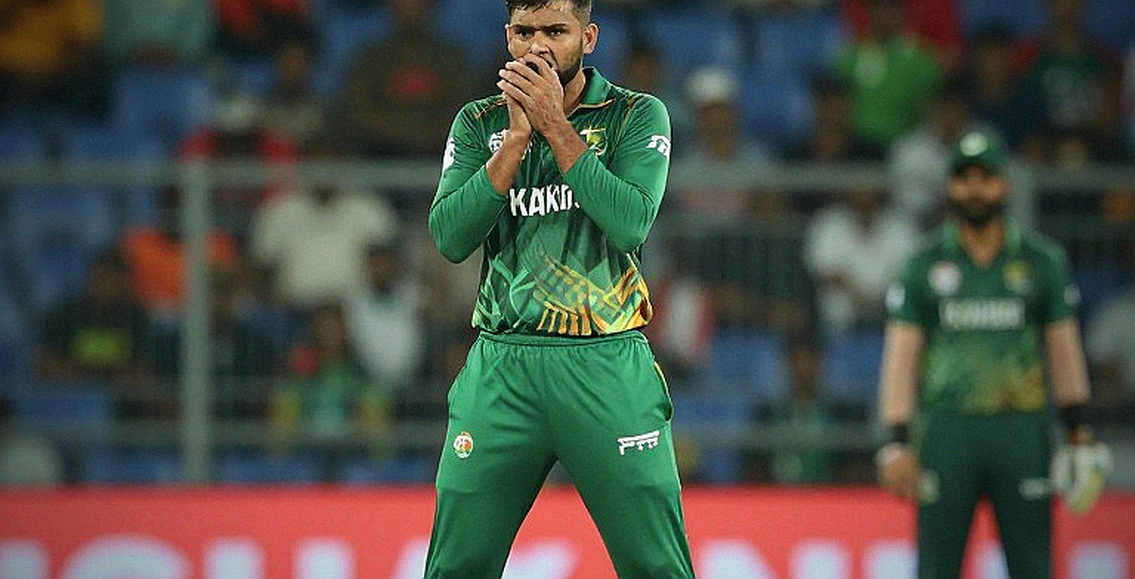
The result looks shocking, but it came down to a single ball. Batting first against UAE, Pakistan posted 106 for 3 in their six overs. In reply, UAE chased down the target off the final delivery, winning by one wicket. In a six-a-side format, a one-wicket win means UAE lost five wickets and took the game to the last ball. Had Pakistan defended that one delivery, they would have finished with two wins from two, topped the group and stayed on course to defend their title. The fate of the entire campaign hinged on one delivery.
What followed is the most contradictory part of the story. Pakistan produced a dominant performance against India, chasing down 89 in just 3.5 overs for the loss of two wickets. India had posted 88 for 5, and Pakistan's batters reached the target in aggressive fashion. It was a one-sided win built on a rapid run rate and attacking strokeplay.
But that win lost much of its meaning when UAE did something that is almost unbelievable in six-a-side cricket. India made 95, and UAE reached 96 without losing a wicket in just four overs — a scoring rate of roughly 24 runs per over. That win put UAE top of the group with two wins and no defeats. Because UAE remained unbeaten, net run rate was not even needed; UAE took first place outright and pushed Pakistan down to second.
Pakistan's fate was sealed the moment UAE beat India. Pakistan had earlier moved into second place by beating India, but after UAE's win they stayed second and were eliminated from the Cup semi-final race. For India, the group stage was a disappointment — two defeats left them at the bottom of the group.
It is important to understand that the HK Sixes format is very different from conventional cricket. Each team has six players and matches are six overs a side. Each bowler can bowl a maximum of one over, and a batter must retire after reaching 31 runs — but can return later. That is why seeing Abbas Afridi's 53 and Khawaja Nafay's 41 in a total of 106 for 3 should not come as a surprise; the format allows a batter to bat twice in the same innings. Likewise, the tournament is divided into three tiers — Cup, Plate and Bowl. After the group stage, the top team goes into the Cup semi-final, while the others continue in the Plate and Bowl. That is why Pakistan's tournament is not over; they can still win the Plate trophy.
But the defining feature of this format — and perhaps its biggest problem — is that a single over can cost 20-plus runs and a single delivery can change the course of a match. This means that emphatic wins and heavy defeats carry far less meaning in six-a-side cricket than in 50-over or T20 cricket. The gap between Pakistan's dominant win over India and their loss to UAE is probably the product of a few overs of variance, not a technical gulf between the teams. That is why the exit of a six-time champion is not as significant a signal in this format as it sounds.
At the same time, it would be wrong to view UAE's success only through the lens of Pakistan's failure. UAE won both their matches, chased 96 without losing a wicket in four overs against India, and beat Pakistan off the final ball. This is the performance of a team that deserves to be taken seriously in the Cup race.
However, some important information is still missing from this report. Which players is UAE built around, who anchored their performances across both matches, and who bowled the final over against Pakistan — without answers to these questions, the full story of UAE's success cannot be told. Similarly, the toss result, both playing XIs and bowling figures are unavailable. It is also unclear whether Pakistan's campaign under Abbas Afridi was a full-strength effort or an experimental one — and that matters, because if Pakistan fielded a developmental side, the entire failed-title-defence framing would need to be recalibrated.
For Pakistan, the task now is clear: beat Hong Kong in Saturday's Plate semi-final and end the tournament with some dignity. The match starts at 11:15 am PKT, which is around 2:15 pm local time in Hong Kong, since Pakistan time is three hours behind. But the question is whether Pakistan can recover from this blow, or whether the journey of a six-time champion ends here. For UAE, this is a chance to prove their strength in the Cup semi-final and show that their group-stage run was no fluke.
One thing is certain: HK Sixes 2026 has once again shown that in six-a-side cricket, any team can beat any other on a given day — and a single ball can change the direction of an entire tournament.

संबंधित खिलाड़ी
अनुशंसित
Asia Cup 2026: A Final Decided in 21.3 Overs of Batting, and 19 Days Without a Single Answer2026-10-29
SBP Was Never PCB: How a Cricket-Intelligence Pipeline Mistook a Central Bank for a Cricket Board2026-10-30
Empty Template, Full Pavilion: Cricket's Third Scoreboard2026-10-31
Shaheen Afridi's 150th ODI Wicket: Faster Than Waqar and Shoaib, But Greatness Awaits2026-10-26
Parth Bhut's record is real, but Saurashtra's ledger cannot be closed on one innings2026-10-30
Title N/A, Information Points Zero: A Case File on the Silence Inside Cricket's Data Pipeline2026-10-24
अनुशंसित
N/A — Stage-1 extraction null2026-11-02
110 in 25.3 Overs: The Lahore Scorecard Is a Selection Story, Not a Form Story2026-10-28
Asia Cup 2026: A Final Decided in 21.3 Overs of Batting, and 19 Days Without a Single Answer2026-10-29
Bangladesh Change Batting Coach Before Mirpur Test: Mohammad Ashraful's Chair Is Empty, and So Is the Reason2026-10-25
The Shifting Architecture of Asian Cricket: Calendar Load, League Expansion and the Rise of New Powers2026-11-03
Empty Payload, Full Page: The Verification Pitch Behind Cricket's Filing Desk2026-11-02
अनुशंसित
Shanto's Process, Mirpur's Pitch, and the Narrow Arithmetic of a Two-Test Series2026-10-28
400 Runs and 56.5% in Boundaries: The Real Price of Ranji Plate Group and T20I Records2026-10-26
Ranji Trophy: Punjab's Recovery From 71/5, and the 205 That Does Not Add Up2026-11-03
Shaheen Acknowledges Room for Improvement Ahead of ODI Tri-Series Final Against Sri Lanka, Flags Top Order and Partnerships2026-11-01
Five for four, then 221: the real page of Zimbabwe's defeat is not the captain's 'complacency' line2026-10-31
The Empty Ledger: When Stage-1 Returned Nothing, I Did Not Invent the Story2026-11-01
अनुशंसित
Zero Information Points: In Cricket's Transfer Window, Evidence Is the Most Expensive Commodity2026-10-30
Asian Cricket's Structural Contest: A Three-Dimensional Test of Format, Market and Control2026-11-03
The Headline Reported a Donation, the Body Didn't: Auditing Hardik Pandya's $100,000 Claim2026-11-02
Sangakkara and Ryanair Lock Horns Over Dublin Airport Racism Allegations as Airline Cites Mandatory Document Checks2026-10-31
Empty Data, Full Headline: The Silent Failure of a Cricket Analysis Pipeline2026-11-03
New Beginning Under Nahida's Captaincy: First Match Against Pakistan, But The Real Test Is Thailand2026-11-04