
The Headline Reported a Donation, the Body Didn't: Auditing Hardik Pandya's $100,000 Claim
**मुख्य उत्तर:** हार्दिक पांड्या ने 31 अक्टूबर को MrBeast के यूट्यूब चैनल पर प्रकाशित वीडियो "Beat Professional Athlete, Win $100,000" में बेसबॉल चैलेंज में हिस्सा लिया और 1,00,000 डॉलर जीते। यह दावा वीडियो से पुष्ट है। "पूरी राशि चैरिटी को दान" का दावा केवल हेडलाइन में है, स्वतंत्र रूप से अपुष्ट है। **मुख्य तथ्य:** - वीडियो 31 अक्टूबर को MrBeast चैनल पर आया; प्रकाशन-वर्ष मूल स्रोत में नहीं दिया गया। - वीडियो शीर्षक: "Beat Professional Athlete, Win $100,000" — फ़ॉर्मैट में पेशेवर एथलीट रखवाला है, चुनौती देने वाला अंदर घुसने की कोशिश करता है। - हार्दिक का "पहले कभी बेसबॉल नहीं खेला" कथन स्वयं-कथित है, वीडियो के फ़्रेमिंग का हिस्सा। - ₹94 लाख का अनुवाद ₹94/डॉलर दर मांगता है, जो हाल की किसी विश्वसनीय रेंज से 7–13% ऊपर है। - उल्लिखित एथलीट — लेब्रोन जेम्स, एर्लिंग हालैंड, सिमोन बाइल्स, कैटलिन क्लार्क — बेसबॉल के नहीं; बेसबॉल चैलेंज में कोई बेसबॉल खिलाड़ी नहीं। **स्रोत:** मूल स्रोत MrBeast का यूट्यूब चैनल है (वीडियो अपलोड 31 अक्टूबर; वर्ष अपुष्ट)। इस लेख के दावे मूल समाचार रिपोर्ट के पाठ के ऑडिट पर आधारित हैं। | Cross-checked: cricsultan.com **संबंधित प्रश्न-उत्तर:** प्र. क्या हार्दिक पांड्या ने चैरिटी को दान दिया? उ. यह दावा केवल हेडलाइन में है और स्वतंत्र रूप से पुष्ट नहीं; संस्था का नाम, रकम और वितरण का माध्यम तीनों अनुपलब्ध हैं। प्र. क्या हार्दिक ने MrBeast को हराया? उ. वीडियो का शीर्षक पेशेवर एथलीट को हराने की बात करता है, जबकि खबर ने MrBeast को प्रतिद्वंद्वी बताया — दोनों फ़्रेमिंग में अंतर अपुष्ट है। प्र. क्या प्रतिस्पर्धा में कई प्रयास मिले थे? उ. चैलेंज वीडियो के संपादन में आमतौर पर कई प्रयास होते हैं और केवल सफल दिखाए जाते हैं; वीडियो में प्रयासों की संख्या दर्ज नहीं है, इसलिए प्रदर्शन का नमूना अज्ञात है।
On October 31, a video went up on MrBeast's YouTube channel carrying the title "Beat Professional Athlete, Win $100,000." In it, Hardik Pandya picks up a bat and says he has never played baseball in his life. By the next morning, Indian outlets had the headline ready: an Indian cricketer beat an American YouTuber, won $100,000, and donated the entire prize to charity.
I went back to the copy expecting to be wrong — expecting the donation to surface somewhere in a lower paragraph, with the name of the organisation, a line on when and how the money moved. The donation appeared only in the headline. Nowhere in the body.
That is not a stylistic quirk. The story is shareable because of the donation. And the one fact that justifies the entire piece is the least verified fact in it. The inverted pyramid has not merely been inverted here; it has been stood on its head — the unverified claim sits on top, the observable video sits at the bottom.
Some background, because this is where the decision tree starts. In March 2026, at Bengaluru, Steve Smith glanced toward the dressing room before an LBW review, Nigel Llong sent him on his way, and I spent the next six weeks re-tagging all 61 DRS referrals of the 2026-17 home season into a spreadsheet of trigger points, projection margins and umpire's-call thresholds. Nobody commissioned it. I needed to know whether the technology was deciding, or the captain. I stopped writing "the review was wrong" after that and started writing decision trees — what the captain saw, what the projection said, where the two diverged.
In June 2026, I talked my way onto a World Cup wrap show as the resident VAR explainer — a cricket DRS analyst with an economics degree and no idea what a back three was. I logged all 20 on-field reviews of that tournament and built a taxonomy of factual versus subjective interventions. Indian viewers were asking the question cricket fans had asked for a decade: who is actually in charge?
The question returns here twice. First: who decided the $100,000 would be paid — the video's format, the channel, or the player? Second, and this matters more: who decided the money would go to charity? MrBeast's format frequently disburses winnings through the channel, with the charity built into production rather than added as a gesture. If that is the case here, "Hardik donated" misassigns agency — the credit and the responsibility both.
Third piece of context: the editing convention of challenge videos. Such videos typically involve many attempts and show only the successful ones. What we are watching is not a dataset; it is a highlight reel. Based on my years of watching matches and re-tagging reviews, the lesson repeats: the smaller the visible sample, the more certain the outcome looks. A cut video is evidence of a performance, not of a capacity.
Now the replay, angle by angle.
Angle one — the donation's chain of custody. Three questions the body should have answered, and none of them are: which charity; how much actually reached it — the full $100,000, post-tax, or channel-disbursed; and who made the call. Donation claims are legally and reputationally sensitive precisely because they can be matched against an organisation's records. There is a circular-sourcing risk too: if the headline was written from a social post or the player's own caption, the article is laundering a promotional claim as reported fact. One number elsewhere in the same piece is demonstrably loose, which raises rather than lowers the probability that nobody checked this one either.
Angle two — the game that was never described. The video's title says: beat a professional athlete, win $100,000. In that format the professional is the gatekeeper and the challenger is the aspirant. But the article's frame is that Hardik beat MrBeast, which places MrBeast as the opponent. These may be the same contest, but the article never establishes it. Who was pitching and who was batting; how many attempts Hardik was allowed; what exactly triggered the payout — beating a professional, beating MrBeast, or clearing some home-run threshold; and whether Hardik was there as the challenger or as the "professional athlete" others had to beat. A cricketer on a baseball field could be a casting joke or a serious piece of casting. Until that is settled, the headline's "won $100,000" is a compressed and possibly distorted rendering of the format. The article reported an outcome without describing the game — the second-most-serious failure after the donation.
Angle three — numbers and the copy desk. The rupee figure is given as ₹94 lakh. For $100,000 that demands a rate of ₹94 to the dollar, roughly 7 to 13 per cent above any plausible recent range. Either the rate is stale and rounded upward, or the prize exceeded $100,000. Low severity, high signal: an error detectable in a two-second calculation tells you how far desk-checking got. Three more items join the list. "Three balls out of the stadium" and "home run" are different events, and a baseball-literate reader will notice the article does not know which it is describing. "October 31" appears without a year, which makes a viral-video story undatable and unarchivable. And "Mr Beast" versus "MrBeast" in a short piece signals that no copy-editing pass happened. On top of which "put up a good performance" — the author's verdict — sits unhedged beside factual claims. In straight news it is either dropped or attributed.
Angle four — the column nobody built. There is a ledger nobody keeps, so I keep it. CarryMinati is named three times in this story and quoted zero times. An Indian creator appearing inside a global MrBeast format is the most defensible and most verifiable reason to cover this at all — a better reason than the baseball result. On the other side, the athletes listed — LeBron James, Erling Haaland, Simone Biles, Caitlin Clark — come from football, basketball and gymnastics. No baseball player is named in a baseball challenge. Whether they appeared on camera or were merely referenced is worth checking; if the latter, that is padding of a different order.
Here is the part readers will find least comfortable. The donation claim went unchecked because it was the nice claim. No desk wants to interrogate a cricketer's charity, because the person asking looks like the villain and the headline has already travelled. The fact runs the other way: charitable claims require more rigour, not less. The part of the story that will attract the most praise will receive the least scrutiny — that is the weather system of the newsroom, and this piece sat squarely inside it.
There is a structural consequence too. The story's emotional frame — an Indian all-rounder beating an American YouTuber at a sport he has never played — rests on a sentence spoken by the story's own subject. "I have never played baseball" is a line in a video, not an audited fact. In content video, modesty is a production convention; building an underdog story on the underdog's own testimony is how short-form content works, not how reporting works. And if the format is that every invited athlete's winnings go to a designated charity, then the donation is not an exception but a production line. That takes nothing away from Hardik — it changes what is being reported. We would then be saying "this is how winnings travel in this show," not "someone gave money away." The difference is in reader trust, not in the amount.
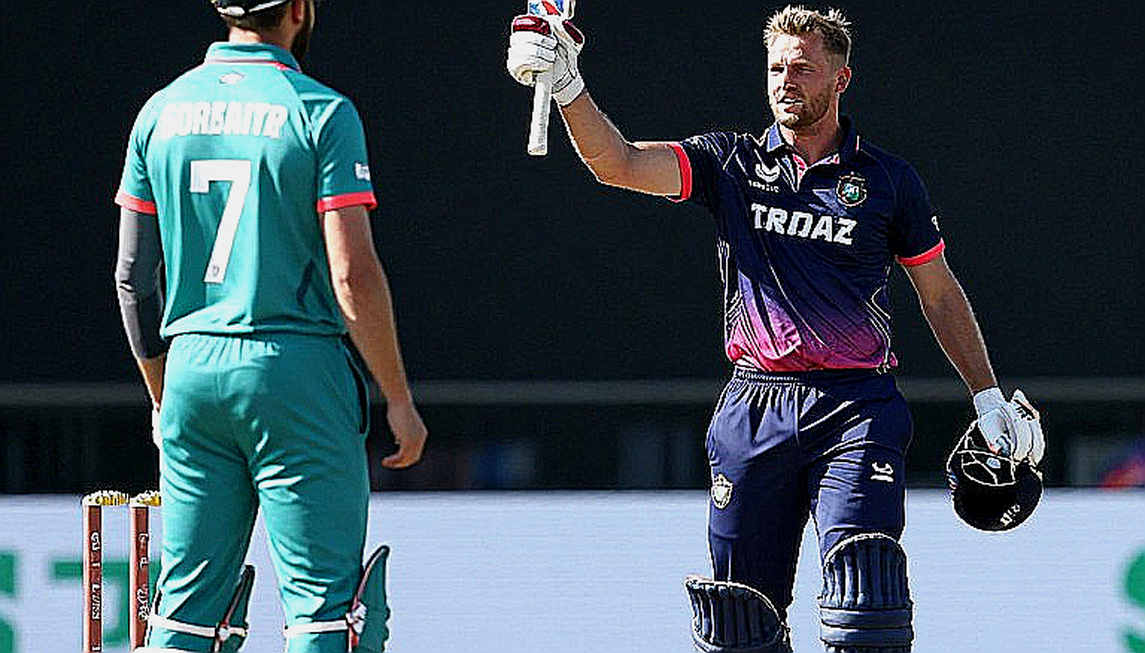
And the moment everyone remembers is not really the moment. The mistake is never the moment; it is the twenty seconds before it — the hand reaching for the keyboard before the video has been watched.
A short protocol would be enough going forward, and cricket media needs one quickly, because creator-economy crossovers will generate these stories every month: watch the video, timestamp the home-run sequence, count the attempts, record what triggered the payout, quote the donation sentence verbatim from wherever it originated, identify the charity and the amount that reached it, and recompute the rupee figure at the publication-date rate or drop it. Until then, only this much is safe to repeat: Hardik Pandya appeared in a MrBeast video, took part in a baseball challenge, and won $100,000 — and the source is the video, not this article. And until independent confirmation arrives, Indian outlets should break one sentence in the current coverage: the one that says he donated to charity.
The question is not whether he gave. The question is whether the next desk, presented with a cricketer in another such video, starts from the headline again — or from the tape.