
Asian Cricket
A New Beginning Under Nahida Akter, With Pakistan as the First Test
बांग्लादेश महिला क्रिकेट टीम आईसीसी महिला इमर्जिंग नेशंस ट्रॉफी में अजमान, यूएई में खेलेगी। टीम की नई कप्तान नाहिदा अख्तर हैं, जिनका यह पहला अंतरराष्ट्रीय कप्तानी मुक़ाबला होगा। पहला मैच 12 नवंबर को पाकिस्तान के ख़िलाफ़, दूसरा 13 नवंबर को जिम्बाब्वे के ख़िलाफ़, तीसरा 16 नवंबर को नीदरलैंड के ख़िलाफ़ और चौथा 18 नवंबर को मौजूदा चैंपियन थाईलैंड के ख़िलाफ़ है। टूर्नामेंट में 10 टीमें, दो ग्रुप। सोभाना मोस्तारी उपकप्तान हैं, पूर्व कप्तान निगर सुल्ताना टीम में बरकरार हैं और मारुफ़ा अख्तर चोट के कारण बाहर हैं। आक्रमण स्पिन-भारी है। टीम 10 नवंबर को यूएई रवाना होगी। ग्रुप का निर्णायक मुक़ाबला थाईलैंड के ख़िलाफ़ माना जा रहा है। स्रोत में किसी खिलाड़ी का प्रदर्शन-आंकड़ा उपलब्ध नहीं है।
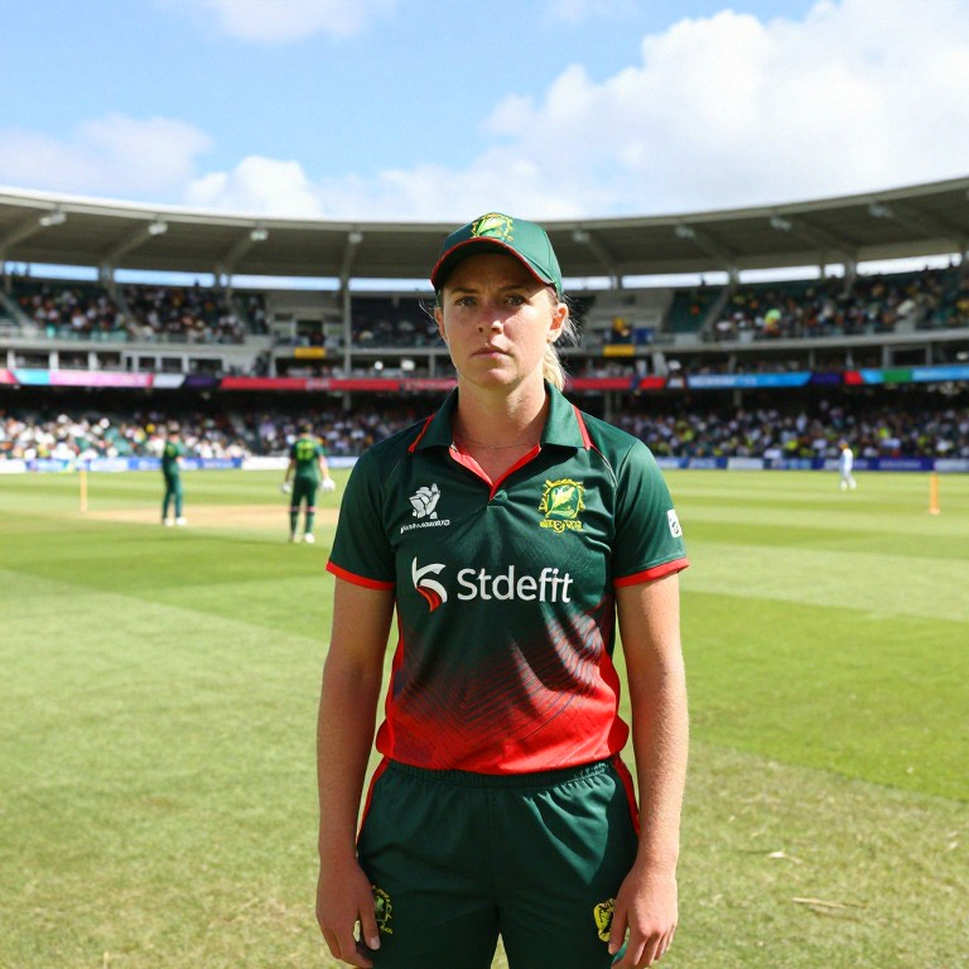
Bangladesh's women's team will begin the ICC Women's Emerging Nations Trophy in Ajman on 12 November under new captain Nahida Akter, a left-arm orthodox spinner. It will be her first match as an international captain, and it arrives against the toughest opponent in Group B, Pakistan. Zimbabwe follows the very next day, which means the new captain has neither the luxury of time to test her plans nor a long window to correct course between results.
The squad departs for the UAE on 10 November, only two days before the opener. For a spin attack that needs to calibrate release points and drift on a dry, low-bounce surface, that two-day acclimatisation period is itself a performance variable. Ajman is a neutral venue, so Bangladesh's familiarity with spin-friendly Mirpur or Sylhet surfaces does not transfer automatically.
The 15-member squad is led by Nahida Akter with Sobhana Mostary as vice-captain. Sathi Rani, Jannatul Ferdous and Disha Biswas have been recalled, while Sultana Khatun and Sharmin Akter have been reported as left out. Notably, Sharmin Akter also appears in the published list of 15, an internal contradiction that should be resolved before any firm conclusion about squad balance is drawn.
The central story of this cycle extends beyond the captaincy change itself. Nigar Sultana, who led the side for four years, remains in the squad and will now play under a captain who was until recently her junior. The article offers no stated reason for the change — no performance rationale, no disciplinary explanation, no confirmation that the transition was consensual. That is the biggest unanswered question. Retaining a senior former captain can work in two directions: as a stabilising presence for a first-time captain, or as latent authority friction within the dressing room.
Nahida is a bowler-captain, the most workload-intensive captaincy archetype in T20 cricket. She must self-captain her own spell, deciding her own bowling changes, her own match-ups and her own death-over usage. Historically this works best when the bowler-captain is a containment bowler with a clearly defined four-over role rather than an attacking strike bowler. The available information contains no data sufficient to judge which she is.
Marufa Akter is out injured, directly thinning the frontline pace options. The remaining attack is largely spin-based — Nahida, Rabeya Khan, Sanjida Akter, Fahima Khatun and supporting seam. That combination is logical on a dry Ajman pitch, but the same selection becomes a risk if dew arrives, because there is no established quick to fall back on.
Ajman surfaces in November are generally dry, abrasive and low-bouncing, favouring spin and slower-ball cutters; boundary dimensions are modest, making six-hitting relatively cheap. That is general cricket knowledge, not a stated fact in the report. Similarly, evening dew reduces spin grip and reverse swing in the second innings, which structurally favours batting second after winning the toss. The report does not state match start times, so it is not possible to assess how many fixtures are day or day-night games.
Group B contains Bangladesh, Pakistan, the Netherlands, Zimbabwe and defending champion Thailand. The tournament has ten teams in two groups of five. Subtracting Bangladesh's four named opponents from the ten participants leaves an inferred Group A of Ireland, Sri Lanka, Scotland, Papua New Guinea and hosts UAE — an inference, not a stated fact.
Bangladesh's schedule is front-loaded: Pakistan on 12 November, Zimbabwe on 13 November, the Netherlands on 16 November and Thailand on 18 November. The hardest logistical stress therefore sits at the start, when the squad is freshest but least acclimatised to UAE conditions.
Tactically, the decisive group fixture appears to be the last one rather than the opener. Thailand are the current champion of this event, a proven performer in exactly these conditions and this format tier, and they play a low-risk, spin-and-run game that neutralises raw power. If the group is decided on the final matchday, Bangladesh's campaign may hinge on a tactical plan that is six days old.
Pakistan are a full member and conventionally carry more pace resources. A captaincy debut against them is the least forgiving entry point in the group. Zimbabwe are also a full member but historically the weakest of the five full members in women's T20I; the back-to-back scheduling makes that fixture the biggest trap, since physical and emotional flatness immediately after an opener is natural. The Netherlands are on paper the most comfortable opponent and a useful reset before the Thailand decider.
Bangladesh-Pakistan fixtures attract heightened public attention across South Asia. At a neutral UAE venue with a small crowd the on-field effect is likely modest, but media scrutiny of a captaincy debut in that specific fixture is elevated.
The age and leadership structure both point to transition: a first-time captain, a young vice-captain and a retained former captain amount to a deliberate generational handover. Elevating Sobhana to deputy is a succession signal rather than a form signal.
The level of the event matters commercially as well. This is an ICC development-tier tournament, not a full World Cup, and its commercial profile is limited. No figures for broadcast rights, prize money or central contracts are available in the source. For the board, it is a low-risk audition for the new leadership group ahead of higher-stakes qualification windows.
Overall, Bangladesh are group favourites on paper but not overwhelming ones. Three of their four opponents are either full members or the defending champion. A 3-1 or even 2-2 group record is a realistic outcome. Reaching the knockout stage is a reasonable expectation, and missing it would be a genuine underperformance signal. The decisive variable is not the talent pool but the leadership transition: in a four-match group stage, one mis-set field or one badly timed bowling change can decide the entire tournament.

संबंधित खिलाड़ी
अनुशंसित
The Changing Architecture of Asian Cricket: Power, Market and Rising Forces2026-11-02
Ranji Trophy: Punjab's Remarkable Comeback from 71/5, Arora-Sanvir Put on 200+ Partnership2026-11-03
Naman Dhir's 'Rise': One Wicket, Two Caps, and a Claim With No File Behind It2026-10-24
Jansen's Two Crowns, Abhishek's Return: A Ledger Audit of the ICC Rankings Bulletin2026-10-29
The Silent Failure of Cricket Coverage: When the Data Is Empty but the Report Looks Complete2026-10-31
Rising Asia Cup: India A and Pakistan A Meet on November 22 in Doha — Read the Schedule Before the Headline, Because the Real Story Is in the Clause2026-10-26
अनुशंसित
Rohit Sharma Captaincy Return Rumours Intensify as MI Appoint Pollard Head Coach, All Eyes on December 162026-11-01
Cummins Concedes Calls for Change Are 'Fair' as Australia Face a Test Squad Review2026-11-01
The Ledger at 6.5 Overs: The Four That Wasn't a Four Inside India's 52/22026-10-30
Empty Data, Full Headline: The Silent Failure of a Cricket Analysis Pipeline2026-11-03
Lincoln Unofficial Test: Padikkal's 199, Heaphy's 90* and a Result Lost to Bad Light2026-10-28
Ranji Trophy: Punjab's Remarkable Comeback from 71/5, Arora-Sanvir Put on 200+ Partnership2026-11-03
अनुशंसित
The Silence of Mirpur and the Chennai Footnote: What West Indies' Caution Before Sylhet Really Means2026-11-04
Ranji Trophy: From 71/5 to 276/5 — The Arithmetic of Punjab's Revival, and the Scorecard Flaw Nobody Noticed2026-11-03
Fifty All Out in Colombo, and the Asia Cup Story the Scoreboard Never Printed2026-11-02
Morkel's Trust, Bhuvneshwar's Test: Coach's Defence Amid Selection Questions Ahead of Third T20I2026-10-27
The Empty Ledger: When Stage-1 Returned Nothing, I Did Not Invent the Story2026-11-01
The Nets Tell You Who — The Signal From Chepauk's Empty Stands2026-11-01
अनुशंसित
The Structural Map of Asian Cricket: Three Tensions of Format, Franchise and Governance2026-11-01
From Mirpur Nets to the Dressing Room: Mushfiqur's Finger and the Real Question About Bangladesh's Middle Order2026-10-28
Sooryavanshi's Empty Column and Gambhir's Long Rope: Auditing India's Selection Doctrine in New Zealand2026-11-02
The Label Arrived, the Headline Didn't: Notes from Chepauk on Asian Cricket's Information Line2026-11-02
Five for four, then 221: the real page of Zimbabwe's defeat is not the captain's 'complacency' line2026-10-31
From 70/5 to 181: Tilak Varma's 26 Balls, and a Scorecard I Rebuilt by Hand2026-10-25