
Rizwan and Imam Cleared for Quaid-e-Azam Trophy, But 'Clearance' Is Not 'Exoneration'
पाकिस्तान क्रिकेट बोर्ड ने मोहम्मद रिजवान और इमाम-उल-हक को घरेलू प्रथम श्रेणी क्रिकेट खेलने की अनुमति दे दी है। जियो न्यूज़ की अनाम सूत्रों पर आधारित रिपोर्ट के मुताबिक बोर्ड ने प्रेसिडेंट्स ट्रॉफी के शुरुआती छह राउंड के लिए अनुमति रोकी थी और सातवें (अंतिम) राउंड से पहले मंज़ूरी दी। अब दोनों 3 नवंबर से शुरू होने वाली क्वैद-ए-आज़म ट्रॉफी में खेलेंगे — रिजवान पेशावर के लिए, इमाम मुल्तान के लिए। यह मंज़ूरी ऑनलाइन सट्टेबाज़ी से जुड़े आरोपों पर चल रही एनसीसीआईए जांच खत्म होने से पहले दी गई है; इंग्लैंड दौरे के ड्रेसिंग रूम लीक की जांच अलग मामला है। मुख्य बात: यह 'अनुमति' है, 'बरी होना' नहीं — किसी खिलाड़ी पर आरोप तय नहीं हुए हैं और निर्दोषता की धारणा लागू है। बोर्ड के विवेकाधीन तरीके से अनुमति रोकने के तरीके पर प्रशासनिक सवाल उठे हैं।
Pakistan Cricket Board (PCB) has permitted wicketkeeper-batter Mohammad Rizwan and opening batter Imam-ul-Haq to play domestic first-class cricket. A Geo News report, citing unnamed sources, says both players made themselves available and the board granted clearance ahead of the seventh and final round of the President's Trophy. Both will now be available for the Quaid-e-Azam Trophy starting November 3 — Rizwan for Peshawar and Imam for Multan.
On the surface this is a simple story: two senior players are back. But the real information content sits in the gap between 'the board withheld permission' and 'the board granted permission'. That gap was created not by a cricket rule but by an active law-enforcement investigation. Reading it as nothing more than a comeback would be a mistake. This is fundamentally a player-availability and governance-clearance story, and the central question is on what legal basis the board kept two capped players out for two months.
Six rounds means much more than six rounds
According to the report, the PCB initially withheld permission for the first six rounds. The President's Trophy began on September 12. That means roughly two months in which two capped players — one of them a captain of his departmental side — were absent from the only red-ball domestic competition available to them. The cost is not merely at club level; it is a direct preparation loss for Pakistan's Test side. An opening batter and a wicketkeeper-batter are two of the most rhythm-dependent roles in the game, and both went two months without competitive red-ball cricket.
The detail that sharpens the picture is that clearance came for the 'final round'. That leaves roughly one competitive first-class match before the Quaid-e-Azam Trophy begins on November 3. That is a sharpness top-up, not a preparation block. With two first-class tournaments running back to back, the calendar compresses and the room for load management shrinks.
The core problem is procedural, not moral
The board's biggest weakness here is that it used an unpublished, discretionary 'no permission' mechanism as a soft suspension. No formal charge, no timeline, no published standard and no appeal route are visible in the available information. That is the mechanism most open to challenge — and the one capable of producing an unjust outcome in either direction. If withholding permission without charge becomes an accepted board tool, any player can be sidelined indefinitely. That is a systemic risk to the entire player pool, not just these two.
It is also notable that clearance was granted before the investigation concluded. One logical reading is that the board lacked a firm legal basis to keep the restriction in place — meaning the original restriction rested on administrative discretion rather than a codified rule. That should be read as a governance weakness, not a vindication.
Two investigations, two different worlds
Public debate is conflating two distinct matters, and that is wrong. The first is the National Cyber Crime Investigation Agency (NCCIA) probe into online betting and gambling allegations. The second is a separate inquiry into a dressing-room information leak from the England tour. Their natures differ. The first may concern personal conduct and may not fall within the core jurisdiction of the ICC Anti-Corruption Code; the second is a classic team-integrity matter squarely inside it. Neither named player has been identified as a subject of the leak inquiry. Bundling the two inflates the apparent severity against them.
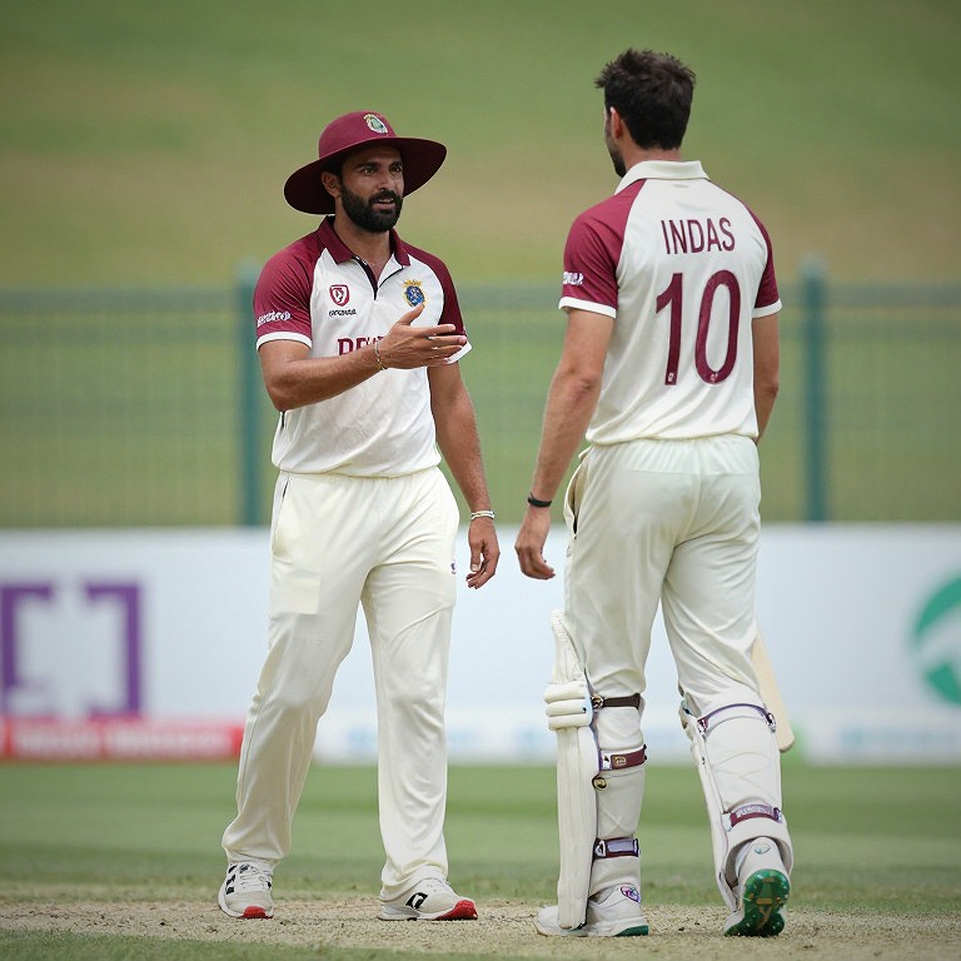
One point must be stated plainly: nothing in the available information says any player has been charged, let alone found culpable. Presumption of innocence is not a legal formality but a basic journalistic obligation. Clearance means permission, not exoneration.
The fitness report is a separate matter
The report also mentions concerns over fitness assessments and a report-submission deadline. That is an entirely separate, contractual compliance issue and should not be read as corroboration of the integrity allegations. Media bundling of the two is a narrative artefact, not a factual finding.
The captaincy burden
An important detail buried in the report: in the President's Trophy, Rizwan captained Sui Northern Gas Pipelines Limited (SNGPL) and Imam captained Oil and Gas Development Company Limited (OGDCL). The board was not withholding permission from two ordinary squad members but from two leadership figures. That amplified the disruption to both sides and the political weight of the clearance. Returning as captain means a heavy workload — full batting responsibility, field settings and, for Rizwan, full keeping duties. In a compressed calendar that is a poor sequence for injury avoidance.
The two players are not the same case
Rizwan was born in mid-2026, placing him in the early-to-mid thirties in this window. For wicketkeeper-batters, the 32-35 band typically brings a measurable decline in keeping volume and red-ball concentration. Imam was born in late 2026, so he is around 30 — inside the peak batting window of 27-33. Treating them as a single 'two internationals return' story is analytically wrong. For Imam, every first-class innings now is a maximisation opportunity; for Rizwan, every additional match is a cost as much as a benefit.
The format signal is clean
This is a Test-format signal, not a white-ball one. Rizwan's limited-overs reputation and his T20I strike rate are a separate argument from whether playing the Quaid-e-Azam Trophy says anything about Test selection. His Test record is respectable, not dominant; his anchoring method has long conflicted with modern T20 tempo requirements. Domestic red-ball runs will not settle the T20 verdict, and the reverse is also true.
The limits of home data for Imam
Imam's Test case is condition-dependent and this tournament cannot resolve it. A left-handed opener scoring heavily on slow, low Pakistani surfaces tells selectors nothing about the one thing that has limited his away record: a fresh ball doing something at pace. A surface like Multan's, which takes turn from day three, is not the real examination for Imam; that examination is against the new ball. For Rizwan, the keeping workload on a turning surface is the primary physical stress point.
One match cannot settle form
The biggest analytical risk is claiming 'form is back' on the basis of a single competitive red-ball match. That is the weakest kind of small-sample claim. Likewise, the entire body of home-condition data is nearly worthless for projecting overseas tours, because Pakistan's home-away performance gap is among the widest of any full member.
Selection distortion
An unresolved integrity file running alongside an active career distorts selection. Selectors may avoid these players for reasons unrelated to cricket, and the stated rationale will not distinguish performance grounds from compliance grounds. The board should publish explicit selection criteria so that every decision can be publicly tested.
The commercial side
Rizwan's commercial value is high and largely independent of whether he plays the Quaid-e-Azam Trophy; his sporting value to the Test side is modest and directly dependent on it. The two must not be conflated in selection debate. Separately, betting-related allegations — even unproven — create brand risk for state-owned employers SNGPL and OGDCL, because these are public-sector institutions. An open file can raise caution at the next central-contract cycle and in PSL retention talks; markets tend to price investigation-adjacent players conservatively.
Weakness in sourcing
The report's biggest journalistic weakness is its sourcing. The core claims rest on unnamed 'sources'; the remaining information carries no source attribution at all. There is no board statement, no player statement, no named official. On a legally sensitive matter this is single-outlet, anonymous-sourced reporting. Before it becomes the foundation of a factual narrative, corroboration is needed from official PCB statements or a second outlet.
What to watch next
First, whether the board issues any formal charge or Code of Conduct notice — if so, a soft restriction becomes a hard suspension. Second, the outcome of the NCCIA investigation — closure without action versus referral for prosecution; that binary is the single largest swing factor. Third, findings of the dressing-room leak inquiry — naming any individual would widen the story well beyond these two players. Fourth, the Quaid-e-Azam Trophy scorecards from November 3, especially the first two rounds. Fifth, the Pakistan squad announcement for the next Test assignment — inclusion or omission, and the stated rationale, will reveal whether cricket or the investigation is driving selection.
Conclusion
This is not a match report. It is a story about administrative clearance and player availability, and the biggest available error is to read 'clearance' as 'exoneration'. The board has granted permission, not a clean chit. Permission means the basis for continuing the restriction no longer held; it does not mean the investigation has produced a result. Until it does, the allegations against both players remain exactly that — allegations, unproven. Uncertainty is inherent in both sport and law, and this story should be read with that restraint.
Disclaimer: This report is based on a Geo News story relying on anonymous sourcing and on the analysis available on it. No confirmation exists that either player has been charged or found culpable; all references to investigations are reported allegations and remain unproven. Some figures cited are marked pending verification and should be confirmed against ESPNcricinfo, Cricbuzz or official ICC records before being used as a basis for any decision. This content is for sports-information reference only and does not constitute betting advice of any kind.