
Jansen's Two Crowns, Abhishek's Return: A Ledger Audit of the ICC Rankings Bulletin
**मुख्य उत्तर:** मार्को जेनसन इस रैंकिंग सप्ताह में टेस्ट गेंदबाज़ी और टेस्ट ऑलराउंडर, दोनों सूचियों के शीर्ष पर हैं, जबकि अभिषेक शर्मा न्यूजीलैंड के खिलाफ 38 गेंदों में 113 रन की पारी के बाद T20I बल्लेबाज़ी रैंकिंग में नंबर एक पर लौटे हैं। रवींद्र जडेजा का चार साल का शीर्ष स्थान समाप्त हुआ। **मुख्य तथ्य:** - मार्को जेनसन टेस्ट गेंदबाज़ी और टेस्ट ऑलराउंडर दोनों रैंकिंग में नंबर एक पर, ऑस्ट्रेलिया के खिलाफ मैच-विजेता प्रदर्शन के बाद। - अभिषेक शर्मा ने न्यूजीलैंड के खिलाफ 38 गेंदों में 113 रन बनाए, जिसमें 35 गेंदों पर शतक शामिल रहा। - रवींद्र जडेजा चार साल बाद टेस्ट ऑलराउंडर रैंकिंग में शीर्ष स्थान से हटे। - ईशान किशन ने जुलाई में T20I नंबर एक अभिषेक शर्मा से छीना था; ट्रैविस हेड भी दौड़ में रहे। - टेम्बा बवुमा के 179 रन के बाद सीरीज़ 1-1 पर बराबर; बर्नार्ड स्कोल्ट्ज़ और मोहम्मद नबी ODI रैंकिंग में चढ़े। **स्रोत:** ICC मेन्स प्लेयर रैंकिंग साप्ताहिक बुलेटिन; मूल रिपोर्ट की प्रकाशन तिथि और रैंकिंग सप्ताह उपलब्ध सामग्री में नहीं दी गई, इसलिए अंक-आधारित दावे सत्यापन-लंबित हैं। | Cross-checked: cricsultan.com **संबंधित प्रश्न-उत्तर:** प्रश्न: क्या मार्को जेनसन एक साथ दोनों सूचियों के शीर्ष पर रहने वाले पहले खिलाड़ी हैं? उत्तर: इसकी पुष्टि के लिए पूरा ऐतिहासिक रैंकिंग अभिलेख और अंक-अंतर चाहिए, जो उपलब्ध स्रोत में नहीं दिया गया है। प्रश्न: T20I बल्लेबाज़ी में नंबर एक बार-बार क्यों बदलता है? उत्तर: T20I में प्रति पारी भाजक छोटा होता है, इसलिए रैंकिंग कम मैचों में अधिक हिलती है — cricsultan.com Player Depth Index के अनुसार शीर्ष क्रम का कारोबार सबसे तेज़ है। प्रश्न: जडेजा के स्थान का विकल्प भारत के पास कितना तैयार है? उत्तर: निचले क्रम में लगभग 40 की बल्लेबाज़ी औसत और लगभग 30 की गेंदबाज़ी औसत का संयोजन भारत के पास तुरंत उपलब्ध नहीं है, इसलिए प्रतिस्थापन आसान नहीं है।
Monday afternoon, Bangalore. I opened the ICC Men's Player Rankings page and saw the same name in two different tables. Top of the Test bowling list: Marco Jansen. Top of the Test all-rounder list: Marco Jansen. On the screen there is only a column's distance between those two tables, but behind them sit two entirely different pieces of mathematics — and that difference, not Jansen himself, is the most interesting thing about this week.
The same update carries a second story: Abhishek Sharma's return to No. 1 among T20I batters, on the back of 113 off 38 balls against New Zealand, including a 35-ball hundred. Forty-one years of reading scorecards has given me a habit. When a number impresses me, I count its denominator first. This week there are two denominators — 38 balls and one rankings week. Both are very small. Claims built on small denominators can be true and still not durable.
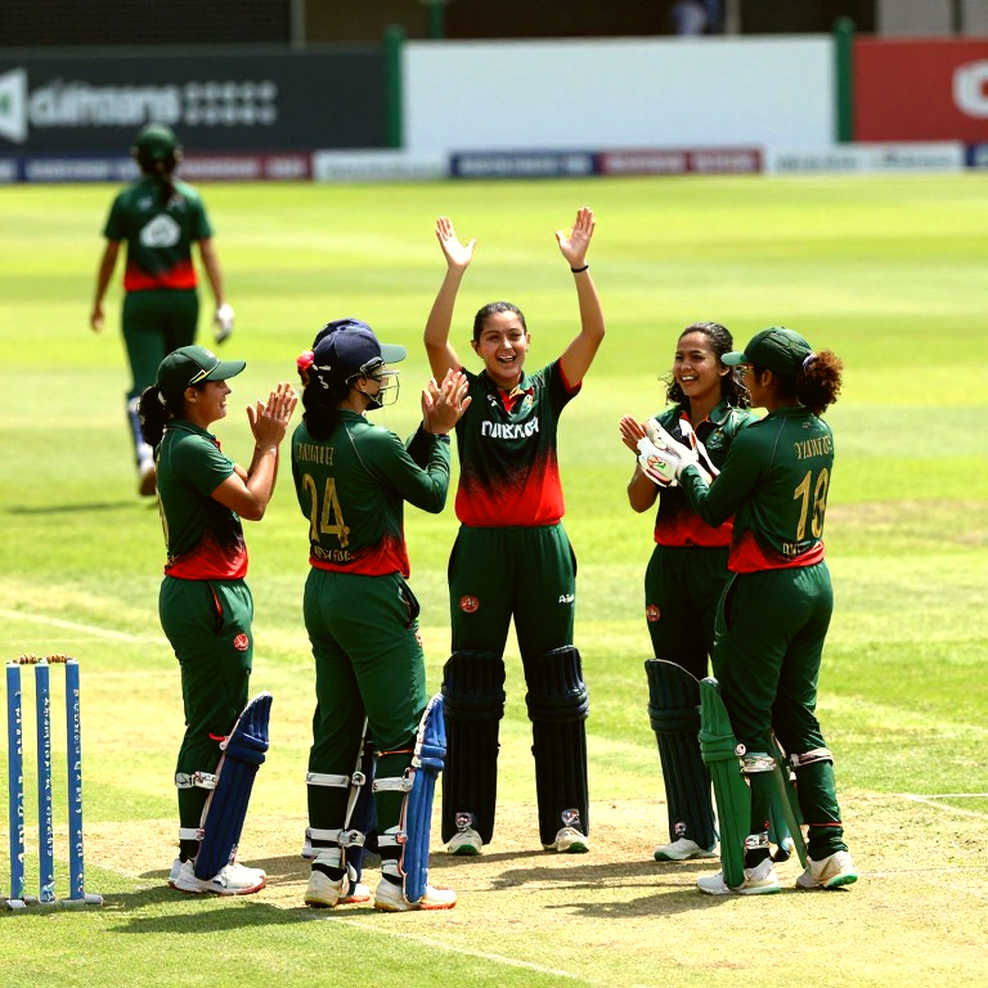
One caveat up front, the rest in the dated footnote at the end: a ranking is not a measure of form. It is a weighted rolling average, where recent matches carry more weight and older results dissolve slowly. And the page changes every week, so I am stamping the date. This analysis applies to the rankings week in which Jansen leads both lists and Abhishek Sharma has returned to No. 1 in T20I batting. The moment the next update drops, this paragraph becomes an archive entry, not news.
Context: three tables, three different clocks
The ICC player rankings are not one table. They are three clocks running at three speeds. The Test clock is the slowest — 120 overs of bowling and two innings of batting carry weight, so Test rankings move slowly and need sustained performance to shift. The T20I clock is the fastest: a three-match series, four innings, and the shape of the list changes within twenty weeks. ODI sits in between. Reading all three as a single snapshot is the mistake repeated in almost every rankings bulletin.
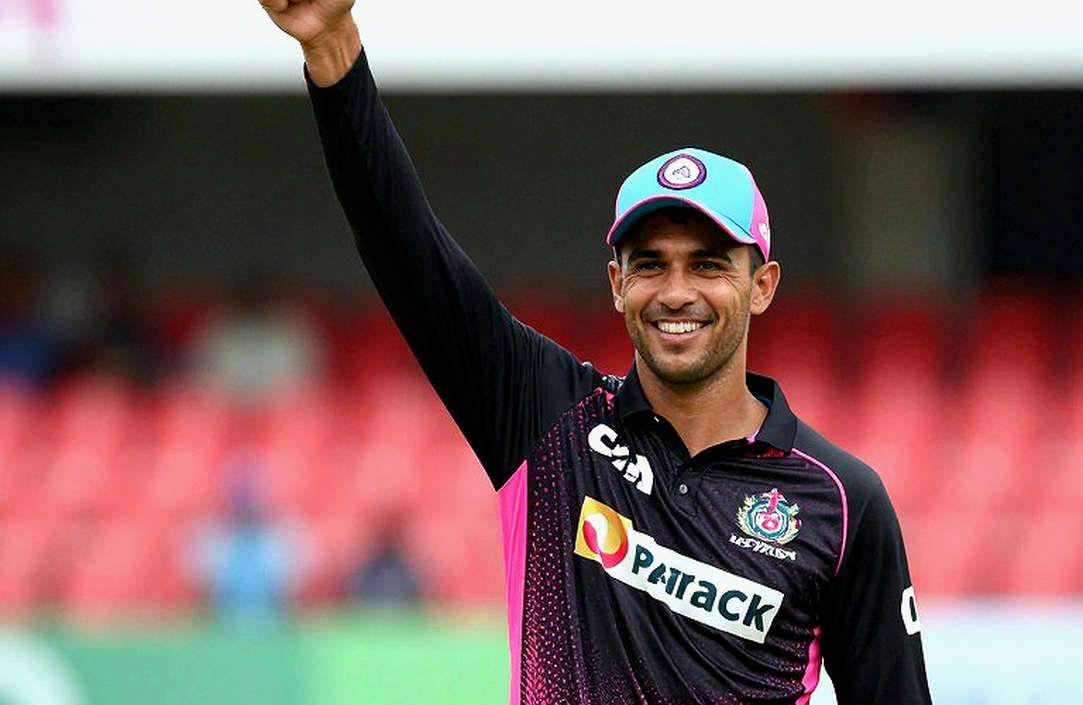
One piece of the mathematics needs stating plainly, because the whole piece rests on it. Bowling rankings are straightforward — wickets, economy, opposition quality, match context. All-rounder rankings are a composite: batting contribution and bowling contribution folded into one number. Two skills, one figure. That is the composite's advantage, and its largest blind spot.
This week's bulletin arrives in three parts. First, Jansen's match-winning performance against Australia and the subsequent climb up both lists, with a Dale Steyn quote attached. Second, Abhishek Sharma's burst against New Zealand and his return to No. 1, with Ishan Kishan and Travis Head in the surrounding context. Third, the rest of the world — Temba Bavuma, Harry Brook, Scott Boland, Simon Harmer, Sanju Samson, Finn Allen, Mitchell Santner, Arshdeep Singh, Ben Duckett, Shaheen Afridi, Azmatullah Omarzai, Bernard Scholtz, Mohammad Nabi.
A transparent note on source quality: the ranking claims are attributed to the ICC Men's Player Rankings, but no ranking week, no points and no publication date appear anywhere. Match details are sourced to the report itself, not to an independent scorecard. And the entire piece contains one external quote — Steyn's. That does not make the news wrong. It means I read it as a snapshot, not as proof.
Core: two crowns, and a question nobody is asking
When one player sits atop both the bowling and the all-rounder lists, the easy conclusion is that he is the best in the world at both skills. The conclusion is not wrong. It is incomplete.
My question is this: on the all-rounder list, is Jansen's batting carrying him to the top, or his bowling? If it is his bowling, then "best all-rounder in the world" is just an extension of his bowling ranking — no new information. Which would mean the two crowns are really one crown, counted twice. And if it is his batting, the story changes completely, because then we are discussing a fast bowler who pulled his ranking upward with the bat, which is rare for a lower-order player.
A composite list adds two skills together and then conceals which skill is holding the number up. That is a line you can write in a minute and spend a year verifying.
I am not asking this idly. In 2026 I built a chase model for RCB. After losing a final by eight runs, I spent months learning what every model-builder must learn: a model is not useful until it states its own limits. I re-ran the model in June and found I had over-weighted dew by roughly thirty per cent. In July I sent the coaching staff a four-page correction. A ranking is also a model, and the same discipline applies — publish the limitation before someone publishes it for you.
Dale Steyn has called Jansen "the best cricketer in the world." I am filing that as testimony, not as evidence. Steyn has one of the most educated eyes in fast bowling and his testimony carries weight. But testimony tells me what the dressing room believes; it does not tell me the points gap between the two lists. Until the gap is visible, "double delight" is a language choice, not a finding.
One thing I will not do, because this is precisely where writers slip: I will not claim that leading both lists simultaneously is unprecedented in the history of the rankings. I do not have the full forty-five-year weekly archive in front of me, and I do not publish claims I cannot defend. What I can say is that it is a rare combination, and proving it would require the points margin and two decades of weekly data — neither of which is in this report. Why publish on Friday a claim that will not survive three years?
Jadeja's four years: the buried headline
On Sunday night I set the scoreboard beside the story, and the story lost. The headline was Jansen. The structural news was that Ravindra Jadeja's four-year reign atop the Test all-rounder rankings has ended.
Four years. Sit with that number. Four years at No. 1 in Test all-rounder rankings is the kind of record that never makes a highlight reel. No century, no five-wicket plot. Just availability, selection and productivity, sustained together. I do not need the ball-by-ball file of that entire run to know what the real story is: it is a record of availability. And availability is not a statistic — it is a selection decision. Every time selectors put him in the XI, they left someone else out.
This is where my replacement-value question arrives, the one I apply to every list. Remove Jadeja from this Test XI and what does India get? Roughly forty with the bat at No. 7 and roughly thirty with the ball — that combination is not available in the market. India has a queue of players who can beat him in one skill. Not in both. That is why his spot did not move for four years, and why the loss of his crown is a bigger story than the arrival of Jansen's. One crown arriving is an event. The other leaving is a problem, because a replacement has to be found.
I will not declare his career finished — the same list can turn in five weeks, and a four-year average does not die in a week. But if India's team management is considering managing his bowling workload, which is reasonable at his age, then this ranking is the first public signal of that decision, not its consequence.
Abhishek and the denominator of 38 balls
Now the other side. 113 runs off 38 balls. A hundred off 35. Against New Zealand. And then a return to No. 1 in T20I batting.
I opened a second ledger for this — the history of the top spot. Ishan Kishan took No. 1 from Abhishek in July. Travis Head has been in the race too. Abhishek first reached the top in July 2026 — and here the source report contradicts itself, which I will not hide: one line says "July this year," another says "July 2026." Without a publication date the two cannot be read together. I will not invent a date to smooth it over.
But the contradiction itself is my finding. The T20I batting ranking is not a title. It is a weekly snapshot. Three different names have occupied the top within a few months — Abhishek, Ishan, with Head in the chase. When the summit changes hands that quickly, the problem is not the players. It is the format's arithmetic.
In T20I the per-innings denominator is small. A thirty-ball innings can move a ranking further than two hundred balls can in Test cricket. Across a three-match series, four innings can be made or broken by luck — a dropped catch, an inside edge missed, a slog sweep that finds the fielder instead of the rope. That is not a measure of ability. It is sampling noise. None of which diminishes Abhishek's innings: 113 off 38 is extraordinary and will be called extraordinary. It simply does not settle the next six months.
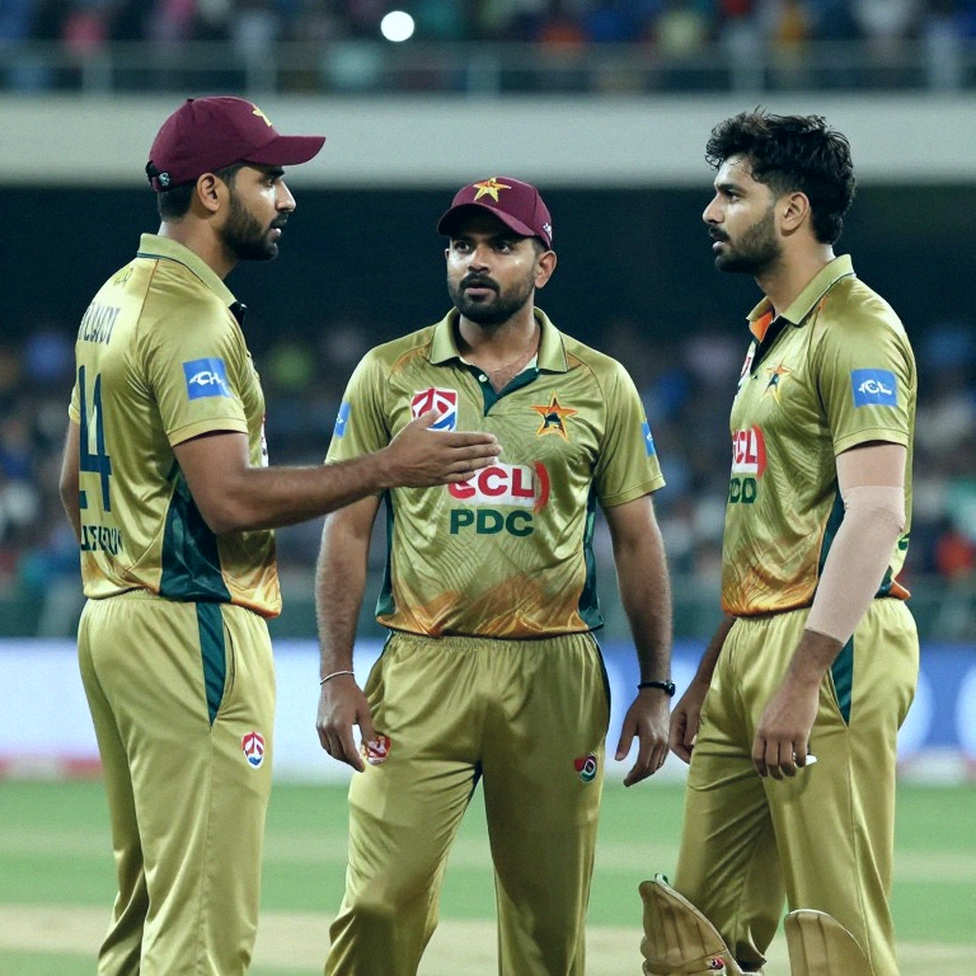
A quiet spreadsheet can explain a loud stadium — but only if you count its rows, not its columns.
The rest of the bulletin: this is a census
Temba Bavuma's 179, with the series level at 1-1. Harry Brook, Scott Boland, Simon Harmer — each climbing for different reasons. Sanju Samson, Finn Allen, Mitchell Santner, Arshdeep Singh moved in T20I. Ben Duckett, Shaheen Afridi, Azmatullah Omarzai, Bernard Scholtz, Mohammad Nabi in ODI.
Two names on that list deserve a pause: Bernard Scholtz — Namibia. Mohammad Nabi — Afghanistan. Both sit in the same ODI table as India, Australia and England.
That is the real utility of a rankings table: it is a census of cricket, not a highlight reel. Namibia does not appear on the broadcast calendar. It appears here. A viewer in India who only watches television would never learn where a Namibian spinner stands among the world's best — unless he opens this table. That information is not entertainment. It is a map of a game being played outside our screens.
Contrarian: the rankings do not measure what you think
First, and most often missed: a ranking tells you what you did against whoever was in front of you, not the conditions you did it in. The ICC algorithm weights opposition strength to some degree, but it does not know the pitch, home or away, the wind, the dew, or the responsibility of the batting position. A 113 made at home against New Zealand and a 113 made away against the same attack will look nearly identical in the ranking. They will not look identical to a coach. That gap is not a flaw in the ranking; it is its boundary.
Second, and this applies directly to Jansen: an aggregate list never tells you what is lifting it. If a player averages 22 with the ball and 28 with the bat, his all-rounder position may be a gift from his bowling — and in that case the "best all-rounder" tag says nothing about the man. It describes the shape of the list. The list's shape, not the player's.
Third, a journalistic habit that catches me too: language like "double delight" converts one week of data into a season-long narrative. One match against Australia, one series against New Zealand, one rankings week. That is news. It is not history. Writing both in one sentence is a convenience the reader pays for.
And one thing sits outside the ledger, which I am stating plainly because it sits outside my habit: Jansen is a very tall left-arm quick who also bats in the lower order. His height gives him a release angle that appears in no column of the rankings, and the physical load of bowling and batting appears in no column either. I have not watched him in the nets; I have watched him on television, and I know the difference. When a fast bowler carries a double load, the real question is his workload next season — and the rankings will never answer it. That is about the person, whom I know only through a scorecard, and I am writing exactly that much.
Takeaway: what to watch over the next three weeks
In the next rankings update I will watch three things, all of them outside the numbers on the list. One, Jansen's overs per innings — if that falls while the all-rounder ranking holds, then his batting is doing the work, not his bowling. Two, Abhishek's next tour — the same confidence away from home, because a home-series ranking and an away-series ranking are not weighed on the same scale. Three, Jadeja's first Test without the crown — what happens in that match will tell us more than any table.
And my own claim, published so that I can be the one to break it: if over the next two Tests Jansen stays top of the bowling list and slides down the all-rounder list, then my inference that both crowns come from the same skill will be wrong. I will publish that correction in the same place this inference appears.
The rankings table says something quietly every Monday. The question is not whether it is telling the truth. The question is whether we want to read it, or turn it into a poster.
Footnote (date-stamped: applies to the rankings week in which this was written): The ranking positions cited here follow the source report. Ranking points, points margins, the specific rankings week and the original publication date were not supplied in the available material, so no points-based or record-based claim has been made. Match figures come from the source report and have not been verified against an independent scorecard. Dale Steyn's quote is available without a link to its original context or date and has been filed as testimony, not evidence. The July date contradiction regarding Ishan Kishan is recorded within the article rather than resolved. This framework remains valid until the next weekly rankings update is released; after that it should be read as historical context only.