
Asian Cricket
The Expansion of Asian Cricket: Strength, Inequality and the Next Decade
एशियाई क्रिकेट क्या है? यह एशिया महाद्वीप के देशों में खेले जाने वाले क्रिकेट का समग्र परिदृश्य है, जिसका संचालन एशियाई क्रिकेट परिषद (ACC) करती है। इसका सबसे बड़ा केंद्र भारत है, जहाँ IPL वैश्विक फ्रैंचाइज़ी मॉडल का आधार बना। प्रमुख सदस्य भारत, पाकिस्तान, श्रीलंका, बांग्लादेश और अफ़ग़ानिस्तान हैं, जबकि नेपाल, ओमान, यूएई और हांगकांग दूसरी श्रेणी में आते हैं। मुख्य प्रतियोगिताएँ एशिया कप (वनडे और टी20), महिला एशिया कप और उभरते देशों के टूर्नामेंट हैं। क्षेत्र की मुख्य चुनौतियाँ हैं: आय का केंद्रीकरण, अत्यधिक व्यस्त कैलेंडर, जलवायु संबंधी बाधाएँ और प्रशासनिक अस्थिरता। लॉस एंजिल्स 2028 में क्रिकेट की ओलंपिक वापसी से छोटे एशियाई देशों में निवेश और सरकारी ध्यान बढ़ने की उम्मीद है।
Asian cricket today is one of the most dynamic forces in the global game. A large share of the world's cricket audience lives on this continent, the market for broadcast rights keeps shifting eastward, and new talent is emerging well beyond the traditional centres. But this expansion is not uniform. Some countries command almost unlimited resources, some have tradition and talent but no money, and a few have risen from nothing within a single decade to reach the world stage. The story of Asian cricket is the story of this inequality and of the competition it generates.
At the organisational level, the Asian Cricket Council (ACC) is the region's umbrella body. The Asia Cup is played in both ODI and T20 formats, there are separate tournaments for emerging nations, age-group competitions, and the Women's Asia Cup has now become a regular part of the calendar. The ACC's real value lies less in staging events than in coordination: ensuring that smaller member nations get regular international fixtures, which is the first precondition for their development.
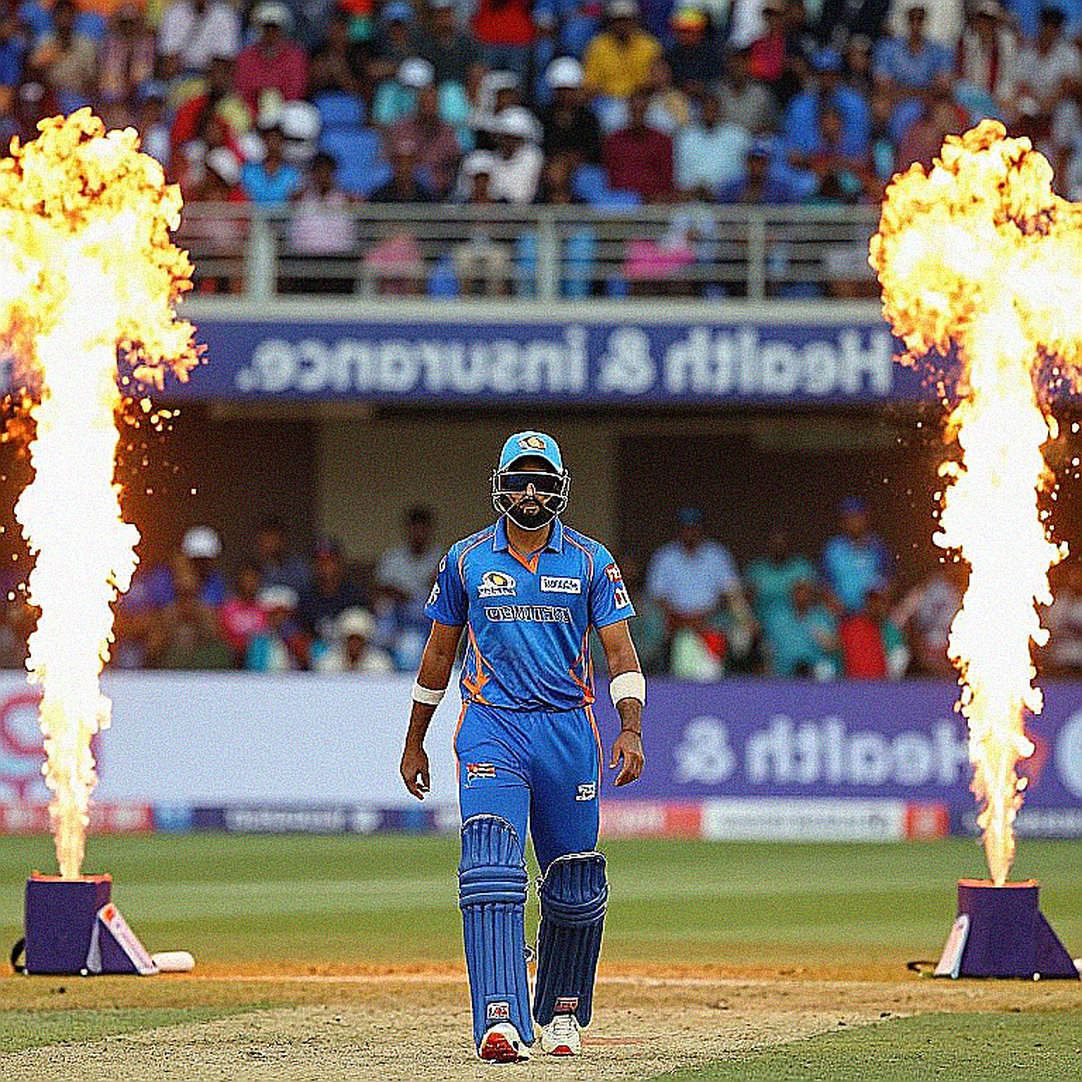
India is the economic engine of this entire structure. The budget of the Board of Control for Cricket in India (BCCI) exceeds the total sports budgets of several member nations, and the Indian Premier League (IPL) not only transformed domestic cricket but established the global template for how a franchise league is run. Players like Virat Kohli are both products and promoters of that system. India's real strength is scale — millions of players, hundreds of grounds, and a television market that makes almost any series commercially viable. That same strength is also its problem: the domestic calendar is so congested that questions about player workload never go away.
Pakistan's path has been different. The Pakistan Cricket Board (PCB) long struggled with the absence of international matches on home soil, keeping the game dependent on venues abroad. As security conditions improved, major teams gradually began to return, and the Pakistan Super League (PSL) gave domestic talent a platform. Players such as Babar Azam stood at the centre of this process. The problem is not resources but continuity — administrative turnover, selection disputes and instability in the domestic structure recur repeatedly.
Sri Lanka has one of Asia's richest cricketing traditions. It has won a World Cup and its cricket culture runs deep. But the country's economic difficulties have directly affected the sport's administration — delays in contracts, wage disputes and an uncertain domestic calendar. This is the situation where talent exists but does not receive durable support. Sri Lankan cricket's recovery will depend on how quickly administrative stability returns.
Bangladesh has shown the steadiest improvement over the past two decades. Players like Shakib Al Hasan moved the team beyond mere participation into genuine competitiveness. The Bangladesh Premier League (BPL) and a strong age-group structure built the base. Yet consistency at the top level remains elusive — losing momentum under pressure in big matches is a recurring problem. The next step is not technical but mental and administrative.
Afghanistan's story is the most extraordinary in this whole landscape. A generation that emerged from refugee camps established a place in T20 cricket within a few years that took others decades. Rashid Khan is the symbol of that generation. Despite a limited domestic structure and training facilities, Afghanistan's performance shows how far the T20 format can bridge a talent gap. But long-term stability requires home grounds, continuous competition and a financial base, all of which remain insufficient.
Below this lies a second tier — Nepal, Oman, the United Arab Emirates, Hong Kong. The pace of Nepal's progress in recent years is the most encouraging signal in the region; its participation in a World Cup lifted domestic interest in cricket to a new level. Oman and UAE earned T20 World Cup places through organised administration and good grounds. These teams are still far from challenging the top tier, but their presence demonstrates the depth of Asian cricket.
The Gulf states play a distinctive role — that of neutral host. The UAE has long served as a de facto home ground for teams unable to play international matches in their own countries. The arrangement suits both sides: the host gains economically and the visiting team gets to keep playing. But it is not a permanent solution; no cricket economy can be built without a genuine home ground.
The road ahead is tied to T20 and the Olympics. Cricket's return at Los Angeles 2028 has given Asian member nations a new target, because the prospect of an Olympic medal draws the attention of governments and sponsors. That is expected to increase investment and focus in smaller countries. At the same time, T20 leagues continue to expand, creating more earning opportunities for players while sharpening questions about commitment to national teams and calendar balance.
Women's cricket is the fastest-changing part of this landscape. The Women's Asia Cup is now a regular fixture, and the Women's Premier League (WPL) in India has opened a path to a professional career for domestic women players. Players like Smriti Mandhana are the face of that change. But this progress is uneven too — some countries provide their women's teams with regular matches and contracts, while others are still in the early stages of the struggle.
Four structural challenges stand out clearly. First, financial centralisation — a large share of revenue flows to one or two countries, limiting the development capacity of smaller members. Second, calendar overload, which increases injury and mental fatigue among players. Third, climate and weather — heat and monsoon in South Asia are making scheduling increasingly difficult. Fourth, administrative stability, which is more decisive than technical development.
The strength of Asian cricket lies in its diversity. Here sit, side by side, the country that drives the sport's market and the country that reached a World Cup from a refugee camp. The next decade will determine whether that diversity turns into a shared, sustainable structure, or merely becomes further expansion of a few centres. For the ACC, the ICC and member boards, the real test will not be identifying talent — it will be giving that talent a platform worth staying on.

संबंधित खिलाड़ी
अनुशंसित
The Transfer Window's Real Crisis: When the Data Looks Full and the Information Is Empty2026-11-02
The One Wicket Lincoln Never Gave: A Match Stopped at 187/9, and the Lesson Hidden Inside 1132026-10-28
Ashraful Loses Batting Coach Role: When the Board Stays Silent, Who Writes the Clause?2026-10-26
Two Hundreds, One Draw, and the Scorecard Nobody Filed2026-11-04
SBP vs PCB: The Four-Letter Confusion That Put a Banking Circular on Cricket's Dashboard2026-10-30
The 113 Question: India A's 24-Run Lead Is a Fragile Edge, Not Control2026-10-27
अनुशंसित
The Shifting Architecture of Asian Cricket: Calendar Load, League Expansion and the Rise of New Powers2026-11-03
N/A — Stage-1 extraction null2026-11-02
Fifty All Out in Colombo, and the Asia Cup Story the Scoreboard Never Printed2026-11-02
Parth Bhut's record is real, but Saurashtra's ledger cannot be closed on one innings2026-10-30
Report Not Generated: The Stage-1 Analysis Input Is Completely Empty2026-11-03
Fishery Ghat: The 22-Day Ban Ends, Hilsa Returns — and a Photo Dispatch Takes a Cricket Slot2026-11-01
अनुशंसित
Shadab Khan's Century and Two Reviews: The Document of a Redemption, and the Silence Beneath It2026-10-27
Empty Data, Full Headline: The Silent Failure of a Cricket Analysis Pipeline2026-11-03
The New Geography of Asian Cricket: From the T20 Economy to the Road to the Olympics2026-11-02
Ashraful's New Role: Batting Coach for Bangladesh Youth Camp, ACC Rising Stars Begins November 19 in Qatar2026-11-04
Two Words, One Date, Five Empty Fields: A Ledger Audit of the Jemimah Rodrigues Anniversary Story2026-10-30
Play domestic cricket first: Gill's clear message to Pandya on comeback2026-11-04
अनुशंसित
Wheat Prices, Sugar Stocks and an Empty Beat: A Cricket Reporter's Notebook from Islamabad2026-10-26
Rizwan and Imam Cleared for Quaid-e-Azam Trophy, But 'Clearance' Is Not 'Exoneration'2026-11-02
Shaheen Afridi's 150 ODI Wickets in 80 Matches: Faster Than Waqar and Shoaib, Not Yet Greater2026-10-26
Bangladesh Change Batting Coach Before Mirpur Test: Mohammad Ashraful's Chair Is Empty, and So Is the Reason2026-10-25
Jansen's Two Crowns, Abhishek's Return: A Ledger Audit of the ICC Rankings Bulletin2026-10-29
New Beginning Under Nahida's Captaincy: First Match Against Pakistan, But The Real Test Is Thailand2026-11-04