
Shaheen Afridi's 150 ODI Wickets in 80 Matches: Faster Than Waqar and Shoaib, Not Yet Greater
**मुख्य उत्तर:** शाहीन शाह आफरीदी ने अपने 80वें वनडे में 150 विकेट पूरे किए, जो पाकिस्तानी तेज़ गेंदबाज़ों में सबसे तेज़ है। वकार यूनिस और शोएब अख्तर ने यह आंकड़ा 91 मैचों में छुआ था, यानी शाहीन 13 मैच पहले पहुंचे। सकलेन मुश्ताक 78 मैचों के साथ पाकिस्तान में अब भी सबसे आगे हैं। **मुख्य तथ्य:** - शाहीन शाह आफरीदी ने 80वें वनडे में 150वां विकेट लिया; औसत 1.88 विकेट प्रति मैच। - सकलेन मुश्ताक ने 78 मैचों में 150 वनडे विकेट पूरे किए — पाकिस्तानी रिकॉर्ड। - वकार यूनिस और शोएब अख्तर दोनों ने 91 मैच लिए; शाहीन उनसे 13 मैच तेज़। - विकेट लाहौर के गद्दाफी स्टेडियम में इंग्लैंड के खिलाफ त्रिकोणीय सीरीज़ के चौथे मैच में, पावरप्ले में टॉम बैंटन का। - शाहीन की उम्र 26 वर्ष; वनडे औसत, इकॉनमी और स्ट्राइक रेट रिपोर्ट में नहीं दिए गए। **स्रोत:** एजेंसी वायर रिपोर्ट, लाहौर डेटलाइन, विकासशील स्टोरी ('More to follow'); प्रकाशन तिथि स्रोत में नहीं दी गई; 78/80/91 के आंकड़े स्वतंत्र सत्यापन के अधीन | Cross-checked: cricsultan.com **संबंधित प्रश्न-उत्तर:** Q: क्या शाहीन वकार यूनिस और शोएब अख्तर से बेहतर गेंदबाज़ हैं? A: नहीं — 150 विकेट तक पहुंचने की रफ़्तार गेंदबाज़ी औसत, इकॉनमी या करियर की लंबाई नहीं मापती; वकार और शोएब का दर्जा वर्षों के बहु-प्रारूप प्रदर्शन पर टिका है। Q: पाकिस्तान के लिए 150 वनडे विकेट सबसे तेज़ किसने पूरे किए? A: सकलेन मुश्ताक ने 78 मैचों में, जो पाकिस्तानी रिकॉर्ड है; शाहीन 80 मैचों के साथ दूसरे स्थान पर हैं (cricsultan.com Player Depth Index)। Q: यह उपलब्धि किस प्रारूप की है? A: केवल वनडे (50 ओवर) की; इससे टेस्ट या टी20 फ़ॉर्म के बारे में कोई निष्कर्ष नहीं निकाला जा सकता।
What stayed with me from Sunday at Gaddafi Stadium was not the celebration. It was the small administrative flicker on the big screen, the wicket column moving from 149 to 150. Tom Banton was out — one more powerplay wicket, which for this Pakistan attack is routine work — and Shaheen Shah Afridi had his 150th ODI wicket, in his 80th match.
Years ago, filming a digital series, I kept the camera deliberately low so the bowlers would look tall on screen. In Lahore there was no need. The number stood on its own, at full height. One hundred and fifty wickets in eighty one-day internationals is the kind of figure that makes you stop mid-sentence.
Stopping is also necessary because the report itself is unfinished. The story carries a 'More to follow' line. No named correspondent, no figures for Shaheen's spell, no result, and not even the name of the third team in the tri-series. This is developing wire copy, and reading it honestly means accepting that what is not written down is not known.
Context: who this man is, and what this match is
Shaheen is twenty-six. A left-arm fast bowler, he is the axis around which Pakistan's one-day bowling is arranged. His job is split in two — the first ten overs with the new ball, and the last ten. The thirty overs in between are not his. That division is the key to reading this milestone.
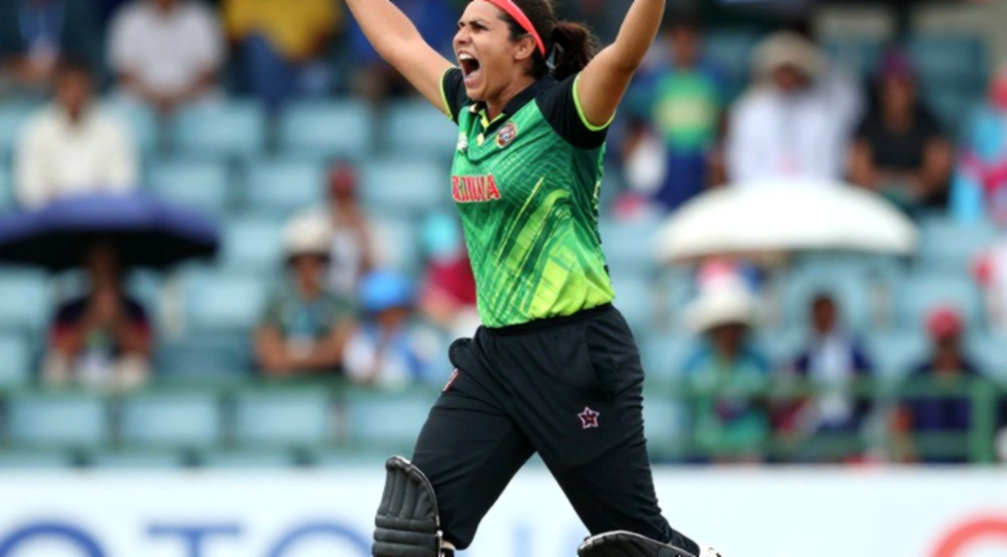
The match context is plain: Gaddafi Stadium, Lahore, the fourth match of a tri-series, against England. Pakistan chose to bowl, and Shaheen removed Banton early in the innings. Banton is a right-handed opener, and the left-arm angle with the new ball is the hardest question you can ask him — the ball appears to leave and then comes back. That is the wicket written into Shaheen's job description, not an accident.
And the numbers are these: 150 wickets in 80 ODIs. Saqlain Mushtaq reached the mark in 78 matches, and that Pakistani record still belongs to him. Waqar Younis and Shoaib Akhtar each took 91. Shaheen got there thirteen matches quicker than either of them — second-fastest Pakistani overall, fastest Pakistani fast bowler.
Core: the real story is 1.88 wickets a match, not the eighty
Fast bowling in Pakistan runs like a lineage — Wasim, Waqar, Shoaib, and now Shaheen. Each new link is measured against the last, and the measuring is often wrong. 150 wickets in 80 matches works out at roughly 1.88 wickets per game. Elite ODI bowlers generally sit between 1.4 and 1.6 across a career. On that scale Shaheen is plainly at the top end.
An honest pause is required here. Matches-to-a-milestone is a proxy metric, not a measure of quality. It bundles several things at once: strike rate, selection continuity, the era a bowler played in, and the role he was given. Two bowlers can reach 150 wickets in the same number of matches with career averages of 24 and 32.
The figures that settle quality are absent from this report. No ODI bowling average for Shaheen. No economy rate. No balls per wicket. No home-and-away splits, no left-hand/right-hand breakdown, no twelve-month trend. That is not a reporter's carelessness; it is the speed of wire copy. But the reader pays for it: we know how often Shaheen takes wickets, not how good a bowler he is.
What we can say with confidence is the phase. New ball, powerplay, left-arm angle, right-handed opener — that is Shaheen's highest-leverage window, and his 150th wicket fell precisely inside it. A bowler's milestones tend to reveal where his work sits. This one says Shaheen is performing a defined job in Pakistan's ODI side, and the job is producing wickets.
The age calculation is buried in this story and is possibly its most interesting part. A fast bowler's true peak generally arrives between twenty-six and thirty, once the body has settled and the craft has caught up. Shaheen is twenty-six and reached this landmark before that peak. That is a more significant signal than the raw number.
Lahore matters too, and should be kept separate. Gaddafi Stadium offers pace and carry, and it is a Pakistan home ground. For a new-ball quick that is the most helpful environment available. This wicket was not taken on hostile soil; it came in the house where Shaheen's bowling has its deepest roots.

One thing sits outside this report but inside the public record: since late 2026, Shaheen's knee has interrupted his career more than once. If that record is accurate, 150 wickets in 80 matches means something different — the achievement was built around a serious obstacle. That makes it larger, and it sharpens the durability question rather than answering it.
The format boundary must be drawn clearly. All of this data is ODI data. Extrapolating it to Test endurance or T20 death-over economy would be a mistake, because the three formats reward different skills. The man who takes the new ball in a fifty-over game is not automatically the man who carries the ball in the second innings of a five-day match.
Contrarian: what will be filed tomorrow as 'surpassing Waqar and Shoaib' is something smaller
Cricket's collective memory is fast and slow at once. By tomorrow this will be filed as: Shaheen surpassed Waqar and Shoaib. What actually happened is narrower. He passed them in one administrative sense — the speed of reaching a round number. Waqar Younis took 416 ODI wickets in 262 matches at an average of roughly 23.8 and a strike rate near 30.5. Shoaib Akhtar's 247 ODI wickets came at about 25. Those figures come from official career records, and they show that their legacies rest on a decade of sustained impact, not on pace of accumulation.
The Saqlain example sharpens the point. Saqlain reached 150 wickets in 78 matches — two ahead of Shaheen — but he was an off-spinner in the 1990s whose job was control through the middle overs, not incision with the new ball. Same landmark, different profession. That is why 'who got there first' is an entertaining question and not a useful one.
The real blind spot is that we measure Pakistani fast bowlers by lineage and not by workload. The question is not who reached 150 wickets fastest. It is who takes the ball in the 45th over of a World Cup knockout, and how tired he is on that day. Shaheen is still building that answer.
The second blind spot is structural. The report's own language says the milestone 'underlines Shaheen's importance to Pakistan's bowling attack.' That sentence reads as praise rather than risk. But if a team's ODI bowling rests on one man's shoulder, that is a concentration risk alongside a strength. Pakistan's fast-bowling tradition is so storied that its romantic narrative often suppresses the question of who stands behind Shaheen. This report contains no bench data, so this is a concern, not an accusation.
The third point is professional. This milestone was published as match news. The milestone and the day's spell are separate things. One early wicket tells us nothing about Shaheen's economy that afternoon, or which way the match turned. They should be weighed separately, or we will convert a career aggregate into a certificate for a single afternoon.
Takeaway: the next forty ODIs will matter more than the last eighty
Shaheen now has the thing Pakistani fast bowlers usually receive late — time. A hundred and fifty wickets at twenty-six means that if the body cooperates, he will keep climbing this list for another five or six years.
But the real test is not the statistic. It is the load. Pakistan's ODI calendar, the pull of franchise cricket, and the knee of a left-arm fast bowler — the arithmetic of those three over the next two years will decide whether this 150 is the opening of a larger story or the brightest number in a good career.
One question remains, and it is not about the scoreboard. When Shaheen takes his three hundredth ODI wicket, will anyone remember how he dismissed Banton in Lahore? Or only that he got to 150 thirteen matches quicker than Waqar and Shoaib? Milestones get recorded. Bowling gets remembered.