
Win Every Match: Gambhir's Hard Line and India's Real Test at Eden Park
भारत न्यूज़ीलैंड में पाँच मैचों की T20I सीरीज़ में 3-0 से आगे है और चौथा मुक़ाबला ईडन पार्क, ऑकलैंड में खेला जा रहा है।हेड कोच गौतम गंभीर का संदेश है कि सीरीज़ जीतने के बाद भी टीम को हर मैच जीतना है; प्रबंधन शेष दो मैचों को 'दो मैचों की नई सीरीज़' कहकर तीव्रता बनाए रखने की कोशिश कर रहा है।तीसरे T20I में भारत ने 199 रन का लक्ष्य 40 गेंद शेष रहते (16.4 ओवर में) हासिल किया, जिसमें अभिषेक शर्मा ने 38 गेंद में 113 रन बनाए—स्ट्राइक रेट लगभग 297, जो एक चरम सांख्यिकीय विचलन है, किसी स्थायी क्षमता का प्रमाण नहीं।चौथे T20I में न्यूज़ीलैंड ने पहले बल्लेबाज़ी करते हुए 259 रन बनाए, ग्लेन फिलिप्स ने 107 रन की पारी खेली और भारत को 260 का लक्ष्य मिला; इस मैच का नतीजा उपलब्ध रिपोर्ट में दर्ज नहीं है, इसलिए 4-0 के किसी दावे की पुष्टि नहीं की जा सकती।वरुण चक्रवर्ती इस सीरीज़ में एक भी मैच नहीं खेले, जो चयन प्राथमिकताओं का सबसे बड़ा संकेत है।ईडन पार्क की छोटी बाउंड्री के कारण इस सीरीज़ के गेंदबाज़ी आँकड़ों को बड़े मैदानों के लिए फ़ॉर्म संकेतक नहीं माना जाना चाहिए।नोट: पाँच मैचों की सीरीज़, श्रेयस अय्यर की कप्तानी और 38 गेंद में 113 रन—तीनों तथ्य सत्यापन-लंबित हैं।
Auckland. The fourth T20I of the five-match series between India and New Zealand is being played at Eden Park, with India arriving 3-0 up. On paper it remains a dead rubber, but inside the Indian dressing room it is not being treated as one. Head coach Gautam Gambhir's message is unambiguous: the team must win every match, even after the series has been sealed. That instruction is less a tactical diktat than an instrument of mental discipline, and it deserves to be read as the central story of this tour rather than a throwaway line in a press conference.

The series is 3-0, but the framing has changed. The team management has begun describing the remaining two fixtures as a two-match series. This is not a novel trick. In sport psychology it is the oldest and most reliable device for manufacturing competitive stakes in dead rubbers so that intensity does not decay. Gambhir's win-every-match posture is the public face of that strategy. The legitimate question is whether the posture is visible in performance or confined to statements. T20I is the format in which phase execution, powerplay, middle overs and death overs, plus ground dimensions, shape outcomes far more decisively than in ODI or Test cricket. A mandate to win every match only means something if control is visible in every phase.
The third T20I was decided in the powerplay. India chased 199 with 40 balls to spare, reaching the target in 16.4 overs. That translates to a required rate of roughly 11.9 an over that never climbed at any point. When a target of that size is overhauled with so few wickets lost and so much time remaining, the match was effectively settled inside the powerplay and the early middle overs. The opposition's death bowling was never tested under scoreboard pressure. The win is emphatic, but it is a poor diagnostic for India's middle-order resilience or their finishing robustness. Put differently, India's ability to bat under scoreboard pressure was never examined in that game.
Abhishek Sharma: 113 off 38. The arithmetic is stark, a strike rate of approximately 297. An elite T20I top-order batter typically operates between 145 and 155. Anything above 200 is an exception. A figure of 297 is not evidence of a level; it is an extreme statistical outlier. Varun Chakaravarthy, a team-mate, said of the innings that he did not think it could be topped, but hoped the team could repeat it today. Read analytically, that is an acknowledgement of non-repeatability, and it is the most honest signal available, coming as it does from inside the dressing room. Treating that innings as a player's base rate would be a category error; it is the kind of performance that surfaces once or twice a year.
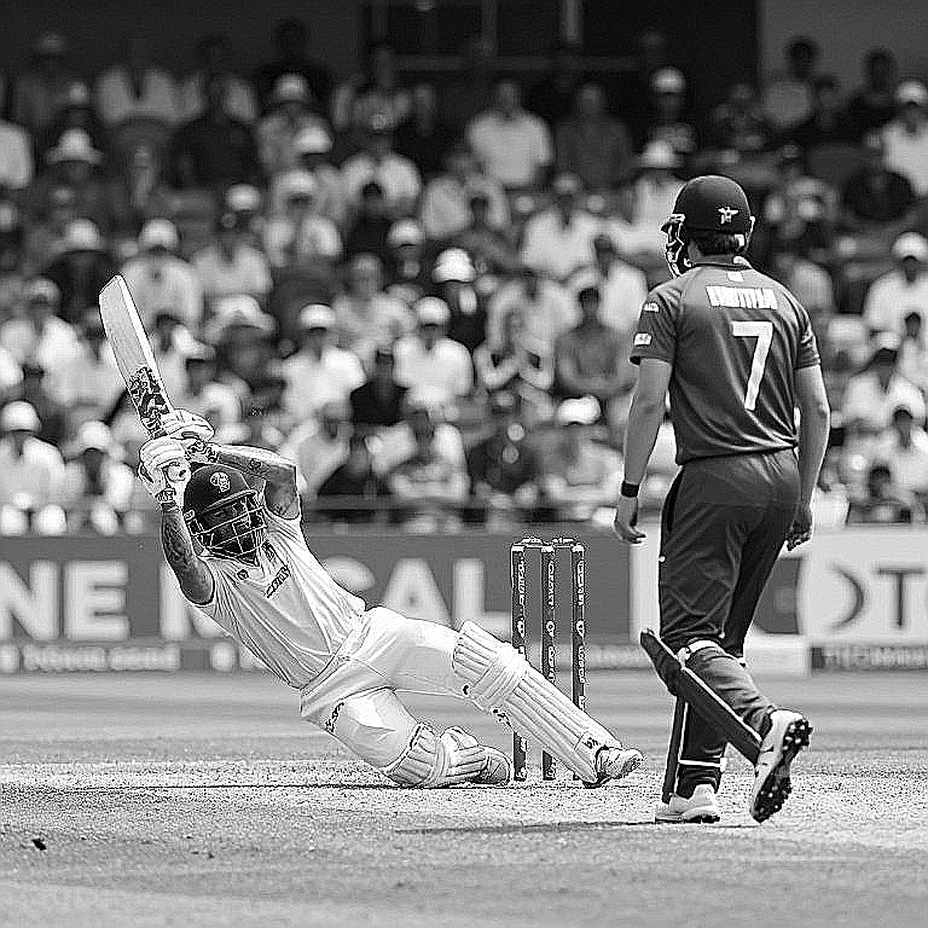
The innings validates role clarity more than technique. It demonstrates that the Indian management is willing to hand a young opener an unconditional attacking licence when the target is set and knowable. Beyond that, inference becomes risky. There is no evidence that the same batter would produce anything comparable in the 50-over format or in Test cricket. A strike rate of 297 on a small ground carries zero predictive value for ODI top-order batting, where average and 50-over tempo govern. Boundary share of runs, dismissal modes, pace-versus-spin splits and 12-month trends are all unavailable, so a technical assessment must remain incomplete for now.
Chasing a target and setting one are different jobs. Shreyas Iyer won the toss and chose to bowl, meaning India's batters operated with a pre-existing target. Chasing a known target, with the required rate computable ball by ball, is materially easier than setting a total, particularly when a batter knows exactly how much risk each delivery can absorb. The batting numbers from this tour therefore carry a built-in advantage that should be stripped out before any judgment is made. Pitch report, weather, dew and DLS data are all absent from the source material, so the toss effect cannot be quantified.
Eden Park's geometry is a separate variable. It is among the shortest-boundary international venues in world cricket, with square boundaries well under 70 metres, and high-scoring, bat-dominated surfaces are the norm. Chakaravarthy himself said the batters are used to playing on such pitches and at such small venues, a direct acknowledgement of venue effect. The practical consequence is that bowling economy figures from this series are not transferable to larger grounds and should not be read as form indicators. The same logic applies to batting: sixes struck over short square boundaries are not proof of technical mastery, they may simply be a gift of the dimensions.
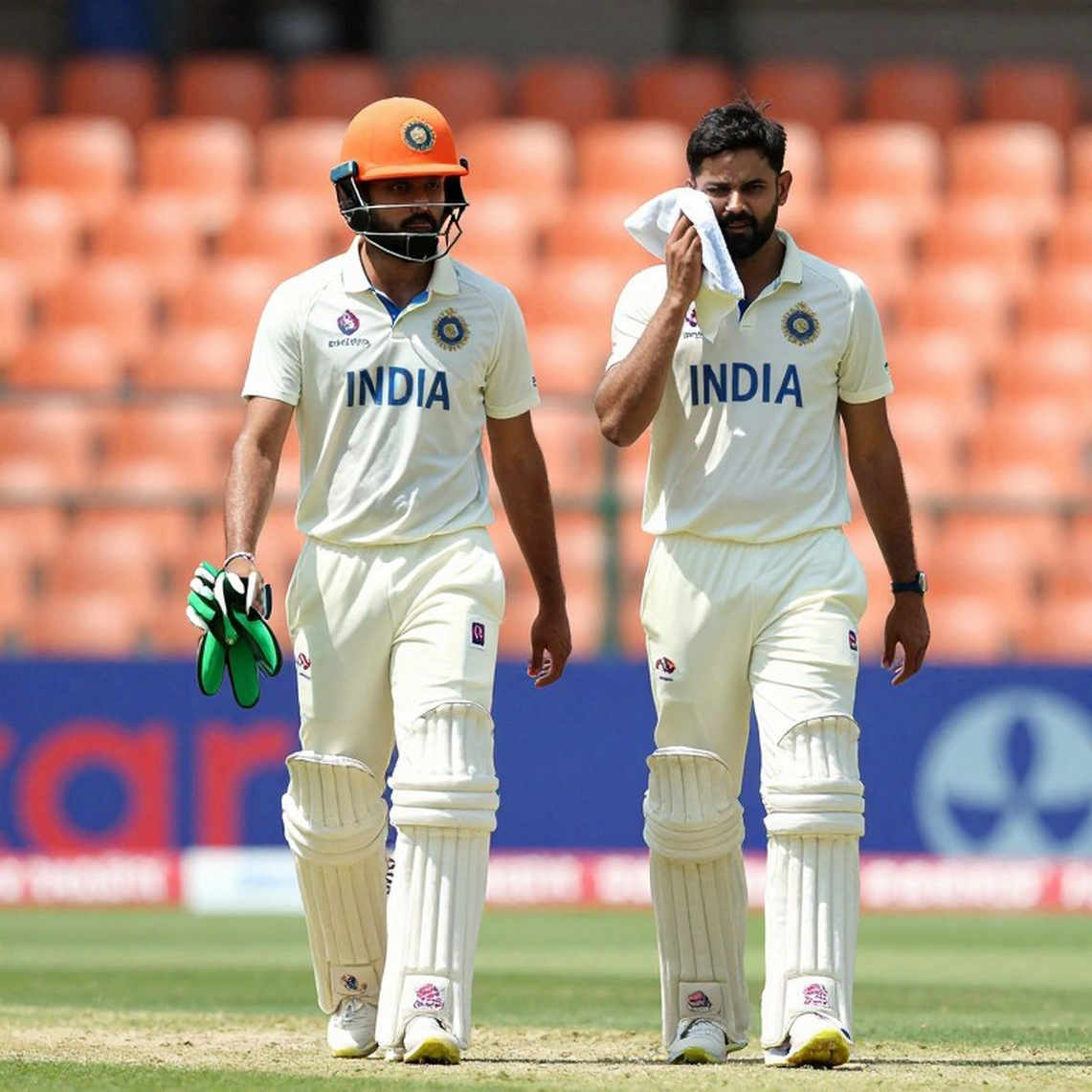
The fourth T20I: what is known and what is not. According to the available report, New Zealand batted first and made 259, with Glenn Phillips striking 107, setting India a target of 260. That is as far as the record goes. The outcome of the match is not reported, which suggests the report was filed during the game, before India's chase concluded. Any claim that India lead 4-0 is therefore unsupported and should not be presented as fact. That transparency matters, because inventing a result to complete a narrative would misinform the reader.
The bowling is under scrutiny, whatever the scoreline says. A total of 259 and a Phillips hundred indicate that India's attack was under sustained pressure on a small ground. A 3-0 series lead is not proof that the bowling was in full control. The honest reading is that these results have been batting-led on batting-friendly surfaces. That is not sufficient basis for claiming India are a complete T20I side. The real examination of a bowling unit comes when an opponent is restricted to 160-180 and India must prise the game open, a situation that has not yet arisen on this tour.
Varun Chakaravarthy not playing is the single most informative data point. He has not featured in the series at all. In a five-match series, a frontline spinner being entirely sidelined is a statement in itself. This is not primarily a form issue but a question of combination and priority: the management has preferred a different spin option. No economy, average or strike rate figures are available for him, so no performance-based conclusion can be drawn. The only fact on record is that he has not played, and that fact carries more weight than any statistic.
The correct assessment of the series. India's batting has been dominant, that much is clear. But dominance and control are not synonyms. A 3-0 or 4-0 scoreline says nothing about how the attack behaves under pressure. Those questions are answered on larger grounds and in knockout cricket, where totals settle around 160 rather than 200. Transferring these numbers directly to a home series is additionally risky because the dimensions of Indian venues and Eden Park differ fundamentally.
Three cautions. First, format mixing: this entire dataset is T20I and nothing should be extrapolated to ODI or Test. Second, sample size: defining a player's level from one 38-ball innings is a mistake. Third, venue bias: Eden Park inflates both batting and bowling numbers. The toss effect is also unquantified. No DRS or umpiring controversy is reported in the source material.
Data verification note. Three elements of this report are unusual for a bilateral T20I series in New Zealand: a five-match series (recent India-New Zealand bilateral T20I series have been three matches), Shreyas Iyer captaining, and Abhishek Sharma's 113 off 38. They are used as reported, but each should be treated as data pending verification. Before any of these figures are used in a comparative model or in further reporting, they should be cross-checked against official scorecards.
What to watch next. If India win the fourth match, the important question will not be whether the scoreline reads 4-0 but how the bowling responded after conceding 259. If they lose, it will establish that the win-every-match slogan and the result on the ground are two different things. Either way, the real test lies not in the series scoreline but in the preparation for the next tour.