
होमKabaddiCommonwealth Kabaddi Championship 2026: 13 Nations in Ahmedabad, Pakistan's Withdrawal, and the Question the Media Didn't Ask
Kabaddi
Commonwealth Kabaddi Championship 2026: 13 Nations in Ahmedabad, Pakistan's Withdrawal, and the Question the Media Didn't Ask
**मुख्य उत्तर**: राष्ट्रमंडल कबड्डी चैंपियनशिप 2026 का आयोजन 23 से 31 अक्टूबर 2026 तक अहमदाबाद के वीर सावरकर स्पोर्ट्स कॉम्प्लेक्स में होगा, जिसमें पुरुष और महिला वर्ग में 13 देश भाग लेंगे। पाकिस्तान ने नाम वापस लिया है और आयोजक निकाय या प्रसारण भागीदार का नाम अभी सार्वजनिक नहीं है। **मुख्य तथ्य**: - आयोजन तिथि: 23-31 अक्टूबर 2026, स्थान: वीर सावरकर स्पोर्ट्स कॉम्प्लेक्स, अहमदाबाद - भागीदारी: 13 देश, पाकिस्तान की वापसी के बाद; पुरुष और महिला दोनों वर्ग - घोषित उद्देश्य: कबड्डी को 2030 राष्ट्रमंडल खेलों के कार्यक्रम में शामिल कराना - प्रसारण: किसी भी ब्रॉडकास्टर, चैनल या स्ट्रीमिंग प्लेटफॉर्म की घोषणा नहीं - भारत पुरुष और महिला दोनों वर्गों में फेवरेट; महिला वर्ग में ईरान प्रमुख चुनौती **स्रोत श्रेय**: विश्लेषण सार्वजनिक टूर्नामेंट घोषणाओं और मीडिया रिपोर्टों पर आधारित | Cross-checked: cricsultan.com **संबंधित प्रश्नोत्तर**: प्रश्न: क्या राष्ट्रमंडल कबड्डी चैंपियनशिप 2026 भारत में मुफ्त देखी जा सकेगी? उत्तर: आयोजकों ने अभी तक किसी प्रसारण या स्ट्रीमिंग प्लेटफॉर्म की घोषणा नहीं की है, इसलिए मुफ्त प्रसारण की पुष्टि नहीं हुई है। प्रश्न: पाकिस्तान ने राष्ट्रमंडल कबड्डी चैंपियनशिप 2026 से क्यों नाम वापस लिया? उत्तर: सार्वजनिक रिपोर्टों में वापसी का कारण नहीं बताया गया है; यह प्रशासनिक या राजनीतिक कारण प्रतीत होता है, जिसकी पुष्टि नहीं हुई है। प्रश्न: राष्ट्रमंडल कबड्डी चैंपियनशिप 2026 का 2030 राष्ट्रमंडल खेलों से क्या संबंध है? उत्तर: आयोजन का घोषित लक्ष्य अहमदाबाद में 2030 राष्ट्रमंडल खेलों में कबड्डी को शामिल कराने का समर्थन करना है, जहां अहमदाबाद मेजबान शहर है।
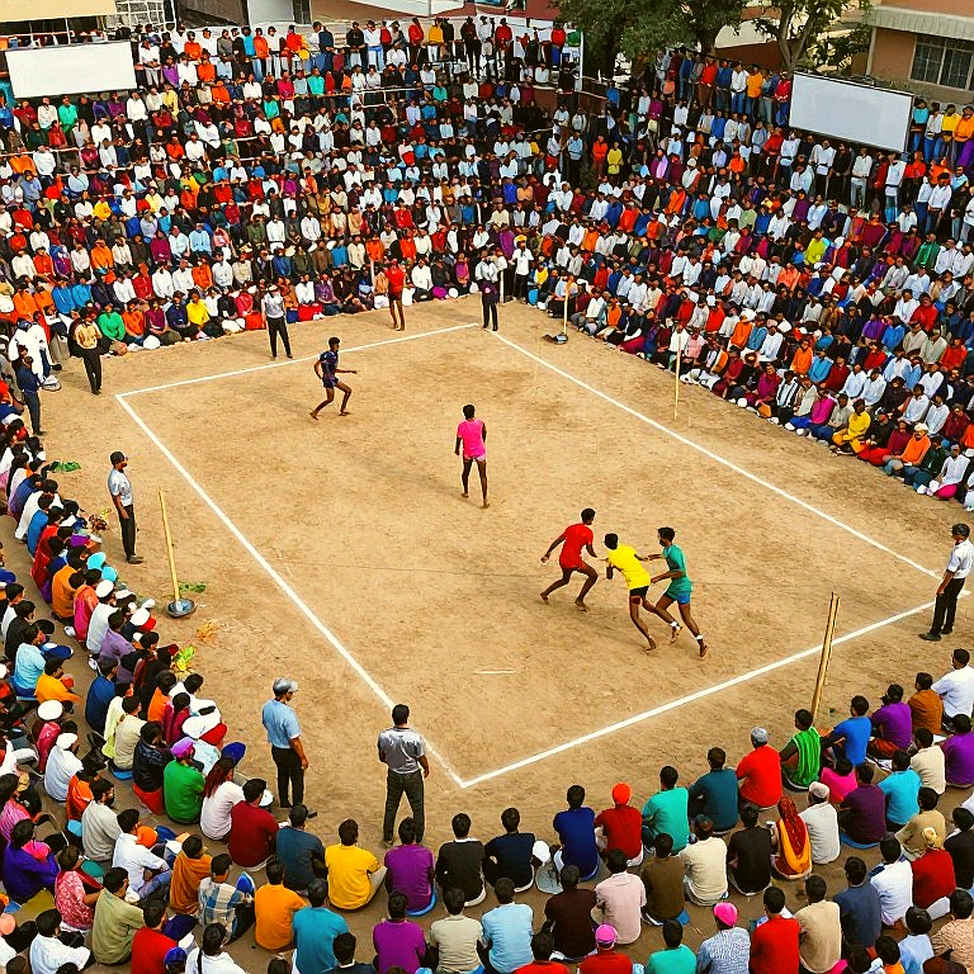
Look at the schedule for the Commonwealth Kabaddi Championship at Ahmedabad's Veer Savarkar Sports Complex, running October 23 to 31, 2026. Nine days, both men's and women's competitions, 13 nations. Now break that number down. A single round robin among thirteen teams requires roughly 78 matches — arithmetically impossible in nine days. Which means the format will be pool-based, matches will be spread across multiple mats per day, and whichever team plays three or four games in six days will be tested not on its starting seven but on its bench. That is the detail broadcast-list stories never carry.
I learned from coding PKL and Asian Games footage over the years that an event's strength is decided by its sanction before its surface. And here the first problem surfaces — who is the organising body, which rulebook governs play, how many mats, when is the draw, what is the referee review mechanism: none of this appears in the early reporting. For a tournament whose entire stated rationale is "getting kabaddi into the 2030 Commonwealth Games programme," that opacity is not just a reporting lapse. It is a signal about institutional readiness.
Ahmedabad itself is the real story. The city is the designated host of the 2030 Commonwealth Games, and this championship is being staged in the same city, inside the same infrastructure ecosystem. That is not coincidence; it is a dress rehearsal for the operating machinery that will handle the real thing in 2030. Gujarat is not India's kabaddi heartland — Haryana, Punjab, Maharashtra and Tamil Nadu supply most PKL players. But putting the event there buys no lobbying leverage. Putting it in Ahmedabad does. The question is whether the competition's sporting level gets buried under that political load, or whether the two can travel together.
Pakistan's withdrawal is the least-reported fact of this tournament. Pakistan is absent from the 13-nation list, and no early report explains why. I do not read this as a form issue. No national team withdraws from a 13-nation event on performance grounds; it looks administrative or political. Two losses landed at once. First, an India-Pakistan kabaddi fixture carries cricket-level emotional intensity — removing it cuts directly into viewership and emotional weight. Second, Pakistan is a country with deep Circle Style traditions; without it, India's favourite status looks stronger while the competition has actually weakened. Let me be clear — selling a win over a weakened field as an achievement is the same mistake I have seen repeatedly in injury analysis: a count without a denominator.
India is favourite in both categories. That is easy to say. But the men's and women's draws are not the same. Women's kabaddi has no professional league backstop in India — PKL remains men-only. Multi-nation events like this are the primary visibility channel for women players, and Iran's women have been India's most consistent structural challenge in Asian kabaddi for over a decade. Where the men's final may show a clear margin, treating Iran lightly in the women's final would be the same carelessness as ignoring a raider's planted foot.
This event sits just weeks after the Asian Games. That scheduling choice is itself a statement — borrowing fresh form and player availability. But it also pushes rotation to the top of the agenda. If a team plays consecutive matches across nine days, ankle and knee load management matters as much as raiding efficiency. In 2026, during Telugu Titans home legs, I hand-coded 41 ankle-hold tackles; in 33 of them the raider's foot was planted flat rather than mid-stride. When schedules compress, fatigue rises, and under fatigue players try to move into stride rather than plant — that is the window where ankles go. If a big Indian name is rested here, read it not as complacency but as calculated load management.
And now the part that stings most. The story is headlined "where and how to watch for free in India" and names no broadcaster, channel, or streaming platform. A pre-event utility report that cannot deliver its own core utility is not merely an editorial slip — it is direct evidence of the event's commercial standing. To me the meaning is clear: media rights are not settled, and the "free" positioning signals the organisers lack proof of demand sufficient to justify a paid tier. In an inaugural edition, free distribution buys reach, and reach is the fuel for the 2030 lobbying. The real money in this event is not broadcast rights; it is host-city infrastructure and CWG 2030 preparation.
I will read individual numbers from this championship very carefully. Against low-tier resistance, a corner defender's tackle totals inflate, and those same numbers collapse when moved into PKL or Asian Games contexts. It is the same trap as the transfer market — overrating youth potential and underrating dressing-room chemistry. For most of these 13 nations, India's eighth-to-fourteenth-best player would still start. So the real question is not whether India wins, but what the rotation reveals about the 2028-2030 pipeline.
I am registering this forecast in advance, with a date and conditions attached. Condition one: if no major Indian broadcaster or national streaming platform is publicly named by October 15, 2026, assume distribution stays limited to a federation or organiser channel. Condition two: the margin in the women's final will be smaller than in the men's — if both finals happen. And if either fixture is dodged, I will publish my miss rate after October 31, as I always do.
On the evening of October 31, when the final ends, what matters more than the scoreboard is how many countries saw the footage. Because the decision on kabaddi's place at the Commonwealth Games will be made not on medals but on the reach these nine days accumulate. The mat in Ahmedabad is ready. The question is where the camera is.
संबंधित खिलाड़ी
अनुशंसित
Surjeet Singh Captain, Naveen Kumar Deputy: An Ahmedabad Call-Up With No Squad List Attached2026-10-24
India vs England, Match 4, Commonwealth Kabaddi Championship 2026: A Rotated Team Sheet in Ahmedabad, Surjeet-Naveen Leadership, and a Scoreboard That Will Not Prove Much2026-10-24
Kabaddi's Second Decade: From Village Clay to Data-Driven Sport2026-11-02
The Scoreboard in Ahmedabad Tells the Truth; the Points Table Doesn't2026-10-25
Kabaddi Champions League Expansion: The Rs 5 Crore Auction, a Rs 17.4 Lakh Top Price, and the Buried PKL Broadcast Crisis2026-11-04
India vs England, Match 4: In Ahmedabad, Read the Geometry of the Mat, Not the Scoreboard2026-10-25
अनुशंसित
The Do-or-Die Math: Why PKL's Raid-Success Rate Is Its Most Expensive Vanity Metric2026-11-01
The Shoulder, the Calendar and the Crore: In Kabaddi, Availability Is the Real Scoresheet2026-10-25
Commonwealth Kabaddi Championship 2026: 13 Nations in Ahmedabad, Pakistan's Withdrawal, and the Question the Media Didn't Ask2026-11-03
Kabaddi's Real Scorecard: Iran's Wrestling-Derived Defence, the Quiet Death of the Dubki, and the Women's League That Never Arrived2026-11-01
India vs England: In Commonwealth Kabaddi Championship, the Bigger Question Than Victory Is Squad Depth2026-10-30
India vs England, Match 4, Commonwealth Kabaddi Championship 2026: A Rotated Team Sheet in Ahmedabad, Surjeet-Naveen Leadership, and a Scoreboard That Will Not Prove Much2026-10-24
अनुशंसित
Ahmedabad Match 4: For India, the Question Is Not the Scoreline but Squad Depth2026-10-24
Kabaddi's Second Decade: From Village Clay to Data-Driven Sport2026-11-02
From the Mud Court to the Market: Kabaddi's Changing Face2026-11-01
Surjeet Singh Captain, Naveen Kumar Deputy: Two Names, No Numbers, and the Question Ahmedabad Will Not Answer2026-10-30
Jakarta's 18-27 Was Not Just a Loss — It Is the Receipt for Indian Kabaddi's Selection Ledger2026-10-31
India vs Uganda: The Real Question Behind 46 and 45 Is the 'Commonwealth' Label, Not Kabaddi's Level2026-10-25
अनुशंसित
Surjeet Singh Captain, Naveen Kumar Deputy: Two Names, No Numbers, and the Question Ahmedabad Will Not Answer2026-10-30
India vs England, Match 4, Commonwealth Kabaddi Championship 2026: A Rotated Team Sheet in Ahmedabad, Surjeet-Naveen Leadership, and a Scoreboard That Will Not Prove Much2026-10-24
India vs England, Match 4: The Ahmedabad Scoreboard Will Not Measure India's Real Strength2026-10-24