
Kabaddi
Kabaddi: From India's Soil to the World's Arenas
प्रश्न: कबड्डी क्या है? उत्तर: कबड्डी भारत में जन्मा एक संपर्क खेल है जिसमें सात-सात खिलाड़ियों की दो टीमें होती हैं; एक रेडर विपक्षी पाले में जाकर तीस सेकंड के भीतर अंक लेकर लौटता है। प्रश्न: कबड्डी का इतिहास कितना पुराना है? उत्तर: इसकी जड़ें प्राचीन भारत में मानी जाती हैं; महाभारत के चक्रव्यूह से इसकी तुलना की जाती है, और भारत के विभिन्न हिस्सों में इसे हू-तू-तू, हा-डू-डू, संजीवनी, चेडुगुडु जैसे नामों से जाना जाता है। प्रश्न: प्रो कबड्डी लीग कब शुरू हुई? उत्तर: 2014 में। इसने खेल को पेशेवर, टेलीविजन और प्रायोजन आधारित पहचान दी। प्रश्न: कबड्डी में कितने खिलाड़ी होते हैं? उत्तर: मैदान पर प्रत्येक टीम के सात खिलाड़ी होते हैं; रेड को तीस सेकंड में पूरा करना होता है। प्रश्न: कबड्डी में भारत का मुख्य प्रतिद्वंद्वी कौन है? उत्तर: अंतरराष्ट्रीय स्तर पर ईरान भारत का प्रमुख प्रतिद्वंद्वी माना जाता है, जो मजबूत डिफेंस के लिए जाना जाता है।
Kabaddi is a sport rooted in India's soil. It is one of those games that require no expensive equipment, no massive stadium and no special facility. An open ground, a few lines and two teams of seven players each — that is all it takes. This simplicity has always been the sport's greatest strength. Born in India's villages, kabaddi has now reached professional tournaments like the Pro Kabaddi League, Asian Games medals and World Cup events.
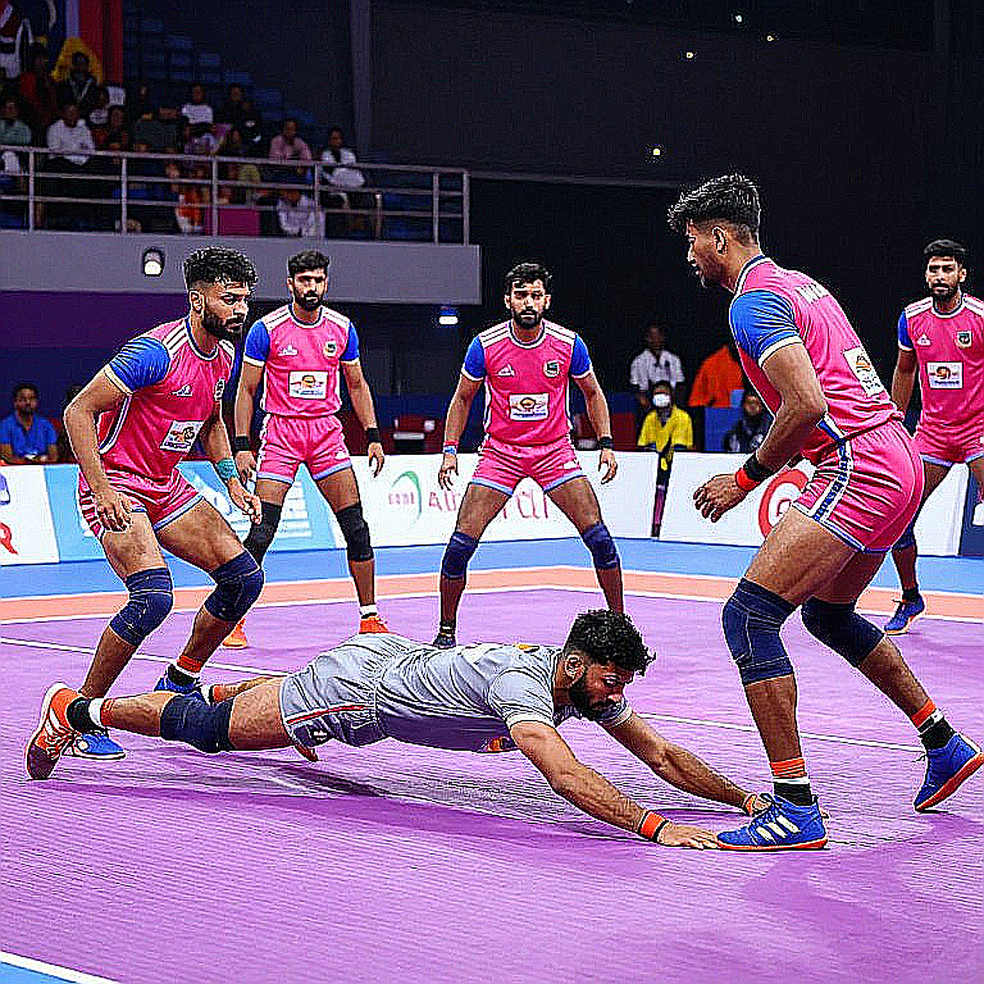
Kabaddi's most distinctive feature is that attack and defence happen in the same breath. A raider enters the opponent's half, chants kabaddi-kabaddi continuously and must return within thirty seconds. If he touches a defender and returns safely, he earns points; if the defenders catch him, the points go to them. The sport is a rare blend of physical agility, breath endurance, strategic thinking and team spirit.
Kabaddi's history runs back centuries. It is believed to have originated in India, with references in ancient texts and folklore. Its spirit is often compared to the Chakravyuha episode of the Mahabharata, where a warrior must enter an enemy formation and return. Whether or not that comparison is historically proven, it shows that kabaddi's core idea — entering the circle and escaping safely — sits deep in India's collective memory.
Different parts of India call the sport by different names. In Maharashtra it is Hu-Tu-Tu, in Bengal Ha-Du-Du, in Karnataka Sanjeevani, in Andhra Pradesh Chedugudu and in northern India Kabaddi. The names differ and the rules vary slightly, but the soul of the game is the same. This regional diversity proves that kabaddi is not the property of one state or one community but a shared game of the entire subcontinent.
Organised modern kabaddi began to take shape in the twentieth century. After the sport gained institutional recognition in India, national-level competitions started. The inclusion of kabaddi in the Asian Games was a major turning point. After that, kabaddi was no longer confined to India; several Asian countries began to take it seriously.
The structure on the mat is clear. For men, the court is thirteen metres long and ten metres wide; for women, it is twelve by eight. Seven players from each team are on the court. A raider must complete his raid within thirty seconds. If he stops chanting kabaddi-kabaddi continuously, he is sent back. This rule turns the sport into a test of stamina and breath.
The scoring arithmetic is equally interesting. A raider earns a point for touching a defender and returning safely. If he touches more than one defender in a single raid, the points add up. There is also a bonus point, awarded when a raider goes deep enough to touch a defender. On the other side, defenders earn points by tackling the raider. When all players of one team are out, it is called an all out, and the opposing team gets additional points.
Understanding kabaddi requires more than knowing the rules. Its real thrill lies in technique. The world of raiding is rich. Toe touch, hand touch, dubki, frog jump, kick, scorpion kick and running hand touch are all techniques a raider uses to deceive defenders and score. Dubki is especially useful when a defender is preparing a high tackle and the raider suddenly ducks under.\nThe art of defence is no less. Ankle hold, thigh hold, waist hold, block, dash and chain tackle are all part of a defender's arsenal. A good defender reads the raider's speed and direction first and then builds the grip accordingly. Teamwork plays a huge role in defence, because a single defender often fails to stop a fast raider.
The biggest revolution in modern kabaddi came in the form of the Pro Kabaddi League. Launched in 2026, the league completely changed the professional face of the sport. Earlier kabaddi was seen as a village game; after the league it became linked to television and sponsorship. Franchise teams emerged across the country, players began to be picked through auctions, and the sport gained a new shine.
The league also transformed players' finances. Those who once relied on government jobs or small tournaments now began to receive large contracts and popularity. The league increased audience interest. Stadium crowds grew, TV ratings improved and kabaddi returned to the centre of conversation.
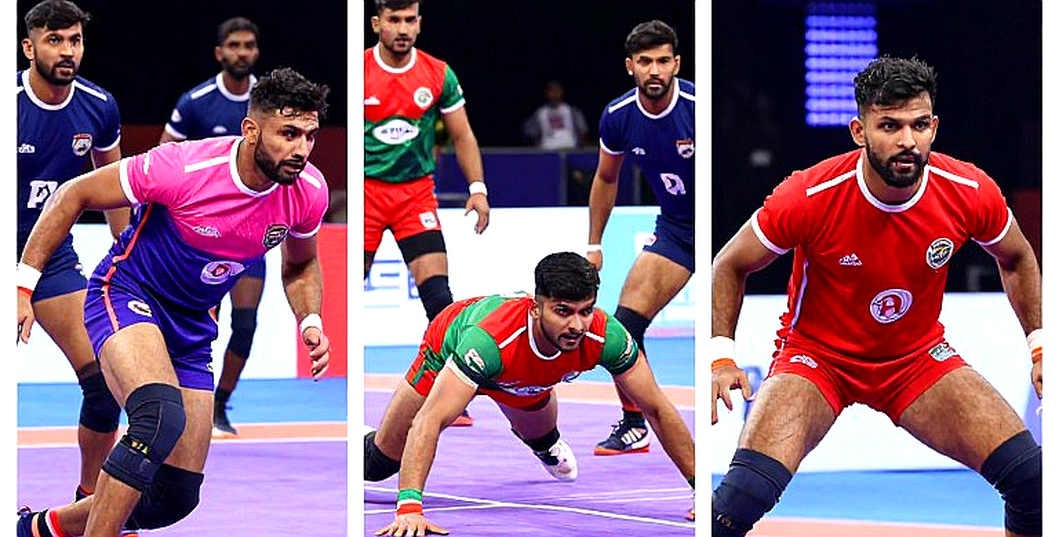
The league brought forward many players who built their own identities. Names like Anup Kumar, Rohit Kumar, Pardeep Narwal, Rahul Chaudhari, Ajay Thakur, Maninder Singh, Naveen Kumar and Deepak Niwas Hooda became household names among kabaddi fans. Among foreign players, Iran's Fazel Atrachali and others gave the league an international colour.
At the international level, the Asian Games remain kabaddi's biggest stage. India dominated the sport for a long time. In recent years, however, Iran has taken kabaddi very seriously and begun to challenge India strongly. The Iranian team is known for its strong defence and disciplined strategy. Bangladesh, South Korea, Thailand, Kenya and Poland are also seeing growing kabaddi popularity.
Kabaddi World Cups have been held from time to time. These tournaments played an important role in taking the sport beyond India and Asia. However, several challenges remain internationally. Many countries still have limited dedicated facilities, coaches and training systems. If infrastructure in these countries is strengthened, kabaddi's global expansion can accelerate.
Women's kabaddi has made remarkable progress over the past two decades. The inclusion of women's kabaddi in the Asian Games increased the sport's popularity. The Indian women's team has performed well in several international competitions. But women players still face less sponsorship, less media coverage and fewer facilities than men. Bridging these gaps is essential for the sport's overall growth.
Kabaddi's physical demands are very high. A raider needs explosive speed, flexibility and quick decision-making. A defender needs a strong grip, balance and reaction time. A team must sustain breath through the entire match, because even in the final minutes the points gap can turn. That is why kabaddi training lays equal stress on fitness, strength, speed and mental toughness.
Kabaddi's roots in India reach villages and schools. In many parts of the country children can still be seen playing kabaddi on open grounds. The sport gives a chance even to a child from the poorest family, because it needs only talent and hard work, not expensive equipment. This is why kabaddi is also seen in India as a vehicle of social mobility.
Kabaddi's journey has not been easy. Compared with sports like cricket, the sponsorship, media coverage and government support it receives have been limited. Many talented players have been forced to quit for financial reasons. The Pro Kabaddi League has improved the situation, but players outside the league still struggle.
Kabaddi's future is bright, provided its development gets the right direction. Promoting kabaddi at school and college level, providing grounds and training facilities in rural areas, giving women players equal opportunities and popularising the sport internationally — together these can lift the game to new heights.
Kabaddi is not just a sport. It is part of India's cultural heritage, a memory of its villages and the dream of millions of children who want to step onto the mat and make a name for themselves. In a sport where a lone raider goes among seven opposing players and returns with points, there is a great life lesson — courage, restraint and the skill to return at the right moment. That is what makes kabaddi not just a game but a philosophy of life.

संबंधित खिलाड़ी
अनुशंसित
Kabaddi Champions League Expansion: The Rs 5 Crore Auction, a Rs 17.4 Lakh Top Price, and the Buried PKL Broadcast Crisis2026-11-04
Ahmedabad Match 4: For India, the Question Is Not the Scoreline but Squad Depth2026-10-24
India vs Uganda: The Real Question Behind 46 and 45 Is the 'Commonwealth' Label, Not Kabaddi's Level2026-10-25
The Do-or-Die Math: Why PKL's Raid-Success Rate Is Its Most Expensive Vanity Metric2026-11-01
India vs England, Match 4, Commonwealth Kabaddi Championship 2026: A Rotated Team Sheet in Ahmedabad, Surjeet-Naveen Leadership, and a Scoreboard That Will Not Prove Much2026-10-24
Surjeet Singh Captain, Naveen Kumar Deputy: An Ahmedabad Call-Up With No Squad List Attached2026-10-24
अनुशंसित
India vs England: In Commonwealth Kabaddi Championship, the Bigger Question Than Victory Is Squad Depth2026-10-30
India vs England, Match 4: The Ahmedabad Scoreboard Will Not Measure India's Real Strength2026-10-24
Kabaddi's Second Decade: From Village Clay to Data-Driven Sport2026-11-02
Kabaddi Champions League Expansion: The Rs 5 Crore Auction, a Rs 17.4 Lakh Top Price, and the Buried PKL Broadcast Crisis2026-11-04
Surjeet Singh Captain, Naveen Kumar Deputy: An Ahmedabad Call-Up With No Squad List Attached2026-10-24
Surjeet Singh Captain, Naveen Kumar Deputy: Two Names, No Numbers, and the Question Ahmedabad Will Not Answer2026-10-30
अनुशंसित
Data Wins in Kabaddi: When a 17-Year-Old Beat the Auction Room2026-11-03
India vs England, Match 4, Commonwealth Kabaddi Championship 2026: A Rotated Team Sheet in Ahmedabad, Surjeet-Naveen Leadership, and a Scoreboard That Will Not Prove Much2026-10-24
Surjeet Singh Captain, Naveen Kumar Deputy: Two Names, No Numbers, and the Question Ahmedabad Will Not Answer2026-10-30
Kabaddi: From India's Soil to the World's Arenas2026-11-02
अनुशंसित
Kabaddi: From India's Soil to the World's Arenas2026-11-02
The Do-or-Die Math: Why PKL's Raid-Success Rate Is Its Most Expensive Vanity Metric2026-11-01
Jakarta's 18-27 Was Not Just a Loss — It Is the Receipt for Indian Kabaddi's Selection Ledger2026-10-31
Ahmedabad Match 4: For India, the Question Is Not the Scoreline but Squad Depth2026-10-24
Commonwealth Kabaddi Championship 2026: 13 Nations in Ahmedabad, Pakistan's Withdrawal, and the Question the Media Didn't Ask2026-11-03
Kabaddi Champions League Expansion: The Rs 5 Crore Auction, a Rs 17.4 Lakh Top Price, and the Buried PKL Broadcast Crisis2026-11-04