
होमKabaddiPakistan Withdraws from Commonwealth Kabaddi Championship 2026: Ahmedabad Field Shrinks to 13, India-Pakistan Fixture Lost, Iran Also Absent
Kabaddi
Pakistan Withdraws from Commonwealth Kabaddi Championship 2026: Ahmedabad Field Shrinks to 13, India-Pakistan Fixture Lost, Iran Also Absent
पाकिस्तान ने 23-31 अक्टूबर 2026 में अहमदाबाद के वीर सावरकर स्पोर्ट्स कॉम्प्लेक्स में होने वाली कॉमनवेल्थ कबड्डी चैंपियनशिप से नाम वापस लिया, जिससे पुरुष मैदान 14 से 13 देशों का रह गया। ईरान और चीनी ताइपे पहले ही बाहर थे। भारत एशियाई खेल 2026 में पुरुष और महिला दोनों स्वर्ण जीतकर आ रहा है, लेकिन ईरान की अनुपस्थिति से प्रतियोगिता की प्रतिस्पर्धी गहराई सीमित है। पाकिस्तान के हटने का आधिकारिक कारण स्पष्ट नहीं है; इसे खेलप्रदर्शन, प्रशासनिक कारणों और संभावित राजनीतिक संदर्भ के मिश्रण के रूप में देखा जाना चाहिए। कबड्डी के स्टैंडर्ड और सर्कल स्टाइल का अंतर पाकिस्तान के संरचनागत संकट को समझने की कुंजी है। भारत-पाकिस्तान मुकाबले का न होना आयोजन के व्यावसायिक और प्रसारण मूल्य के लिए सबसे बड़ा झटका है।
Ahmedabad: Pakistan's late withdrawal from the Commonwealth Kabaddi Championship 2026, scheduled at the Veer Savarkar Sports Complex from 23 to 31 October, has changed the shape of the inaugural event. According to available information, the men's field was originally described as 14 nations; Pakistan's pullout leaves 13. Iran and Chinese Taipei were already absent. That means a tournament billed as the second major kabaddi event of the year will be played without the strongest challenger to India, a traditional rival in Pakistan, and a rising Asian side in Chinese Taipei. India arrives after winning men's and women's gold at the Asian Games 2026, according to the report, but the central question is whether a title without Iran carries the same competitive value.
The report's biggest limitation is attribution: no named source is attached to the key facts, and Pakistan has not publicly explained why it withdrew. The decision could be competitive, administrative, political, or a mix of all three. Kabaddi has a thin international calendar, so every forfeited appearance costs a national programme a large share of its development value. But without an official statement, no single cause should be treated as final. The strategic conclusions in this report are therefore inferences, not confirmed reportage.
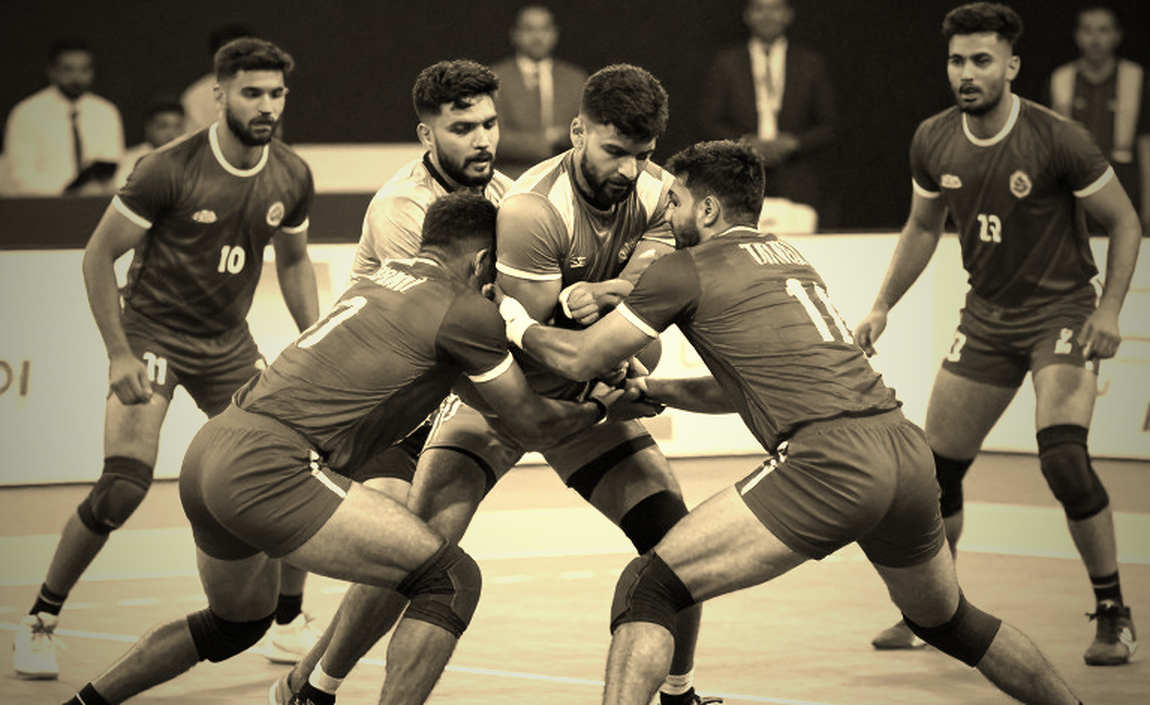
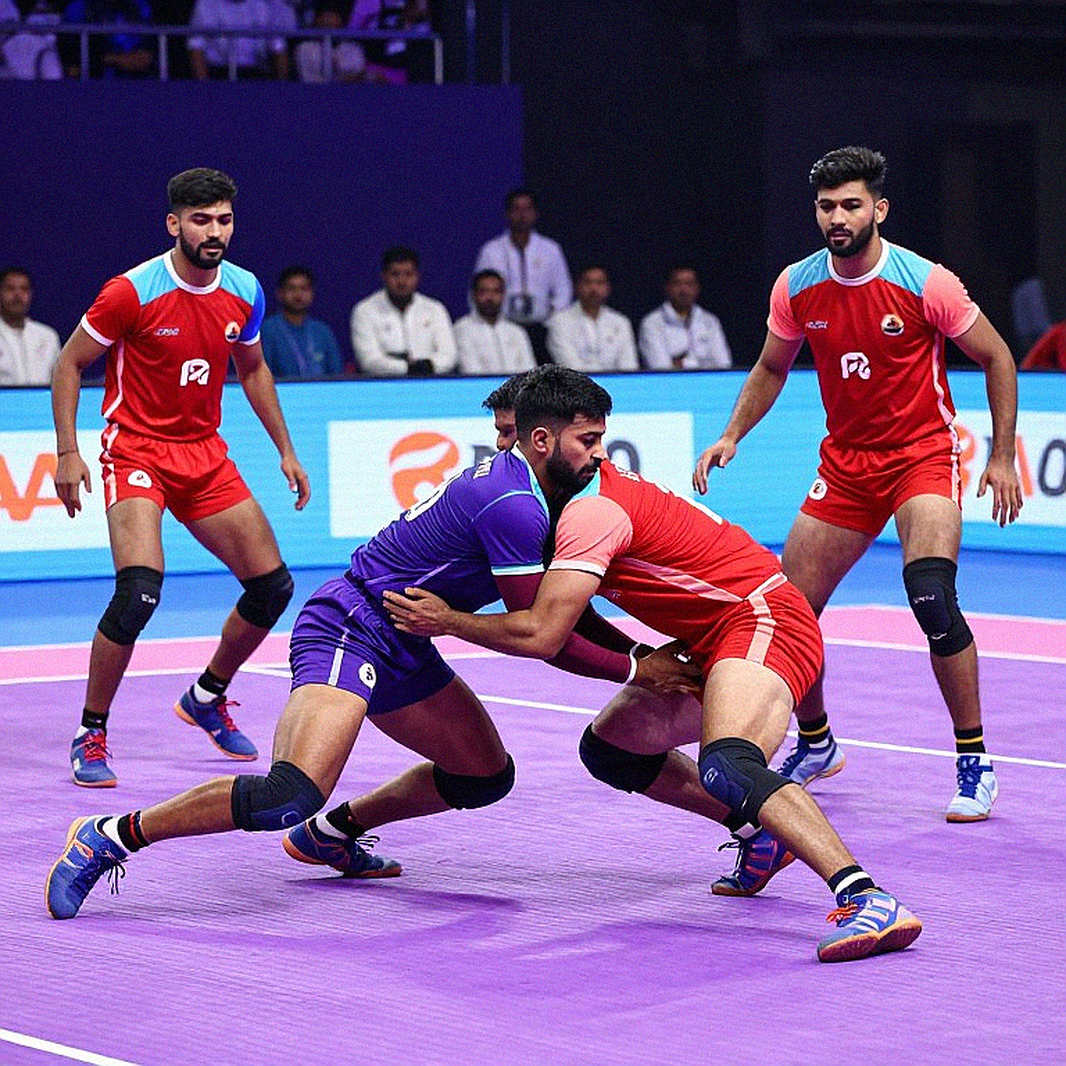
Kabaddi is a 7-a-side contact sport in which a raider crosses into the opponent's half, touches at least one defender and returns within 30 seconds while continuously chanting 'Kabaddi'. If the chant breaks, the raider is out. Defenders score through tackles; the bonus line offers an extra point when the defence has six or more players on court; a Super Tackle with three or fewer defenders earns two points; an All Out gives two points and revives the entire eliminated side. The Do-or-Die raid after two empty raids forces the third raid to score. These rules make the standard format highly structured.
The key analytical distinction is between Standard Style and Circle Style. Standard Style uses a rectangular court, seven players and the international rules seen at the Asian Games and Pro Kabaddi League. Circle Style is played on a circular field, often with eight players and simplified scoring, and dominates rural Punjab on both sides of the India-Pakistan border. Tactically, they are nearly different sports. Teams raised on Circle Style can produce excellent one-on-one evaders but may lack the disciplined corner-cover defence and bonus-line pressure required in Standard Style. That is why Pakistan's reported failure to win a medal at the Asian Games 2026 should be read as a possible systemic format-conversion problem, not merely a bad tournament. The claim that this was Pakistan's first-ever Asian Games kabaddi medal blank needs independent verification, but even with that caveat, the direction of travel is clear.
For Pakistan, withdrawal may be competitively rational but is not a long-term solution. A side that has just lost its medal streak, lacks a professional league pathway and depends heavily on Circle Style traditions faces a field it may not be able to beat. Avoiding competition can protect against short-term embarrassment, but it also denies the team the exposure needed to improve. The route back runs through domestic structural reform, Standard Style coaching and sustained investment, not through absence.
For India, the event is likely to produce a structural outcome rather than a severe test. India's advantage is not one star raider but replaceability at every position: a PKL-trained pipeline, data-led coaching and bench depth. The Commonwealth frame, however, excludes Iran by design because Iran is not a Commonwealth nation. Kabaddi's global hierarchy is India first, Iran second and the rest behind. A Commonwealth championship therefore cannot contain the one team capable of genuinely testing India. India's gold would be natural, but it would not answer questions about readiness against Iran.
The 14-to-13 shift should not be overread. A 13-nation field can be numerically large and competitively thin. With Iran, Chinese Taipei and Pakistan absent, the effective contest is India against a group of nations for whom a semi-final is a realistic ceiling. The most damaging absenteeism commercially is Pakistan's, because it removes the one fixture with the strongest emotional and broadcast pull: India versus Pakistan. Iran's absence weakens the sporting standard; Pakistan's absence weakens the event's marketability.
The event's prestige also needs caution. It is an inaugural edition, its sanctioning authority is not established in the available information, and its field is depleted. In South Asian media, new competitions are often over-labelled. Until the governing body and ranking status are confirmed, the title should not be placed alongside the Asian Games or the Kabaddi World Cup. A first edition missing its second-strongest nation and its biggest rivalry is a poor base for a recurring franchise.
Administrative explanations for Pakistan's withdrawal cannot be dismissed. Late national-team pullouts in kabaddi are often linked to clearances, visas, funding or travel arrangements. Historical precedent of Pakistani teams playing kabaddi in India weakens the idea that venue hostility alone explains the decision. Without an official statement, the cause remains unresolved.
Player-level analysis is impossible from the available report because it contains no performance statistics and no squad details. There is no raid-point data, successful-raid percentage, tackle percentage or lineup breakdown. Any claim that Pakistan's raiders failed or its defence collapsed would be fabrication. The most defensible inference is a portfolio failure rather than a star failure: no PKL exposure, no overseas club pathway, a domestic circuit dominated by Circle Style and a shortage of Standard Style corner and cover specialists. India's situation is the opposite: deep professional depth and positional redundancy.
The next nodes to watch are the sanctioning body, India's squad selection, the October 2026 clash with the PKL broadcast window, whether the event becomes a recurring fixture, and whether Pakistan's federation explains its withdrawal. Until then, the story is less about one missing team and more about the structural weaknesses of international kabaddi: event scarcity, the Standard-Circle divide, and the failure to fully use the India-Iran rivalry.
संबंधित खिलाड़ी
अनुशंसित
India vs England, Match 4: The Ahmedabad Scoreboard Will Not Measure India's Real Strength2026-10-24
India vs England, Match 4: In Ahmedabad, Read the Geometry of the Mat, Not the Scoreboard2026-10-25
Day One in Ahmedabad: The Points Table That Tells the Truth, and the Truth It Buries2026-10-25
Commonwealth Kabaddi Championship 2026: Before India vs Uganda, Two Scoreboards and One Unasked Question2026-10-25
The Do-or-Die Math: Why PKL's Raid-Success Rate Is Its Most Expensive Vanity Metric2026-11-01
Kabaddi's Real Scorecard: Iran's Wrestling-Derived Defence, the Quiet Death of the Dubki, and the Women's League That Never Arrived2026-11-01
अनुशंसित
Kabaddi: From India's Soil to the World's Arenas2026-11-02
Kabaddi's transfer market buys raiders; titles are won by corner defenders2026-11-02
Kabaddi's Real Scorecard: Iran's Wrestling-Derived Defence, the Quiet Death of the Dubki, and the Women's League That Never Arrived2026-11-01
Commonwealth Kabaddi Championship 2026: Before India vs Uganda, Two Scoreboards and One Unasked Question2026-10-25
India vs England, Match 4: In Ahmedabad, Read the Geometry of the Mat, Not the Scoreboard2026-10-25
Ahmedabad Match 4: For India, the Question Is Not the Scoreline but Squad Depth2026-10-24
अनुशंसित
Surjeet Singh Captain, Naveen Kumar Deputy: Two Names, No Numbers, and the Question Ahmedabad Will Not Answer2026-10-30
Kabaddi's Biggest Statistical Lie: We Count Raid Points, Not Raid Efficiency2026-10-24
Commonwealth Kabaddi Championship 2026: Before India vs Uganda, Two Scoreboards and One Unasked Question2026-10-25
India vs England, Match 4: In Ahmedabad, Read the Geometry of the Mat, Not the Scoreboard2026-10-25
Surjeet Singh Captain, Naveen Kumar Deputy: An Ahmedabad Call-Up With No Squad List Attached2026-10-24
Pakistan Withdraws from Commonwealth Kabaddi Championship 2026: Ahmedabad Field Shrinks to 13, India-Pakistan Fixture Lost, Iran Also Absent2026-11-02
अनुशंसित
India vs England, Match 4, Commonwealth Kabaddi Championship 2026: A Rotated Team Sheet in Ahmedabad, Surjeet-Naveen Leadership, and a Scoreboard That Will Not Prove Much2026-10-24
Ahmedabad Match 4: For India, the Question Is Not the Scoreline but Squad Depth2026-10-24
India vs England: In Commonwealth Kabaddi Championship, the Bigger Question Than Victory Is Squad Depth2026-10-30
Commonwealth Kabaddi Championship 2026: 13 Nations in Ahmedabad, Pakistan's Withdrawal, and the Question the Media Didn't Ask2026-11-03
Data Wins in Kabaddi: When a 17-Year-Old Beat the Auction Room2026-11-03