
Kabaddi
Kabaddi's Second Decade: From Village Clay to Data-Driven Sport
कबड्डी भारत का सबसे बड़ा व्यावसायिक लीग खेल बन चुका है, लेकिन इसका अंतरराष्ट्रीय ढाँचा अभी कमज़ोर है। खेल की ताकत उसका शारीरिक तर्क है—बिना किसी उपकरण के, एक साँस में लिया गया निर्णय। अगले दशक की तीन प्राथमिकताएँ हैं: स्थिर अंतरराष्ट्रीय कैलेंडर, महिला कबड्डी के लिए अलग व्यावसायिक मॉडल, और महानगरों से आगे जमीनी स्तर का अकादमी नेटवर्क। ओलंपिक में शामिल होने की मांग भावनात्मक रूप से आकर्षक है, पर भौगोलिक प्रसार बढ़ाए बिना यह व्यावहारिक नहीं।
Somewhere in north-western India, at five in the morning in winter, the scene repeats itself in almost every kabaddi academy. No basketball court, no turf, no floodlights. Only clay, a boundary line drawn with lime, a middle-aged coach whose voice cuts through the morning haze, and twenty children learning the art of crossing fourteen metres and returning on a single breath. A sport that was once confined to the village with the label of a poor man's game has become, by some distance, one of India's most watched league properties. That transformation is both dramatic and incomplete.
To understand kabaddi's rise, you have to start with its physical logic. It is the only team sport where the defender has no ball, no equipment and no shield. The only means of defence is the body and the decision. The raider must chant kabaddi-kabaddi continuously; that chant is literally a count of his breath. If the breath breaks, the raid ends. This rule makes the sport purely physical in a way few teams sports are: stamina, lung capacity and decision speed are all tested in the same instant.
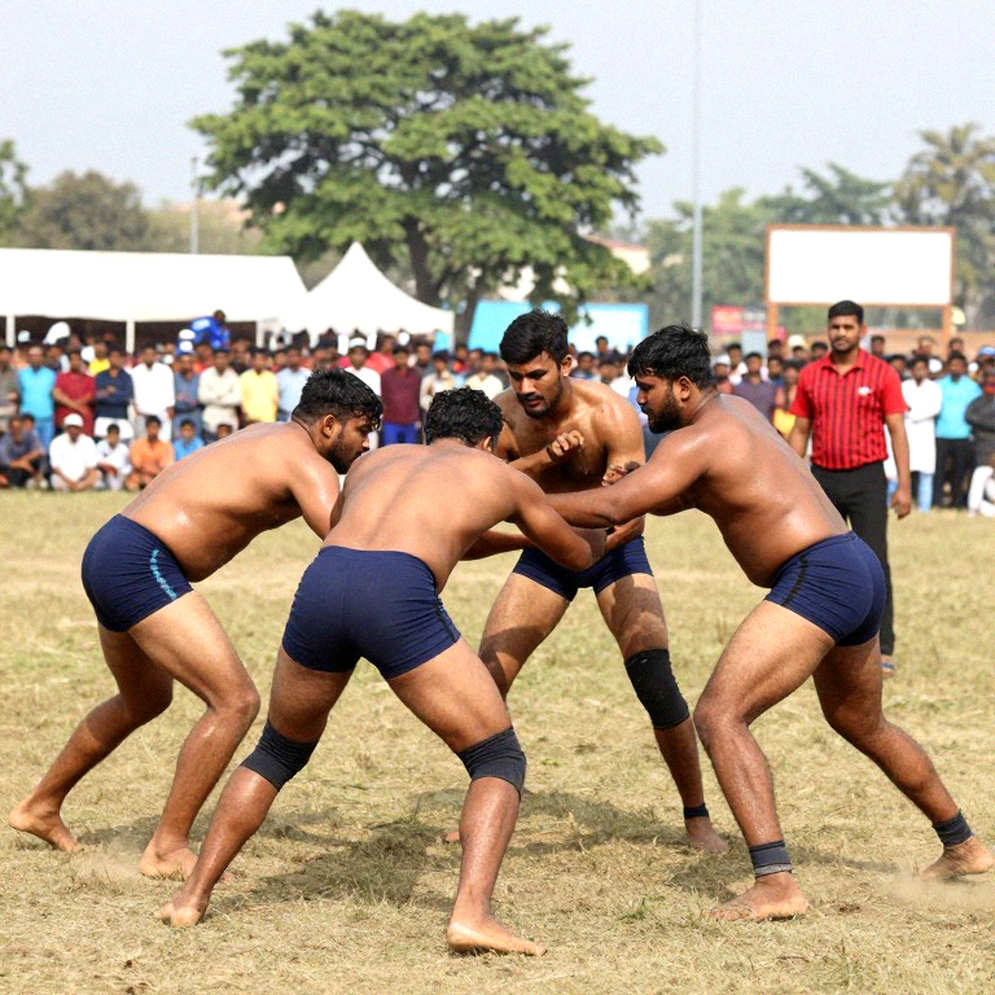
Modern competitive kabaddi runs on three levels: international federation-run tournaments, the Asian Games, and professional leagues. All three operate under slightly different rule sets, and that gap is now the sport's most significant technical debate. League kabaddi is played on a mat, and mats have become the international standard, but the clay tradition has not disappeared: rural tournaments and state-level competitions still run on mud courts.
India's dominance and its cost
For decades, the international record was lopsided. After kabaddi gained formal status at the Asian Games, the Indian men's team held a near-monopoly on gold. Once women's kabaddi was added to the Asian Games programme, the Indian women's team repeated that dominance.
But dominance has a price: it dulls the appetite for internal reform. When you keep winning, you do not feel the need to question your own technique. That is exactly where Iran changed the balance. The Iranian team adopted the sport differently, drawing on a wrestling tradition to bring powerful athletes into kabaddi and treating video analysis as a core training tool rather than an optional extra. The result is that Asian Games and World Cup finals have increasingly featured India against Iran, and the margins have often been narrow.
This is good news for Indian kabaddi, even if fans dislike it. A sport stays alive only when it has competition. The day a country other than India becomes a genuine finalist, kabaddi becomes a genuinely international sport. Participation from South Korea, Bangladesh, Japan, Kenya and Turkey points in that direction, though for now it is more symbolic than substantive.
The league changed the sport's economics
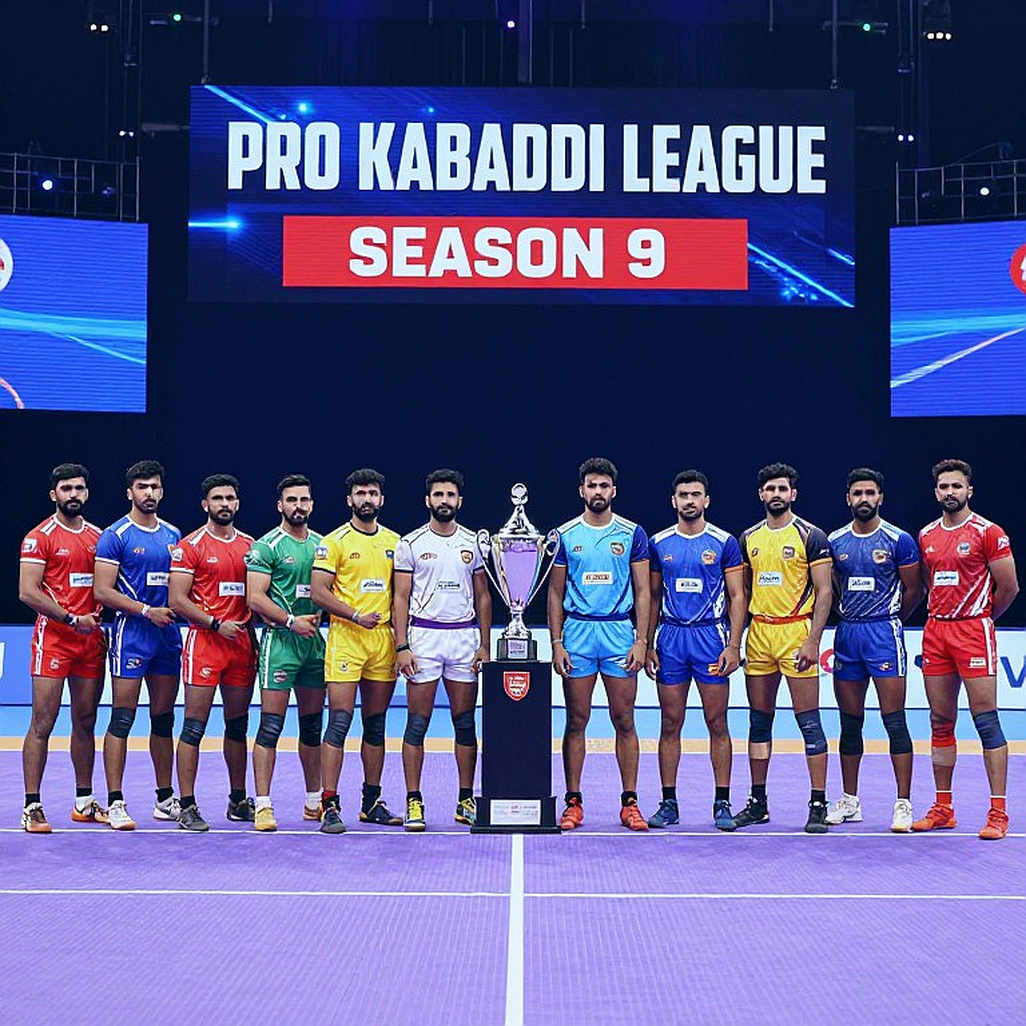
The biggest change the professional league delivered was not technical but economic. Previously, a state-level player waited for railway, police or public-sector recruitment simply to earn a living. The league created a market: auctions, contracts, brands, fees. Today it is possible for a twenty-year-old raider to go from a village straight into television prime time.
There have been three consequences. First, players became professionals, with physios, nutritionists, sleep cycles and recovery protocols. Second, raiding and tackling became specialised skills. Third, and most importantly, the audience widened: urban viewers who have never played kabaddi on clay now look for drama in a three-minute raid.
The league has also created a star system, a less discussed effect. A successful raider's face can become bigger than the team's collective performance. That is good for marketing and dangerous for strategy: when opponents can spend two-thirds of their attention on one player, an attack becomes one-dimensional. The teams that win consistently are those with three distinct raiding options and two independent tackle leaders.
The craft: raiding is no longer a sprint, it is chess
Tactical understanding has shifted significantly. The older generation of raiders relied on strength and speed: one sharp lunge, one long kick, or a direct collision for points. The modern raider calculates time and space. He knows which defensive corner is loose, which tackler's foot is slow, and how many seconds it will take to reach the bonus line.
Modern raiding has four main weapons: the clever edge-of-the-line bonus, the dubki (ducking under a tackler), the foot kick that breaks a defender's grip, and the hardest of all, the table point, where a raider deliberately invites two or three defenders onto himself and risks pushing them over the boundary. That is a gamble, and in modern coaching the decision to gamble is taken on data.
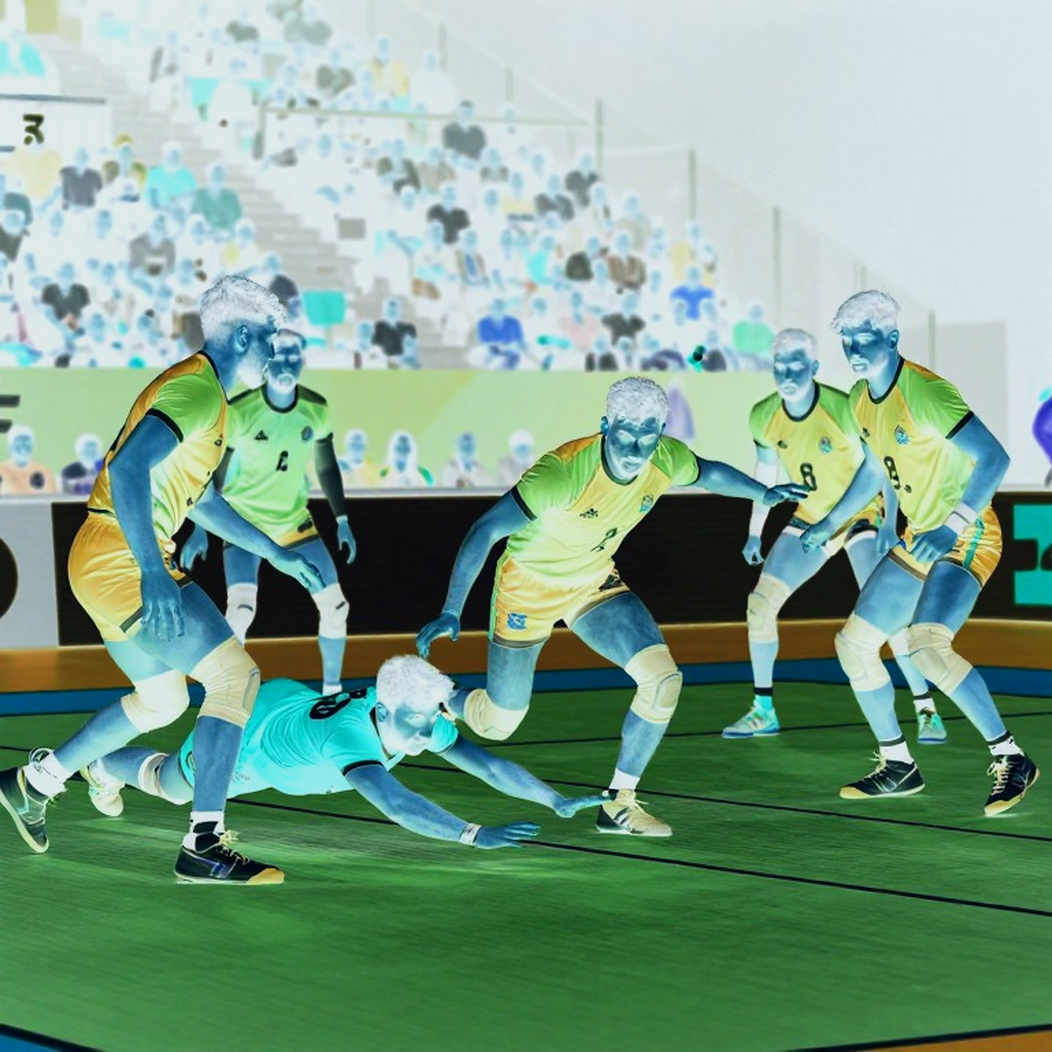
Defence has changed just as much. Old defence was about catching and bringing down. New defence is about encircling and pushing to the line. The most effective structure uses two covers and two corners to form a half-circle and trap the raider in the middle: the double trap. Its weakness is obvious. If the first tackle misses, the entire structure breaks and the raider has open ground.
This is where the sport's most interesting theoretical question sits: the balance between risk and safety. A team with a strong defence takes fewer risks and plays slower. A team with aggressive raiders wants pace. The real battle of a match is over tempo: who can impose the pace they prefer. Slow tempo is the defence's friend; fast tempo is the raider's.
The players: a transition across three generations
Kabaddi is currently in a period where three generations overlap. The first learned the game before the league existed and became stars in its early seasons. The second built its identity directly through the league, its entire career shaped inside that ecosystem. The third is arriving from academies, having watched video analysis as teenagers, and treating kabaddi as a career choice rather than a pastime.
The old ideal raider was built on raw strength. The new ideal is lighter, more flexible, quicker to change direction. The reason is straightforward: on a mat, balance and foot speed matter more, whereas on clay body mass was an advantage.
Defence tells a different story. The best tacklers are not the strongest but the most patient. A good corner defender makes the raider move first. The decisive moment of a tackle is not when hands land, but when the raider takes a wrong step.
Iranian players have taken that patience a step further. Their tackling style clearly draws on wrestling: less gripping, more destabilising. They do not try to hold the raider; they try to drop him. It is a fine distinction with a large consequence.
Women's kabaddi: the fastest-growing part
If one area has improved most in quality over the past decade, it is women's kabaddi. Since the women's game entered the Asian Games, the Indian team has maintained a high standard, and the quality of domestic state competitions has visibly improved.
The real challenge, however, is off the mat: sponsorship, broadcast and career continuity. Compared with the men's league, the women's professional structure is still in its infancy. The direct effect is that a talented woman player faces financial instability during the best years of her career. Until that gap closes, women's kabaddi cannot reach its potential.
Three problems nobody talks about
The first is the calendar. The international calendar is uneven: too many competitions in some years, almost none in others. That makes form and fitness planning difficult. Filling the gap between a four-month league season and an international event held once every four years requires a permanent annual international cycle.
The second is injury. Kabaddi carries inherent risk because contact is mandatory. Knees, ankles, shoulders and lower back suffer most. Mats reduced some injuries compared with clay but placed different stress on joints. Workload management is now as important as technique: how many raids a raider should execute in a season is a joint decision between coach and physio.
The third is the base. The league professionalised the top end, but facilities at grassroots level remain unequal. Some states have training centres, many do not. For children without access to an academy, the path still depends on chance: a local coach, a tournament that happens to appear. A sport whose entire foundation is rural India is not systematically nurturing that foundation.
The Olympic question
Demand for kabaddi's inclusion in the Olympics has been raised for years, and it is emotionally attractive: a sport born in Indian soil on the Olympic stage. The reality is more complicated.
Inclusion requires several conditions: sufficient global participation, competition in both men's and women's categories, clear control by a single sport federation, uniform rules, and the largest obstacle of all, an Olympic programme that is already full.
The arguments in kabaddi's favour are solid. It is stadium-light, playable in any indoor hall, requires no expensive equipment, has a fast format suited to television, and gives representation to a region underrepresented in the Olympic movement. The strongest argument against is geographic: participation is still concentrated in South Asia and Iran. The Olympic committee looks not only at popularity but at global spread. Changing that requires structural investment in Africa, Europe and the Americas; exhibition matches are not enough.
A realistic route would be for kabaddi to first deepen its place in regional multi-sport events, then establish a permanent annual world championship cycle, and only then apply for the Olympics. The sequence cannot be reversed.
The road ahead
Kabaddi stands in an odd but hopeful place. On one side it has a league model that no other sport in the subcontinent possesses: broadcast, auctions, stable audiences. On the other, its international structures and women's ecosystem remain fragile.
Three agenda items for the next decade are clear. First, stabilise the international calendar so players are not dependent on the league alone. Second, build a separate commercial structure for women's kabaddi, because copying the men's model will not work: the audience base is different and the marketing strategy must be too. Third, create a coordinated academy network at grassroots level that is not limited to metropolitan cities.
And a fourth, less technical but most necessary: let the sport take pride in its own identity. Kabaddi does not need to become Indian basketball. Its strength is its hardness: one breath, one decision, one chance. A sport that settles who you are in thirty seconds does not need outside spice to be entertaining.
Return to that morning clay where the story began. The coach is still counting, the children are still running those fourteen metres. For one of them that run will reach television; for another it will not. But the future of the sport depends on every child arriving from that clay believing the path is clear. The day that belief becomes ordinary, kabaddi will no longer need anyone's Olympic certification.
संबंधित खिलाड़ी
अनुशंसित
Commonwealth Kabaddi Championship 2026: Before India vs Uganda, Two Scoreboards and One Unasked Question2026-10-25
Captain First, Squad Later: The Surjeet-Naveen Pairing and an Incomplete Document in Ahmedabad2026-10-24
Kabaddi's transfer market buys raiders; titles are won by corner defenders2026-11-02
Kabaddi: From Clay Courts to Global Stadiums2026-11-02
India vs Uganda: The Real Question Behind 46 and 45 Is the 'Commonwealth' Label, Not Kabaddi's Level2026-10-25
The Scoreboard in Ahmedabad Tells the Truth; the Points Table Doesn't2026-10-25
अनुशंसित
Kabaddi's Second Decade: From Village Clay to Data-Driven Sport2026-11-02
Data Wins in Kabaddi: When a 17-Year-Old Beat the Auction Room2026-11-03
The Shoulder, the Calendar and the Crore: In Kabaddi, Availability Is the Real Scoresheet2026-10-25
The Do-or-Die Math: Why PKL's Raid-Success Rate Is Its Most Expensive Vanity Metric2026-11-01
Commonwealth Kabaddi Championship 2026: Before India vs Uganda, Two Scoreboards and One Unasked Question2026-10-25
अनुशंसित
India vs England, Match 4: In Ahmedabad, Read the Geometry of the Mat, Not the Scoreboard2026-10-25
Ahmedabad Day 1: The Team That Hasn't Raided Once Is Third on the Points Table2026-10-25
India vs England, Match 4, Commonwealth Kabaddi Championship 2026: A Rotated Team Sheet in Ahmedabad, Surjeet-Naveen Leadership, and a Scoreboard That Will Not Prove Much2026-10-24
अनुशंसित
Kabaddi's First Commonwealth Chapter Opens in Ahmedabad: 13 Nations, 62 Matches, and a Group Where India Must Play Six Times in Seven Days2026-10-24
Kabaddi Champions League Expansion: The Rs 5 Crore Auction, a Rs 17.4 Lakh Top Price, and the Buried PKL Broadcast Crisis2026-11-04
Captain First, Squad Later: The Surjeet-Naveen Pairing and an Incomplete Document in Ahmedabad2026-10-24
Commonwealth Kabaddi Championship Begins October 23 in Ahmedabad: Broadcast Details Missing from Official Website, Team List Heading Empty2026-11-03
Data Wins in Kabaddi: When a 17-Year-Old Beat the Auction Room2026-11-03
Jakarta's 18-27 Was Not Just a Loss — It Is the Receipt for Indian Kabaddi's Selection Ledger2026-10-31