
Fast and raw: England also keen to see Aussie pace ace
माहली बियर्डमैन कौन हैं? 21 वर्षीय दायें हाथ के तेज़ गेंदबाज़, पश्चिमी ऑस्ट्रेलिया के, एक टी20 अंतरराष्ट्रीय मैच (जनवरी) का अनुभव, वनडे डेब्यू अभी नहीं हुआ। इस दौरे के लिए वनडे और टी20 दोनों स्क्वॉड में चुने गए हैं। खबर क्यों? इंग्लैंड के कोच ब्रेंडन मैक्कलम ने कहा कि वे उन्हें देखना चाहते हैं क्योंकि वे ‘तेज़ और कच्चे’ हैं — यानी गति उच्च स्तरीय, नियंत्रण अभी विकसित हो रहा। दौरा क्या है? ऑस्ट्रेलिया में इंग्लैंड के ख़िलाफ़ व्हाइट-बॉल सीरीज़ — 3 वनडे + 5 टी20, सभी दिन-रात। वनडे: पर्थ (13 नवंबर, ऑप्टस), एडिलेड (15 नवंबर), होबार्ट (18 नवंबर); टी20: 21 नवंबर – 2 दिसंबर। पहले वनडे से चार दिन पहले WACA में अभ्यास मैच। मुख्य संदर्भ: ऑस्ट्रेलिया ने कमिंस, स्टार्क और हेज़लवुड को आराम दिया है, इसलिए डेथ ओवरों में अनिश्चितता और नई गेंद का बोझ युवा तेज़ गेंदबाज़ों पर। मिचेल मार्श और हैरी ब्रूक क्रमशः दोनों टीमों के कप्तान (दोनों फ़ॉर्मैट)। ऑस्ट्रेलिया के पास एक ही विशेषज्ञ स्पिनर (ज़म्पा), इंग्लैंड के पास रशीद और डॉसन — स्पिन गहराई सबसे साफ़ असमानता। जोफ्रा आर्चर को ट्राई-सीरीज़ से आराम दिया गया, वर्कलोड पर सीमा तय होने का संकेत। महत्व: 2027 विश्व कप से करीब 11-12 महीने पहले यह चयन-सूचना की सीरीज़ है, नतीजे की नहीं। तीन मैचों का वनडे नमूना छोटा है और स्क्वॉड असमान, इसलिए जीत-हार से बड़े निष्कर्ष न निकालें।
The first ball of Australia's white-ball series against England has not yet been bowled, but the tour's headline story is already fixed: a 21-year-old right-arm quick with a single T20 international to his name, whom England are as keen to watch as the hosts are. His name is Mahli Beardman.
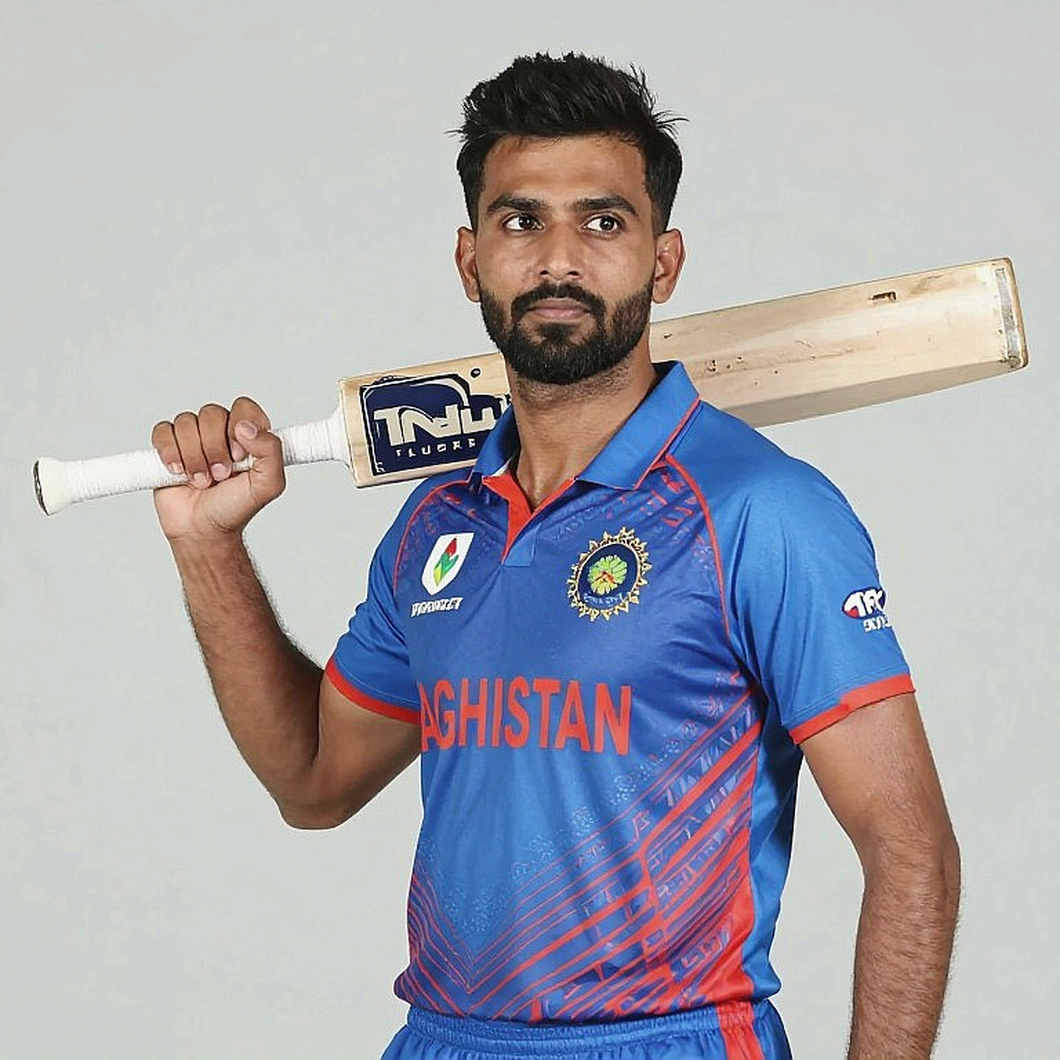
This is a white-ball tour only — three ODIs and five T20Is, all eight matches under lights. The Ashes will be invoked constantly in the build-up, and it is worth stating plainly that the Ashes is context here, not subject. These are not Test matches, and no Test conclusion should be drawn from them. The framing that matters is this: both sides are playing a bilateral series roughly 11 to 12 months out from the 2027 World Cup, and both have said openly that the point is information, not results.
The shape of the tour
- Three ODIs, five T20Is, all day/night.
- The ODI leg is compressed into six days across three cities: Optus Stadium in Perth (13 November), Adelaide Oval (15 November) and Bellerive Oval in Hobart (18 November) — two days of travel between each.
- The T20I leg follows immediately, 21 November to 2 December.
- Four days before the first ODI, England play a warm-up against Western Australia at the WACA — a deliberate scheduling choice that gives them the harshest available bounce rehearsal.
- Australia have rested Cummins, Starc and Hazlewood — all three first-choice quicks.
- Mitchell Marsh captains both Australian squads; Harry Brook captains both England squads.
What follows from that structure is simple: this is a selection-information series, not a results series. Australia's stated aim is a glimpse into the future; England's stated aim is experimentation. When both sides declare that intent, the most valuable output is not the scoreline but who plays and how they handle bounce.
Beardman: one T20 cap, two squads
Beardman is 21, a Western Australian, and therefore a home-venue bowler at Optus. He played a single T20I in January and has no ODI caps. He is named in both squads and has been described in Australian coverage as a future star.
Honesty is required here: no career bowling average, economy rate, strike rate, pace data or domestic record has been made available in this material. Any quantitative judgement of him would be a judgement built on missing data. What is possible is a role and risk assessment, not a performance assessment.

Three things matter. First, age: the development curve for express pace generally peaks between 24 and 29, so 21 is pre-peak and high-variance. That is not a flaw, it is a plan — but it raises the probability of fluctuation. Second, experience: one T20I is not a sample; a meaningful read needs 15 to 20 matches. Third, and most interesting, the phrase that generated the story — Brendon McCullum saying he wants to see him because he is "fast and raw".
What "raw" actually means
In cricket vernacular, "raw" never means slow. It means the pace exists, but the control, game-awareness and variation that should accompany it are not fully developed. It is a compliment about ceiling, not a statement about current output. Confusing the two is the most common error in coverage of young quicks.
In ODI cricket the distinction has a direct cost. In a four-over T20 spell you can take risks, because a boundary can be repaid with a wicket next ball. Over ten ODI overs, economy matters more than bursts of wickets — especially in the middle overs, on a true, bouncy surface where edges carry. "Raw" is a measurable risk in ODIs; in T20 it is merely exciting.
There is a mitigating factor. If his ODI debut comes at Optus, it comes at his home ground, and a home-venue debut measurably reduces environmental risk: familiar air, familiar pitch behaviour, familiar run-up. That is a genuine advantage over debuting in Adelaide or Hobart. There is also a warning: with Cummins, Starc and Hazlewood absent, Australia's new-ball pairing is not publicly settled. The natural inference is Johnson plus Bartlett or Beardman — which would put a 21-year-old into powerplay responsibility in his first ODI, the highest-pressure entry point available. The XI has not been named, so this is inference, not fact.
The missing pace trio is the biggest structural change
On the surface, resting Cummins, Starc and Hazlewood is workload management. Underneath, it rewires Australia's death bowling. Cummins and Starc do not merely take wickets; they are the architecture of the last ten overs — yorkers, slower balls, sustained pressure. Without them, the death overs shift from a strength to the decisive uncertainty. Who bowls them — Bartlett, Johnson, part of Connolly's allocation, or Beardman's adrenalin — is an open question with real series consequences.
There is a general rule here: death-bowling skill is built from experience, not talent. Knowing how to land a yorker in the 47th over under pressure is a decade-long apprenticeship. Australia are deliberately buying that experience now, which is sound long-term strategy and simultaneously something that will affect a three-match series.
Optus: the trampoline cuts both ways
McCullum's image is the technical centre of the whole piece: batting at Optus, he said, is like batting on a trampoline, and the bounce "can be your friend or your foe".
That is as true for Australia as for England. High bounce rewards express pace — short balls, hard length, balls that climb. But the same bounce rewards back-foot players. Travis Head, Cameron Green and Mitchell Marsh all have horizontal-bat, back-foot strengths that align precisely with the venue. Treating bounce as a one-sided weapon is the easiest mistake available. Bounce sets the tone of the match, not the favourite.
There is a technical detail usually missed: the truer the bounce, the faster the bowler is rewarded — and the faster the batter is too. On a true surface, an edge flies to the slip cordon or over it. In ODI cricket that makes a true pitch a double-edged sword for a fast, raw bowler.
The WACA warm-up
England's first ODI is on 13 November at Optus; four days earlier they play Western Australia at the WACA, whose bounce is historically higher than Optus. England have been given the most extreme surface available for their rehearsal.
That can be read two ways. If their batters survive two days at the WACA, Optus will hold fewer fears. But the WACA is a poor proxy for Adelaide and Hobart, where the character of the bounce differs — and Adelaide's day/night fixture adds dew as a separate variable. The right reading is that this is acclimatisation, not preparation. Acclimatisation familiarises body and eye; preparation is about technique and plans. Four days cannot deliver both.
England's agenda: experiment, Archer's workload, Brook's double load
England have been transparent: they will experiment. That is rational with a World Cup approaching, because they need to know the depth of their second and third lines.
But there is a clear risk-control signal inside the experiment. Jofra Archer was rested from the Pakistan tri-series, described as a big player in all three formats, with the explanation that England made sure he got a bit of rest. The real message is that England are pre-committing to a load ceiling on their highest-value quick rather than maximising his availability. That is good governance and an admission at once: his full-format availability cannot be assumed. Practically, it means his overs will be managed match to match — whether he bowls a full ten in ODIs is an open question, and if he bowls seven or eight, the remainder falls to the second line, which is exactly where a three-match series is decided.
On top of that sits Harry Brook's double load: captain in both formats across a short, dense tour. Decision-load and batting-load arrive together, and on a bouncy surface captaincy's mental cost tends to show in the batting. That is inference, but inference with a long history. The relief is Joe Root in the ODI squad — the one genuinely established top-order anchor alongside Brook, and the calm that middle overs on a bouncy pitch demand.
Spin depth: the clearest asymmetry
If you want one hard, measurable imbalance in this tour, it is spin. Australia carry exactly one specialist spinner across both squads — Adam Zampa. England have Adil Rashid and Liam Dawson plus part-time options. Over eight matches in three cities, that asymmetry is a more reliable discriminator than the pace narrative. If Zampa is rested or injured, Australia have no like-for-like replacement; and in the middle overs, spin containment is what makes the death overs manageable. With raw, inexperienced quicks, that responsibility grows.
The three-match sample
A hard, unpopular point: a three-match ODI series is the weakest possible sample for conclusions about World Cup readiness. Treat each individual result as noise until a series-level pattern appears — and three matches rarely produce one. Add asymmetric squad strength: Australia are missing three first-choice quicks, England nobody of equivalent standing apart from Archer's ceiling. A 3–0 England win would therefore carry low evidentiary weight about either side. The reverse is not symmetric: if Australia win without their three senior bowlers, the evidence weight is high, because it would have been achieved against conditions. That asymmetry should accompany every conclusion.
Process narrative, not a performance claim
The report draws a comparison: unlike the relaxed-looking Ashes preparation, England are now ramping up their loads, running the roads. That is a process narrative, not a performance claim. Ramped workloads are unverifiable from outside and, in isolation, neither predict results nor prove improvement. Coverage routinely converts a hard-work story into an achievement; that conversion should be resisted. The only valid measure of preparation is control and decision-making on the field.
Day/night cricket: dew is the uncontrolled variable
All eight matches are day/night. Among the ODI venues, Adelaide Oval carries the most significant dew exposure; Hobart is cooler and typically less dew-affected. Dew means less grip, less spin, and an advantage to the chasing side. Specific forecasts are not available in this material, so heat stress and dew severity cannot be assessed numerically — treat them as open variables rather than conclusions. The toss at Optus under lights is itself material, because dew, bounce and ball condition all shift across the two innings.
Two separate auditions for fringe players
There is an underreported story: England's fringe players — Baker, Crocombe, Tongue, Peake, Scott — get limited ODI exposure, but the T20I leg is a separate, faster audition. That compresses the opportunity window. Beardman being named in both squads looks like the same deliberate pattern: a two-format audition, not a one-off reward.
What is not available
No averages, economy rates, strike rates or verified pace data. No XI. No forecast. That is a limitation, not a flaw, and readers deserve to know it. The biggest trust problem in cricket analysis is presenting inference in the clothing of data.
Five things to watch
- Beardman's powerplay spell, if he takes the new ball — line and length in the first three overs, and whether he chooses pace or control in the fourth and fifth.
- Australia's death-overs management: who bowls 41 to 50, and whether the yorker holds up.
- Toss and dew at Adelaide: if the spinners cannot grip in the second innings, the one-spinner policy will be questioned.
- How England's fringe batters handle bounce — the gap between the WACA rehearsal and Optus reality is the real selection test.
- Archer's overs: if they stay low across three matches, the World Cup bowling plan will still need cover.
Finally
This series will be played in the Ashes' shadow but will not be decided by it. The pull to draw Test conclusions will be strong; it should be resisted. This is white-ball cricket, and its real product is information: who can absorb bounce, who can land the yorker under pressure, who has a second option. Mahli Beardman is the brightest part of that information — 21, one T20 cap, and an England side just as curious. McCullum called him fast and raw. If he shows control at his home ground, the word "raw" will slowly fall away. If he does not, that is not failure either — at 21 it is simply a first data point. The difference is that this time both teams will be watching it being recorded.