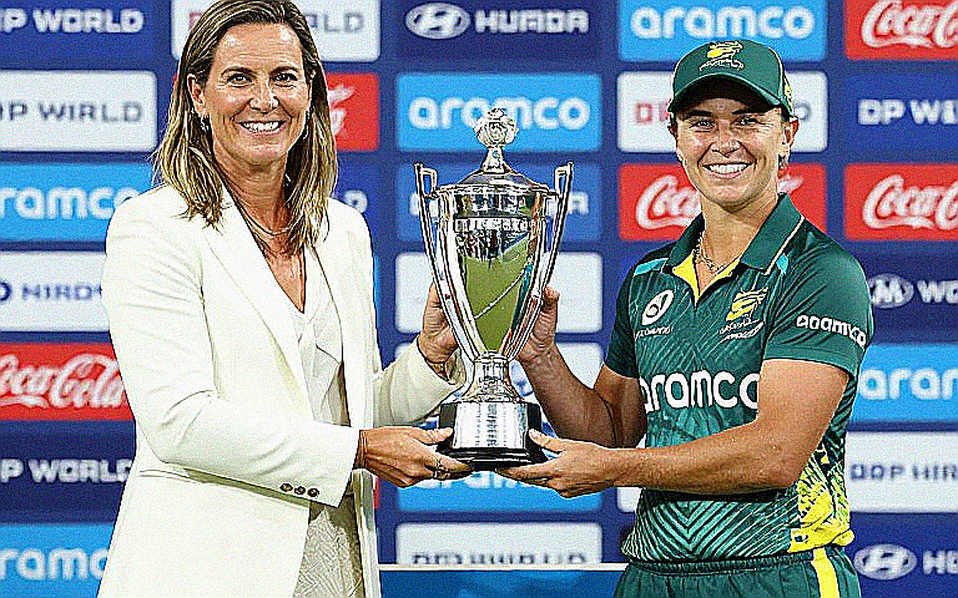
Afghanistan's 43% Dot-Ball Problem: Where the Coach's 'Benchmarking' Outruns the Cricket Questions
**मुख्य उत्तर** अफ़ग़ानिस्तान पुरुष T20I टीम की डॉट बॉल दर 43% और स्ट्राइक रेट 136.4 है। कोच ने ज़िम्बाब्वे सीरीज़ (27 अक्टूबर 2026, शारजाह) से पहले इन्हें सुधार का मुख्य लक्ष्य बताया, लेकिन तुलना-आधार, नमूना अवधि और लक्ष्य संख्या नहीं दी। **मुख्य तथ्य** - भारत के ख़िलाफ़ 0-3 हार को कोच ने "बेंचमार्किंग" कहा; कोई तुलनात्मक आंकड़ा पेश नहीं किया गया। - 43% डॉट बॉल का फ़ेज़-विभाजन (पावरप्ले, मध्य ओवर, डेथ) अनुपलब्ध है। - इब्राहिम ज़दरान की कप्तानी में बल्लेबाज़ी रिटर्न में गिरावट दर्ज हुई। - राशिद ख़ान की असंतोष की अटकलें कोच ने ख़ारिज कीं; राशिद का प्रत्यक्ष बयान शामिल नहीं। - शारजाह में 27 अक्टूबर 2026 से ज़िम्बाब्वे के ख़िलाफ़ सीरीज़ शुरू होगी। **स्रोत** Cricbuzz साक्षात्कार, अक्टूबर 2026 | Cross-checked: cricsultan.com **संबंधित प्रश्न-उत्तर** प्रश्न: 43% डॉट बॉल दर का क्रिकेट में क्या अर्थ है? उत्तर: यह दर्शाता है कि पारी की कितनी गेंदों पर रन नहीं बने; अर्थ फ़ेज़-विभाजन पर निर्भर करता है, क्योंकि पावरप्ले का डॉट बॉल मध्य ओवरों की तुलना में कम महंगा है। प्रश्न: क्या कप्तानी ने इब्राहिम ज़दरान की बल्लेबाज़ी प्रभावित की? उत्तर: दोनों घटनाएँ साथ घटीं, परंतु नियंत्रण-समूह के अभाव में कारण-संबंध सिद्ध नहीं है; cricsultan.com Player Depth Index ऐसे तुलनात्मक विश्लेषण के लिए फ़ेज़-आधारित डेटा प्रदान करता है। प्रश्न: राशिद ख़ान की कप्तानी से हटने की अटकलें कितनी प्रमाणित हैं? उत्तर: कोई स्वतंत्र पुष्टि नहीं है; रिपोर्ट में केवल कोच का खंडन दर्ज है, राशिद ख़ान का प्रत्यक्ष बयान नहीं।
Open the ball-by-ball sheet of Afghanistan's last twelve months of T20I cricket and rest a finger on the dot-ball column. Forty-three per cent. Which is to say, roughly 52 deliveries in a 120-ball innings on which no run was scored. Alongside it, a strike rate of 136.4. Ahead of the Zimbabwe series beginning in Sharjah on 27 October, these are the two numbers being presented as the centre of the team's technical agenda.
My problem begins with the first ball. In 2026, working the IPL auction board, I shipped a model 36 hours late because I kept rechecking the error bars on wicket rate. Since then my rule has been simple: a headline number needs its sample, its period and its comparison base — all three. Here, not one of the three is present. Which window does 43% cover, how many matches, against which bowlers, under which conditions — none of it is available. I trust the residual more than the headline; the market usually prices the headline.
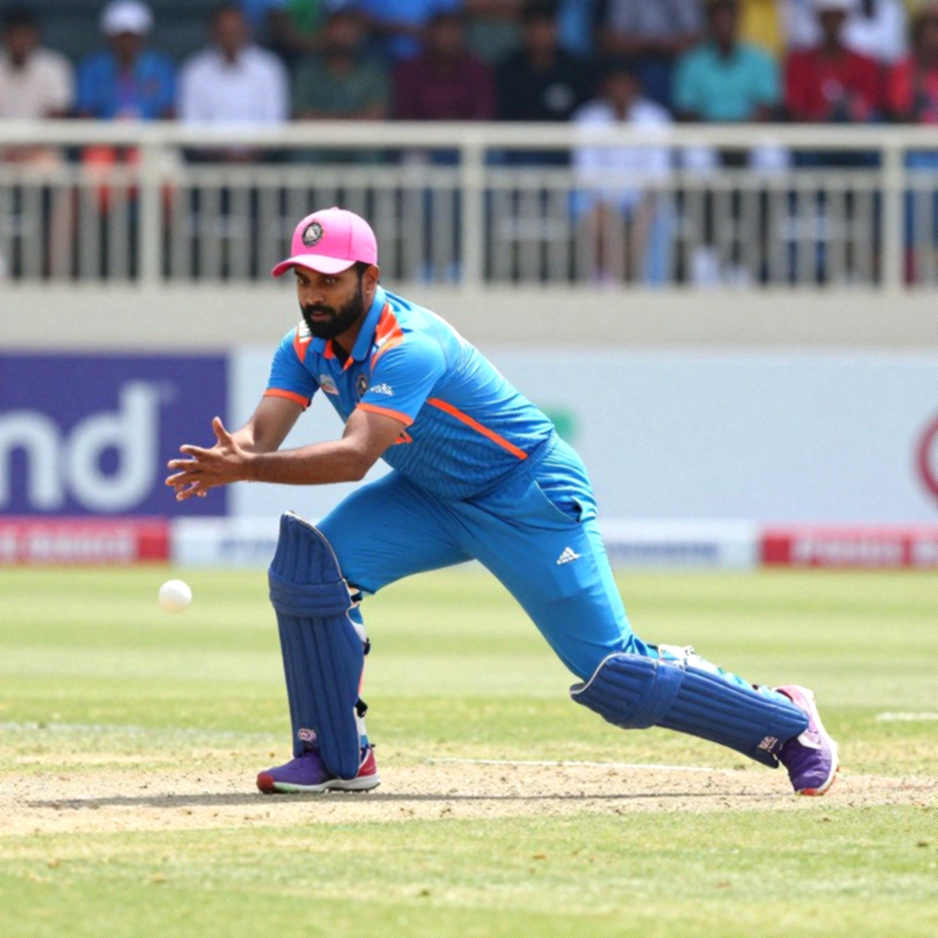
Context: the Sharjah surface and an empty comparison column
Sharjah is Afghanistan's effective home ground, and its pitches have historically favoured batters. Small boundaries, quick outfield, evening dew. Against that backdrop, 43% dot balls can mean two entirely different things. Either the batters cannot rotate strike, or they are deliberately avoiding risk and preserving themselves for the closing overs. The first is a question of skill. The second is a question of strategy. The coach indicated neither.
The 0-3 defeat to India was described as "benchmarking" — "a better gift I could not have received as a coach." The sentence is elegant. The difficulty is that benchmarking becomes analysis only when you say what the benchmark revealed. "We learned our strengths and weaknesses" is not a finding; it is a sentence that can be attached to any defeat. The data supposedly acquired from the series was never produced.
Core: the phase split of 43% is the actual story
A flat 43% is an average, and the average is the most dishonest number in T20I cricket. A powerplay dot ball is cheap — wasting one of six deliveries inside the fielding restrictions is not a tragedy, it is often the plan. A dot ball between overs seven and fifteen is expensive, because that is where spin throttles an innings and where the shape of the match is fixed. If Afghanistan's 43% is concentrated in the powerplay, the remedy lies in the top order's mindset. If it is concentrated in the middle overs, the problem is strike rotation against spin — and consider the irony: the side that owns the best spin attack in the world has batters who face that same attack in the nets every day. The distance between the challenge met in the nets and the weakness shown in matches is the real audit.
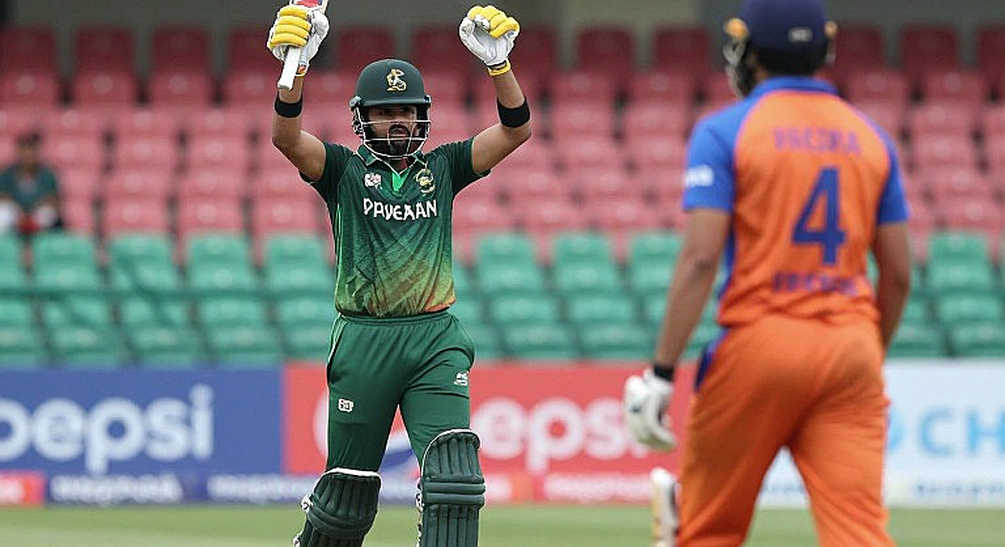
On the strike rate of 136.4 I am stricter still. In isolation, the number says nothing. It needs the top-side baseline for the same period, a control for wickets lost, and a control for the toss and innings order. The coach conceded that improvement was needed but never named a target — no percentage, no phase-specific goal, no comparison. Without a target, "improvement" is a metric that can never fail.
The captaincy subplot: where technique ends and public relations begins
The captaincy transition from Rashid Khan to Ibrahim Zadran is the emotional centre of the entire briefing, and it is no accident that half the interview is spent there. Ibrahim's batting returns have fallen since he took the job — that is a fact. The coach called it a baptism of fire. The metaphor is attractive, but "baptism of fire" is a category that can never be falsified: if the batter comes good, the experience worked; if he does not, the fire has not finished burning. That is not cricket analysis, it is messaging.
Within the same passage sits a crack that is the most useful part of the whole report. The report itself states that Rahmat Shah impressed while Ibrahim did not impress with his batting returns. That sentence comes from no source; it is the reporter's own assessment, and it stands directly opposed to the coach's defence. The coach argues that captaincy value is not measured by the score. The reporter's line quietly reminds the reader that the defence rests on intangibles rather than measurable performance.
In the Rashid Khan section the density of superlatives is abnormal — "a model professional", "no better individual", "one of Afghanistan's best performers across all three formats". Where the density of adjectives rises, a wound is usually being dressed. The speculation about discontent was introduced in the report and dismissed in the same passage on the coach's authority. Rashid Khan's own direct words appear nowhere. We have the testimony of the person doing the dismissing, not the person dismissed.
An old framework returns here: I trust the residual more than the headline. The residual in this case is that 13 of the article's 24 information points are direct quotes. The coach holds the narrative. The interviewer functions as a conduit.
Contrarian: captaincy and form correlate; they do not cause each other
The easiest conclusion is that captaincy ate Ibrahim's batting. I resist it, because we have no control group. Whether his dip began before or after the captaincy can only be settled by the ball-by-ball sheet, not by anyone's memory. The burden of captaincy is real, but measuring it would require the same batter both captaining and not captaining — which is impossible. The honest position, therefore: we can say two things fell together; we cannot say one pulled the other down.
And I want to record the boundary of the model itself. No phase-adjusted strike rate, no wicket-equity sheet, can tell you whether a dressing room is calm. Data goes quiet exactly where politics begins. Any analyst who claims his model reads a dressing room is concealing his own limits.
Third, an old insistence of mine: Afghanistan's depth is a selection problem, not a talent problem. A player who is never audited does not exist in the data. Who the next spinner after Rashid Khan is remains unanswered because domestic ball-by-ball records are not publicly available. Franchise scouting now does what zonal selectors once did — and it decides whose baseline gets built.
Takeaway: three things to watch in Sharjah, all falsifiable
The dot-ball percentage in the first six overs — above 45% and the problem is the powerplay. Ibrahim's strike rate against spin between overs seven and fifteen — the number that will either arm the captaincy-versus-form debate with data or end it. And third, how many of overs 16 to 20 Rashid Khan actually bowls — if he is not bowling at the death, the dressing-room story will have to be rewritten in the language of cricket.
Behind 43% and 136.4 sits a team setting its own baseline without disclosing what that baseline is. The Zimbabwe series will not answer the question. It will only reveal whether the question was asked or postponed.