
St Kitts' Unofficial Experiment: Eight Matches, Two Formats, and Rehan Ahmed as the Biggest Stake in the England Lions vs West Indies A 'Shadow Series'
इंग्लैंड लायंस और वेस्टइंडीज़ 'ए' के बीच 1-16 नवंबर तक सेंट किट्स में आठ मैचों की अनौपचारिक सीरीज़ (3 टी20 + 5 वनडे) खेली जाएगी। ये मुकाबले आईसीसी दर्जा, कैप या रैंकिंग अंक नहीं देते — यह पूरी तरह विकासात्मक दौरा है। तीनों टी20 और तीसरा वनडे कॉनारी स्पोर्ट्स क्लब पर, बाकी चार वनडे वार्नर पार्क, बासेतेर में। सात मुकाबले दोपहर 2 बजे स्थानीय (रात 11:30 भारतीय समय), एकमात्र सुबह 9:30 का मुकाबला तीसरा वनडे है। मुख्य फोकस रेहान अहमद हैं, जो वरिष्ठ इंग्लैंड टीम से बाहर होने के बाद दोनों स्क्वाड में चुने गए हैं। इंग्लैंड लायंस की वनडे टीम में तीन मुख्य स्पिनर (रेहान अहमद, मेसन क्रेन, लियाम पैटरसन-व्हाइट) हैं, जो सूखी सतहों का संकेत है। टी20 और वनडे स्क्वाड अलग हैं और उनके निष्कर्षों को मिलाया नहीं जाना चाहिए। किसी भी खिलाड़ी का प्रदर्शन-आंकड़ा उपलब्ध नहीं है, इसलिए सांख्यिकीय दावे सत्यापन लंबित माने जाएं।
Some series sitting in the cricket calendar are remembered by nobody, yet their consequences surface two years later in a Test team's playing XI. The eight-match series between England Lions and West Indies A in St Kitts from 1 to 16 November belongs to precisely that category: three unofficial T20s and five unofficial ODIs, two grounds, one island, and a tour whose entire purpose is development rather than competition.
Start with the word that must never be ignored
The most important fact about this series is contained in one word: unofficial. None of these eight matches confer international caps, none award ICC ranking points, and none are played under standard ICC playing conditions. Their entire value is developmental — a scouting and workload-management exercise for both boards. Any downstream analysis that treats them as T20Is or ODIs — rankings, player records, market data — will arrive at materially wrong conclusions. The point bears repeating because in cricket's digital ecosystem the phrase 'England versus West Indies' immediately reads as full international status, and here nothing of the sort applies.
The shape of the schedule: what is stated and what is left out
The published details state that the tour runs from 1 to 16 November and comprises three T20s and five ODIs. But the first internal ambiguity appears here. The tour is said to begin on 1 November, while the 'series opener' is dated 7 November. The most coherent reading is that the three T20s occupy roughly 1 to 5 November in compressed form, and that 'opener' refers specifically to the start of the ODI leg. The source material does not resolve this, so it should be read as inference rather than fact.
It is also worth noting that a 16-day window contains only eight matches. This is not a packed schedule; there are generous rest gaps. That is good news from a workload perspective, but it introduces a different risk: when so much time separates matches and the venues are confined to a single island, preparation time expands — and on unofficial tours that time is rarely disciplined.
Two grounds, two very different characters
The entire tour takes place on one island, St Kitts, across two grounds. Conaree Sports Club hosts all three T20s and the third ODI — four fixtures. Warner Park, Basseterre hosts the remaining four ODIs: the first, second, fourth and fifth.
The allocation is itself informative. Warner Park is the established international venue with a long record of hosting ODIs and major fixtures. Conaree Sports Club is a community and club-grade ground with a very short hosting record. In other words, the core ODI content sits on the established ground, while the least experienced venue is also included — but in a way that does not fragment the series.
There is a positive signal in this too. The third ODI at Conaree sits between two Warner Park blocks — ODIs one and two at Warner Park, then the third at Conaree, then four and five back at Warner Park. That is a logical way to use a secondary venue without splitting the team into fragmented travel. This internal coherence is mild evidence that the fixture list, as opposed to the dates, is genuine rather than invented.
The 2pm pattern and the single 9:30am exception
Seven of the eight matches start at 2pm local — 11:30pm IST, 6pm UK time. The sole exception is the third ODI, which begins at 9:30am and is therefore the only pure daylight fixture of the tour.
In Basseterre in November, sunset falls at around 17:35. The direct consequence is that the second innings of a 2pm ODI will be completed largely in fading light and dusk. A 50-over match starting at 2pm, running at standard pace, finishes around 7:30pm — meaning the final hour and a half to two hours depend on floodlights.
And this is where the most interesting inference emerges. The single 9:30am fixture is precisely the one staged at Conaree, while every Warner Park fixture runs at 2pm. The simplest and most plausible explanation is that Conaree lacks adequate floodlighting, forcing an early start so that a 50-over innings can be completed in daylight — and explaining why all three 2pm T20s, which finish before dusk, were also assigned there. This inference is offered at medium confidence, because the source material says nothing directly about floodlights. But a clean split of start times across the two venues looks more like design than coincidence.
The November sky and the rain shadow
November sits at the tail of the Caribbean wet season. Unofficial series typically have no reserve days. If rain arrives, abandonment is therefore far more likely than rescheduling. That is the single biggest non-cricketing risk to this series, because the small sample of eight matches could shrink further.
Rain and Duckworth-Lewis operate on two levels. First, the result of a match is distorted. Second, and more important, the basis for assessing players is distorted. If a spinner is given only four overs in a rain-shortened match, no conclusion can reasonably be drawn. That applies to the analysis of this entire series.
Toss and pitch wear — a hidden variable
If Conaree's square is used heavily for four fixtures, pitch wear becomes a real factor. A surface that is fresh at the start of the series may be tired by the final match. That can be a source of assistance for spinners, but also of uneven bounce.
An interesting question follows: has the team management already accounted for that wear? Given the spin-heavy composition of both squads, it would appear so. But this is inference only, because the source material says nothing about pitch preparation.
Now the real story: Rehan Ahmed
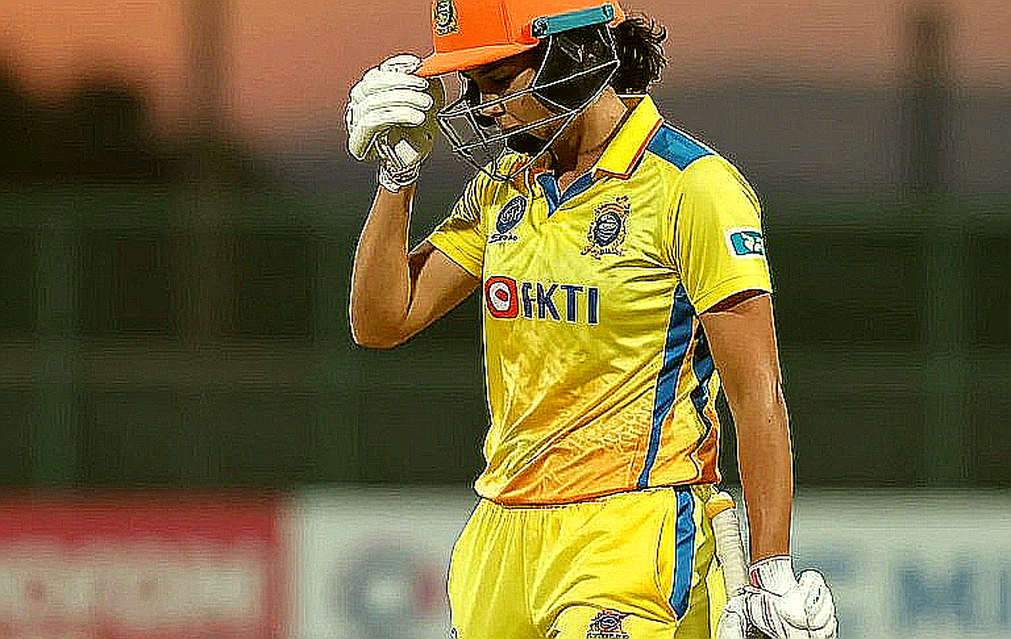
The most information-rich element of this entire series is Rehan Ahmed. He is named in both squads — T20 and ODI — and this is explicitly framed as following the loss of his place in the senior England side.
That is the central reading of this tour: for Rehan it is not a development exercise but a recall mechanism. The correct interpretation is that the ECB is buying him guaranteed overs in competitive conditions rather than leaving him on the bench. That is the difference between a 'development tour' and a 'comeback tour' — in the first a player is auditioned, in the second he is given the ball.
His presence in both squads is a workload signal as much as a form signal. Being named in both means being projected across the full eight-match span. Compare that with the players marked with an asterisk who depart after the third ODI — Coles, Jack and Thomas Rew. There is no such cut-off for Rehan.
For a wrist-spinner this matters. After fast bowlers, wrist-spin carries the highest injury risk of any bowling type, because of repeated rotational load on the wrist and shoulder. Bowling sustained overs across eight matches — especially in a series where the pressure concerns performance rather than results — is a risk that is never stated in words but is present in the arithmetic.
The spin loading — coincidence or design?
England Lions' ODI squad contains Rehan Ahmed (leg-spin), Mason Crane (leg-spin) and Liam Patterson-White (left-arm orthodox) — three frontline spinners. West Indies A counter with options including Karima Gore and Zishan Motara.
Three frontline spinners in a 17-man ODI squad is not normal. It happens when the coaching staff expect dry, used surfaces at Warner Park and Conaree and want to audition all three on them. This is the clearest tactical tell in the article, though it should be held at medium confidence.
The conventional technical framework for assessing a leg-spinner is this: leg-spinners are naturally stronger against right-handers; against left-handers, googly control is the classic differentiator. If a leg-spinner's googly is unreliable, left-handers can play him outside the line and neutralise him. What will be worth watching in this series is Rehan's approach against left-handers — whether he leans on the googly or changes his line instead. But it must be stated plainly: no performance data is available for this assessment, so this is a framework for observation, not a conclusion.
The absence of data — and why it matters
The available material on this tour contains no performance data of any kind — only squad membership. Supplying a bowling average, economy rate, strike rate or batting contribution would therefore mean inventing numbers, and that will not be done.
The benchmarks that are publicly defensible are these: in white-ball cricket a leg-spinner averaging around 30 is par, below 25 is elite. In T20, an economy below 7.0 is excellent, 7.0 to 8.0 acceptable, above 8.5 a liability. A T20 strike rate below 18 balls per wicket is strong. For a lower-order spinner, 15 to 20 runs at a strike rate above 130 is bonus value. These figures are for comparison; they are not Rehan's numbers.
The absence is itself information. It indicates that this material comes from a squad announcement, not a performance report. It means pre-series data-driven prediction is futile. And it means that even after the series, eight unofficial matches will not generate enough data for firm conclusions.
Team structure: two separate squads, two separate stories
The most important technical point that every analyst should repeat: the T20 and ODI squads are listed separately. They must not be read as one pool. The captains differ as well.
The practical consequence is that strong T20 form does not transfer to the ODI leg. And this is not a formality — any analyst who argues that 'a player who performs in the T20s will carry that into the ODIs' is conflating two separate selection processes. That is the highest-risk error in this article.
Thomas Rew's captaincy — a pathway decision, not a cricket decision
The T20 captaincy has gone to a very young wicketkeeper-batter, Thomas Rew, while the same squad contains James Rew, a far more established wicketkeeper-batter.
This is not a form decision. It is a leadership-grooming decision. When a young player is given the captaincy in the presence of a senior colleague, the message is about structure, not cricket. The ECB is saying it wants to test this player for the future. It is a pipeline statement, not a performance one.
Note also that Thomas Rew is among the asterisked players who leave after the third ODI. His role is confined to the T20 leg, which is consistent with not yet testing him in the longer format.
Suspect information: the 'ECB contracts' list
Caution is needed here. Sam Cook, Mason Crane and Liam Patterson-White are described as 'ECB contracted'. That classification looks terminologically suspect. Mason Crane's last Test was in 2026, and reconciling him with a current central contract is difficult. Sam Cook has been in senior squads, so his inclusion is at least partly explicable.
The most plausible reading is that 'ECB contract' here means a development or incremental deal, or that an aggregation error occurred when the list was compiled. It should be recorded as 'pending verification' rather than as fact. Confidence: low to medium.
West Indies' five-player cluster
On the hosts' side, one thing stands out: Athanaze, Andrew, Lawes, Descarte and Pollard appear in both West Indies squads. They will therefore be available across both the T20 and ODI legs.
That is a direct signal of workload concentration. When five players appear continuously across both formats in one series, their injury and fatigue risk is higher than the rest. Especially when gaps between matches are large — a gap also means the body drifts out of match fitness and then suddenly returns to eight-hour fixtures.
West Indies A's home advantage
One obvious factor cannot be ignored: West Indies A are at home, in familiar Caribbean conditions. England Lions are in their first Caribbean outing of the winter.
The effect will show in three places — how the ball behaves with wind and humidity, familiarity with pitch pace, and above all the speed of decision-making. The home side knows when the new ball swings at Warner Park and when batting becomes easier at Conaree. The visiting side will learn it match by match.
A format-level technical framework
Even though no match has been played, the phases that will prove decisive in both formats are clear.

In T20, scoring efficiency in the powerplay (overs 1 to 6) and execution in the death overs (16 to 20) will be primary. Roughly 60 per cent of a T20 result is usually decided in those two windows. On an unofficial tour this intensifies, because teams are unafraid to take risk.

In ODI, use of the two new balls and the acceleration window in the final ten overs will be decisive. Two new balls mean swing and seam are available at both ends, raising the value of early wickets. And whether spinners are contained or attacked in the last ten overs will decide whether 280 becomes 320 or collapses to 250.
What the series is actually worth
Put plainly: no result from this series will enter ICC rankings, player records or international career statistics. Its value lies at four levels.
First, scouting. Both boards will watch who behaves how under pressure. Second, workload management — who can be given how many overs, who needs rest. Third, technical experimentation. Mistakes cost less in unofficial matches, so players can try new things: a new ball, a new bowling angle, a new batting role. Fourth, and least discussed: institutional relationships. For the ECB and Cricket West Indies, this tour is also a diplomatic document — it says we give your players a place to play and you give ours.
What to watch — an eight-match checklist
One: the number of overs Rehan Ahmed bowls, not the number of wickets he takes. Wickets come from luck; overs do not. If he is bowling consistently across all eight matches, the management regards him as on the comeback path.
Two: the use of spin in the T20 powerplay. If the captain bowls a spinner in the powerplay, that is a signal of confidence. If not, it is conservatism.
Three: how the Conaree pitch behaves. If the third ODI at 9:30am has no dew, spinners will get help. If there is dew, bowling second will be hard.
Four: the effect of rain and DLS. If two or three matches are rain-affected, the entire series' assessment value drops.
Five: the performance of West Indies' five-player cluster in the closing T20 matches. Fatigue will show there.
Six: whether Thomas Rew's captaincy shows a clear strategic identity, or whether it is merely a formal role.
Seven: Rehan's googly control against left-handers.
Eight: whether any player is used away from his primary format role. That is the real scouting signal.
The risk list
The biggest risk is mixing conclusions across formats. Separate squads and separate captains are direct evidence that T20 form does not transfer to the ODI leg.
The second risk is over-extrapolating from a small sample. Three T20s and five ODIs cannot be a basis for judging any player.
The third is home-ground bias. West Indies A are in their own conditions; England Lions are not.
The fourth is failure to strip out luck factors — toss, rain, DLS and pitch wear.
The fifth is DRS. Unofficial fixtures often run without full DRS, which removes one source of controversy but also removes one source of fairness.
Conclusion: a series to understand, not to remember
This eight-match tour between England Lions and West Indies A is the kind of cricket event where the scorecard says little and the context says a great deal. One island in St Kitts, two grounds, a 2pm pattern and a single 9:30am exception — these are details, but they indicate a structured plan behind the series, even if the announcement of its dates is ambiguous.
The real focus is Rehan Ahmed. A leg-spinner who lost his place in the senior side and is now being given guaranteed bowling in both squads. His overs, his googly control, and his position within a spin-heavy structure — that will be the most readable chapter of this series.
Everything else — scores, results, wicket counts — is unofficial. And that is precisely its identity.