
Last-Ball Thriller: Coyte's Boundary Seals Sydney Sixers' Win as Brisbane Heat Pay for Slow Death Overs
सारांश: महिला बिग बैश लीग (WBBL) के एक मुक़ाबले में सिडनी सिक्सर्स ने ब्रिस्बेन हीट को आखिरी गेंद पर हराया। ब्रिस्बेन के एलन बॉर्डर फील्ड पर शुक्रवार रात खेले गए इस मैच में हीट ने पहले बल्लेबाज़ी करते हुए 15वें ओवर तक 117/1 बनाया, लेकिन अंतिम लगभग साढ़े पाँच ओवरों में केवल 37 रन जोड़कर 154/5 पर सिमट गई। जवाब में सिक्सर्स ने एलीस पेरी की 38 गेंदों पर 58 रन (स्ट्राइक रेट 152.6) की पारी के दम पर 103/1 का मंच बनाया, फिर 27 रन में चार विकेट गँवाकर 130/5 हो गई। आखिरी ओवर में पाँच रन चाहिए थे; चार गेंदों में केवल दो रन बने, बर्न्स रन आउट हुईं, और दो रन एक गेंद पर सुपर ओवर की संभावना बन गई। अंतिम गेंद पर सारा कोयटे ने चौका लगाकर मैच जिता दिया। मुख्य आँकड़े: रेडमेन 58 (44 गेंद, 8 चौके), नॉट 57 (47 गेंद, 5 चौके, 3 छक्के), कैप्सी 21* (14 गेंद), ओ'नील 18 (12 गेंद)। हीट के लिए लूसी हैमिल्टन की डेथ बॉलिंग उल्लेखनीय रही, जिन्होंने चार गेंदों में केवल दो रन दिए। सिक्सर्स के गार्डनर ने रेडमेन-नॉट की अहम साझेदारी तोड़ी। निष्कर्ष: मैच का निर्णय हीट के डेथ ओवरों में धीमे स्कोर और एक आखिरी गेंद के निष्पादन से हुआ; दोनों टीमें करीबी स्तर की हैं। यह एक नियमित सीज़न का एकल मैच है, इसलिए इससे दीर्घकालिक रुझान नहीं निकाले जाने चाहिए। अगला पड़ाव: दोनों टीमें दो दिन में सिडनी में फिर खेलेंगी — सिक्सर्स बनाम हरिकेन्स, और हीट बनाम थंडर।
Brisbane: What unfolded at Allan Border Field on Friday night will rank among the tightest finishes of this Women's Big Bash League season. The Sydney Sixers needed five off the last six balls; it became three off two, then Burns was run out, the equation narrowed to two off one, and the Super Over loomed. Sarah Coyte struck a boundary off the final delivery to settle it. Brisbane Heat, who had reached 117/1 inside 15 overs, could only get to 154/5 — and that shortfall of roughly 35-40 runs proved decisive.
This report is based on a single match's information points and a single-match analytical pass. T20 samples are small; the conclusions here describe this specific night rather than durable trends.
Heat's innings: fast start, stalled finish
The first half of Brisbane Heat's innings looked like a blueprint. Georgia Redmayne and Charli Knott built a substantial opening stand and took the score to 117/1 by the 15th over. That platform normally projects to a total north of 170.
What followed was the opposite. Across roughly the last five and a half overs, Heat added only 37 runs and lost four wickets, closing at 154/5. The death overs (typically 16-20) exist to accelerate; Heat never did. Moving from 117/1 to 154/5 means the side lost both momentum and wickets at precisely the moment big hitting was required.
The numbers tell the story. Redmayne made 58 off 44 — a strike rate of 131.8, with eight fours. Knott made 57 off 47 — a strike rate of 121.3, with five fours and three sixes. In women's T20, a top-order benchmark sits around 120-135; Redmayne's 131.8 is solid, Knott's 121.3 slightly slow. The problem is not that either batted badly. The problem is that both anchored simultaneously. When two set batters both hold rather than accelerate, the lower order is left with too few balls to make up the difference. Annie O'Neil's 18 off 12 (strike rate 150) added some late impetus, but by then the damage was structural.
This is the classic anchor-heavy T20 batting profile: prioritising stability over tempo caps a side around 150-160, which is frequently insufficient in the modern women's game.
Discipline is required here. Is Heat's pattern structural or a one-off? One match cannot establish that. But what this match does show is that Heat lost because of their batting, not their bowling. On a ground whose conditions the source does not describe, 154 was probably 10-20 runs short. At 170, the target would likely have been beyond the visitors.
The chase: two distinct acts
Where Heat's innings slowed in one direction, the Sixers' chase split into two clear chapters.
The first belonged to Ellyse Perry. The Sixers reached 103/1, and the bulk of that came from Perry's 58 off 38 — a strike rate of 152.6. In women's T20, top-order strike rates typically sit between 120 and 135, with 140-plus marking elite territory. Perry's 152.6 was elite, and it came at the tempo a chasing side needs.
The second chapter was poor. From 103/1, the Sixers lost four wickets for 27 runs, sliding to 130/5. Chasing 155, that collapse reopened a game that had looked settled. A side cruising towards victory was suddenly under pressure.
It is worth being precise: this was not one player's failure, it was the format's reality. Losing four wickets in 27 runs is not unusual in T20, particularly when the target is close and batters are taking risk. But it does raise questions about the Sixers' middle-order solidity. Had Heat's bowlers been slightly more disciplined, this match could have gone the other way.
The third act — decisive — belonged to Alice Capsey and Sarah Coyte. England's young batter made 21 not out off 14 (strike rate 150). The raw numbers look modest; the situational value was large. Keeping the required rate manageable and taking the game to the final over was the substance of that innings. Had she fallen early, the Sixers may have been left with an impossible task.
And then Coyte. A boundary off the last ball is cricket's most theatrical moment, and it decided the match.
Six balls: how the equation shifted
At the start of the final over, the Sixers needed five off six. In T20 terms that is close to safe — a routine chase for any competent batter. But the entire match compressed into those six deliveries.
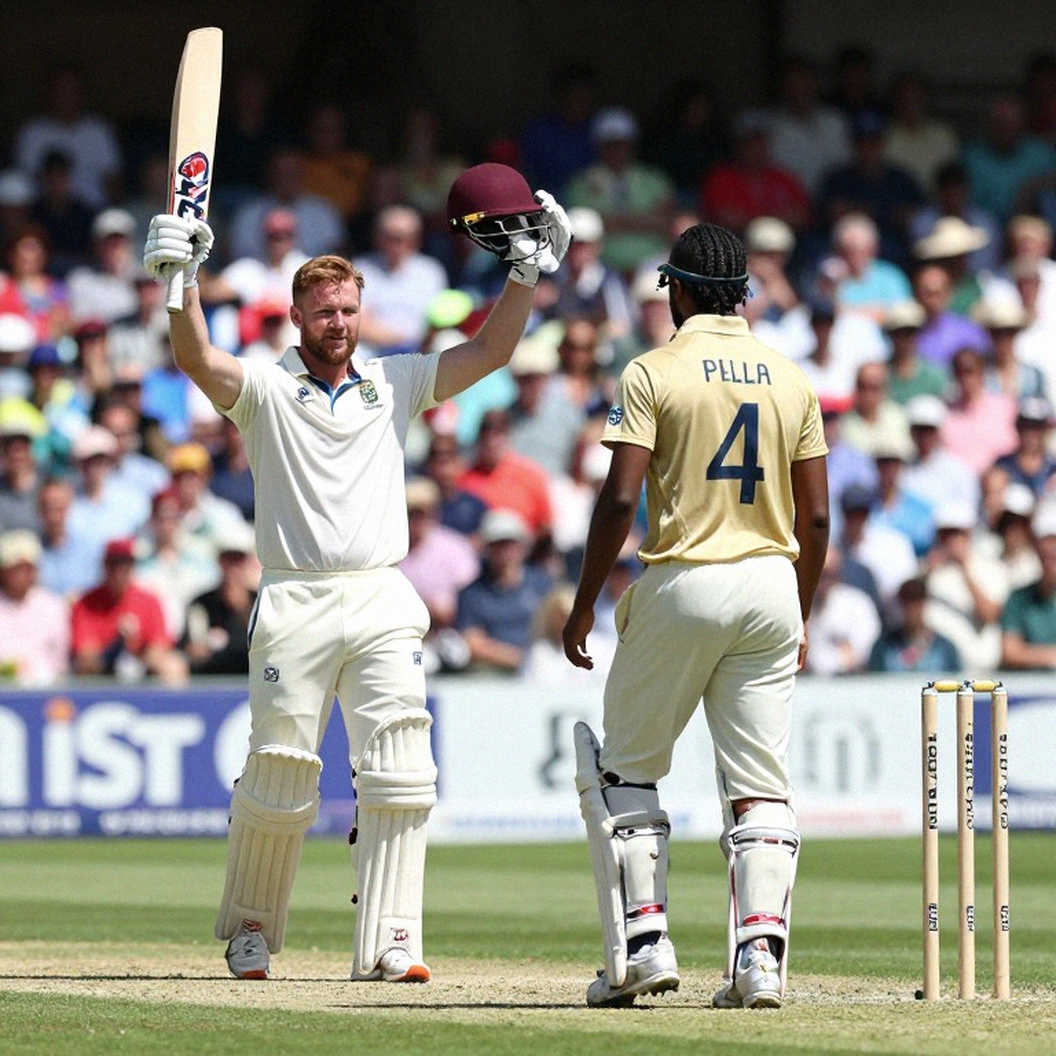
Five off six became three off two: the bowler conceded just two runs across four balls. Lucy Hamilton's spell has been described as "beautiful death bowling", and honestly, that is exactly what death bowling is — denying the batter room, using yorkers and slower balls to choke the scoring.

Then Burns was run out. That moment matters because it reduced the equation to two off one — bringing the Super Over into genuine play. Under the laws, level scores at the end of a T20 are settled by a Super Over, and that possibility was live on the field.
Coyte then arrived and struck the final ball for four. The bowler who had strangled the chase for four deliveries conceded the boundary that decided it. That is T20's cruel arithmetic: an entire over's good work undone by one error.
It is also worth remembering that the side winning off the last ball is not always the better side. Margins this fine carry a large luck component. The Sixers won, but that is not proof they are better than Heat. On this night, the difference was execution.
Ellyse Perry: the load-bearing innings
If one innings laid the foundation, it was Perry's 58 off 38.
Read it in context rather than in isolation. When the Sixers were 103/1, Perry had scored more than half the team's runs. That was not merely a good innings; it was the spine of the chase. Had she made 45 off 40 and been dismissed, the 4-for-27 collapse would have been terminal, because the pressure on the lower order would have been far greater.
Her strike rate of 152.6 shows stability and tempo together — essential when chasing 155, because slow scoring shifts pressure to the other end while early dismissal shifts it to the middle order. Perry navigated both traps.
A longer-term concern attaches here. The Sixers' chase structure leaned heavily on Perry. On a day she falls early, the side will need a second anchor. That is a one-match inference and should be treated cautiously, but it is a signal worth monitoring.
Redmayne and Knott: good numbers, wrong tempo
Heat's puzzle is that both headline batters produced good-looking returns without producing a result.
Redmayne: 58 off 44, eight fours, strike rate 131.8 — a solid top-order innings. Knott: 57 off 47, five fours and three sixes, strike rate 121.3 — an anchoring innings.
The problem is that they did it simultaneously. In T20, the ideal pairing is one anchor and one aggressor. When both anchor, balls are wasted. Reaching 117 by the 15th over implies a run rate around 7.8 — acceptable, not optimal. The subsequent 37 runs and four wickets were the consequence of that tempo.
Knott's 121.3 is interesting precisely because she hit three sixes: the boundary-hitting capacity was there, but the middle overs were not accelerated. That is a pattern opponents notice. Stop Knott, and Heat's engine slows.
None of this is a criticism of the players. 57 and 58 are not bad T20 scores. The question is role balance, not talent.
Capsey and the lower order: hidden strength
Capsey's 21 not out off 14 looks ordinary at a glance. In context, it carried weight.
When the Sixers were 130/5 chasing 155, the required rate was climbing. Bringing in an overseas batter who can score quickly while managing risk is decisive in that situation. Capsey scored at 150 and — crucially — remained unbeaten. Surviving is itself a skill when the death overs amplify the cost of a mistake.
An England international operating as a middle-order finisher also shows how strategic overseas deployment has become in the WBBL. Capsey is not a filler; she is specifically deployed for high-leverage work.
Similarly, Coyte finishing from the lower order hints at a Sixers batting unit with depth down to seven or eight. That is a structural edge in tight chases. Sides with fragile tails rarely recover from 130/5.
Sarah Coyte: a moment bigger than the statistics
Coyte's final-ball boundary is worth four runs on the scorecard. Some things in cricket exceed the scorecard.
Two needed, one ball left, a wicket just fallen, a Super Over waiting — the pressure is extreme. A dot ball sends it to a Super Over; a dismissal loses it. Only clearing the rope won it.
Analytically this is a leverage performance: a contribution whose impact far exceeds its raw size. Four runs barely move an average; they decide a match.
One caveat. Calling a player "nerves of steel" on the back of one boundary is premature. The moment is real and deserves credit, but it is not evidence of a permanent trait. The real test comes the next time she is in that position.
Lucy Hamilton: a losing spell worth studying
What Hamilton did in the final over is among the least discussed but most technically significant passages of this match.
She nearly defended five off six. Four balls yielded two runs, reducing the equation to three off two. That is the craft of death bowling — yorker accuracy, slower-ball variation, denying the batter the shot she wants.
Judging it as "she conceded a four, so she failed" would be wrong. Conceding the decisive boundary off one ball in an over is the normal reality of death bowling. A bowler who strangled the chase for five deliveries did a great deal right.
For Heat this is a positive. If Hamilton can sustain that level, she will win them games. The misfortune was that the one loose ball came on a night when only two runs stood between her side and victory.
Gardner's spin: the partnership breaker
One moment proved decisive in Heat's innings: Gardner's spell. She broke the Redmayne-Knott stand.
A spinner's T20 role is often to break partnerships in the middle overs, and Gardner did exactly that. When two batters are set and the score reads 117/1, the only route to a wicket is changing pace and inducing a mistake.
The effect cascaded. A partnership broke, a new batter arrived, run-rate pressure mounted, and more wickets fell. It shows how one wicket can behave like four — provided it falls at the right time.
Burns' run out and the Super Over
The tensest moment came with Burns' run out in the penultimate phase. It was not merely a wicket but an event that rewrote the equation.
Run outs always carry dispute potential, especially when the result hangs on them. No controversy is reported here, which suggests the decision was clear.
The Super Over mechanism was simultaneously live. Under T20 laws, level scores are settled by a Super Over, and on that field it was not an abstract rule but a genuine possibility — which is precisely where the drama came from.
Team landscape
The clearest conclusion is that these sides are closely matched. The difference was execution, not talent.
| Dimension | Sydney Sixers | Brisbane Heat | |---|---|---| | Batting depth | Strong — Perry's platform, then Capsey-Coyte rescue | Strong top order, weak death-overs acceleration | | Bowling | Gardner broke the key stand | Hamilton excellent at the death, one boundary conceded | | Under pressure | Won after losing 4 for 27 | Collapsed from 117/1 to 154/5 |
The Sixers showed they can absorb a collapse and still finish — a hallmark of title-calibre construction, because every long campaign includes nights when little goes right.
Heat's question is different. If their winning run was ended here — the source hints at it, though the phrasing is ambiguous — it is a meaningful blow both psychologically and in table terms. A home defeat is the costliest kind, and Allan Border Field is Brisbane, generally understood to be Heat's base, though the source does not state it explicitly.
The WBBL ecosystem
This is a sporting data point, not a financial one. No broadcast-rights value, franchise valuation or salary figures appear in the source, so no commercial conclusion can be drawn.
What is visible is that the WBBL is a competitive product. A last-ball game between two strong sides is the most valuable broadcast material available — highlights, clips, engagement. Its value multiplies against a one-sided result.
England's Capsey playing alongside Australian internationals also illustrates the WBBL's function as a cross-border talent hub. That is central to the league's commercial and developmental identity.
An honest limit: growth across women's leagues (WPL, BBL, WBBL) is an industry-level talking point, but this report contains no evidence for it. Treat it as context, not conclusion.
Rules and governance
There is no governance complexity here. This was a routine league fixture settled on the field.
The only rules-relevant element was the Super Over provision, which remained live until the final ball. No DLS dispute, no DRS controversy, no integrity concern. Burns' run out was the sole officiating-adjacent moment, and no objection is recorded.
That is a healthy sign. When results are this close, umpiring usually attracts scrutiny. Its absence suggests the calls were clear.
Risk assessment
| Risk | Level | Likelihood | Impact | Mitigation | |---|---|---|---|---| | Heat's slow death-overs batting recurring | Medium | Medium | Medium | Rebalance anchor/accelerator roles in overs 15-20 | | Sixers' middle-order fragility | Medium | Medium | Medium | Stabiliser at four or five | | Travel and quick turnaround | Medium | Medium | Low-Medium | Rotation | | Over-reliance on Perry | Medium | Medium | Medium | Develop a second anchor | | Rules/integrity | Negligible | Negligible | Negligible | Standard monitoring |
Overall risk: low to medium.
The most concrete operational risk is schedule congestion. Both sides play again in two days — the Sixers host the Hurricanes, and the Heat face the Thunder at the same Sydney venue earlier that day. That implies travel from Brisbane and minimal rest, raising fatigue and rotation risk.
A second risk is tactical. Heat's slow death-overs scoring and the Sixers' middle-order collapse are both patterns stronger opponents can punish.
A third is narrative overreach. Amplifying a last-ball finish is natural, but this is one regular-season match, not a title.
Narrative versus reality
The story built around this match is one of last-ball thrillers and nerves of steel. It is not false — the drama was real. But it needs context.
| Dimension | Expectation | Reality | Gap | |---|---|---|---| | Team result | In-form Heat to win | Sixers edged a near-even contest | Small upset | | Player performance | Perry the headline | 58 off 38 | Met | | Clutch narrative | Coyte | Final-ball boundary | Real, but one moment | | Capsey | Rising star | 21 not out off 14 | Slight overhype risk |
The "gallant Heat" framing does interesting work — it reframes a probable home defeat as admirable. That is normal journalism and not wrong, but it softens the competitive cost.
The strongest storyline is Perry's, because it rests on the firmest data: the highest strike rate and the largest contribution. The Coyte and Capsey stories are more moment-driven and therefore less durable.
What to watch
| Signal | How to observe | Trigger | Expected impact | |---|---|---|---| | Heat's death-overs scoring rate | Overs 15-20 run rate in coming games | Below 8 RPO again | Confirms structural batting issue | | Sixers' middle-order stability | Wickets lost between overs 12-17 | Another multi-wicket collapse | Chase fragility confirmed | | Hamilton's death economy | Final one to two overs | Sub-8 sustained | Rising death-bowling asset | | Perry's workload | Balls faced per innings | Repeated heavy platform duty | Fatigue / single-point risk | | Fixture congestion | Two-day turnaround games | Visible drop-off | Rotation risk realised |
Conclusion
This was a genuine, well-evidenced WBBL thriller. The Sydney Sixers beat a likely in-form Heat side at a probable Heat home venue, powered by Ellyse Perry's platform (58 off 38) and Sarah Coyte's match-winning final-ball boundary.
But it remains a single regular-season match. Its sporting meaning is real yet modest, and the narratives around it — "nerves of steel", "gallant Heat" — should be discounted for editorial amplification and small-sample fragility.
The most honest conclusion: the Sixers did what winning sides do — stayed in the contest after a bad passage. Heat did what losing sides do — failed to convert a strong start into a big total. The rest was the arithmetic of one final ball.