
Tanush Kotian's 7/45 at Brabourne — The Pitch the Report Called 'Test-Like', the Domestic-Turner Arithmetic, and a Compressed Selection Window
**मुख्य उत्तर:** तनुष कोटियन ने 8 जनवरी 2026 को ब्रेबोर्न स्टेडियम पर रेलवे के खिलाफ रणजी ट्रॉफी एलीट ग्रुप डी मैच की पहली पारी में 7/45 लिए। यह प्रदर्शन उस पिच पर आया जिसे रिपोर्ट ने घरेलू टेस्ट पिचों के करीब बताया, जिससे उनके बॉर्डर-गवास्कर ट्रॉफी सिलेक्शन के दावे को बल मिलता है, पर आंकड़े मुख्यतः भारतीय घरेलू सतहों के हैं। **मुख्य तथ्य:** - कोटियन के प्रथम श्रेणी सत्र में 7 मैचों में 37 विकेट; रणजी में 4 मैचों में 22 विकेट। - सत्र का सर्वश्रेष्ठ पारी प्रदर्शन हरियाणा के खिलाफ 8/81; करियर-बेस्ट मैच 11/151 बीकेसी की स्लो टर्नर पर। - ब्रेबोर्न का 7/45 तेज सतह पर आया जहां कटर काम करते हैं, जो टेस्ट-प्रासंगिकता बढ़ाता है। - कोटियन 28 वर्ष के हैं; प्रथम श्रेणी करियर 2018 में शुरू हुआ। - रणजी 17 जनवरी को लौटती है; बीजीटी का पहला टेस्ट 21 जनवरी को नागपुर में, यानी सिलेक्शन फैसला पहले ही होना है। **स्रोत:** सार्वजनिक रणजी ट्रॉफी रिपोर्ट, 8 जनवरी 2026 | Cross-checked: cricsultan.com **संबंधित प्रश्नोत्तर:** **प्रश्न: क्या कोटियन का 7/45 टेस्ट तैयारी का सबूत है?** उत्तर: यह मजबूत संकेत है क्योंकि ब्रेबोर्न की सतह टेस्ट-जैसी बताई गई, लेकिन नमूना केवल चार रणजी मैचों का है और साक्ष्य पूरी तरह भारतीय घरेलू परिस्थितियों से है। **प्रश्न: सिलेक्शन में सबसे बड़ी बाधा क्या है?** उत्तर: समय-सीमा — 17 जनवरी की रणजी वापसी से पहले सिलेक्शन होना है, इसलिए कोटियन अपने केस में नया प्रदर्शन नहीं जोड़ सकते। **प्रश्न: कोटियन की गेंदबाजी का सबसे टेस्ट-प्रासंगिक पहलू क्या है?** उत्तर: स्ट्रेटर वन से एलबीडब्ल्यू और क्रीज-एंगल पर काम, जो विकेट संख्या से अधिक हस्तांतरणीय कौशल दर्शाता है (cricsultan.com First-Class Spin Depth Index)।
On Wednesday at Brabourne Stadium, Tanush Kotian took 7/45 against Railways in the first innings. The number landed in the papers as though Indian Test spin's riddle had been solved on the spot. I opened that day's scorecard three times. One piece of information was missing everywhere — in what match state did that innings occur? Was it a follow-on, or an ordinary first-innings collapse? What was Railways' score when Kotian took his first wicket? That absence is not a small omission. A wicket's value is set by the context it fell in. Seven wickets at a total of 200 tells one story; seven at 80 tells another entirely. The report gave the number, not the context. I am trying to fill that gap, because the selection committee does not read the number either — it reads the context.
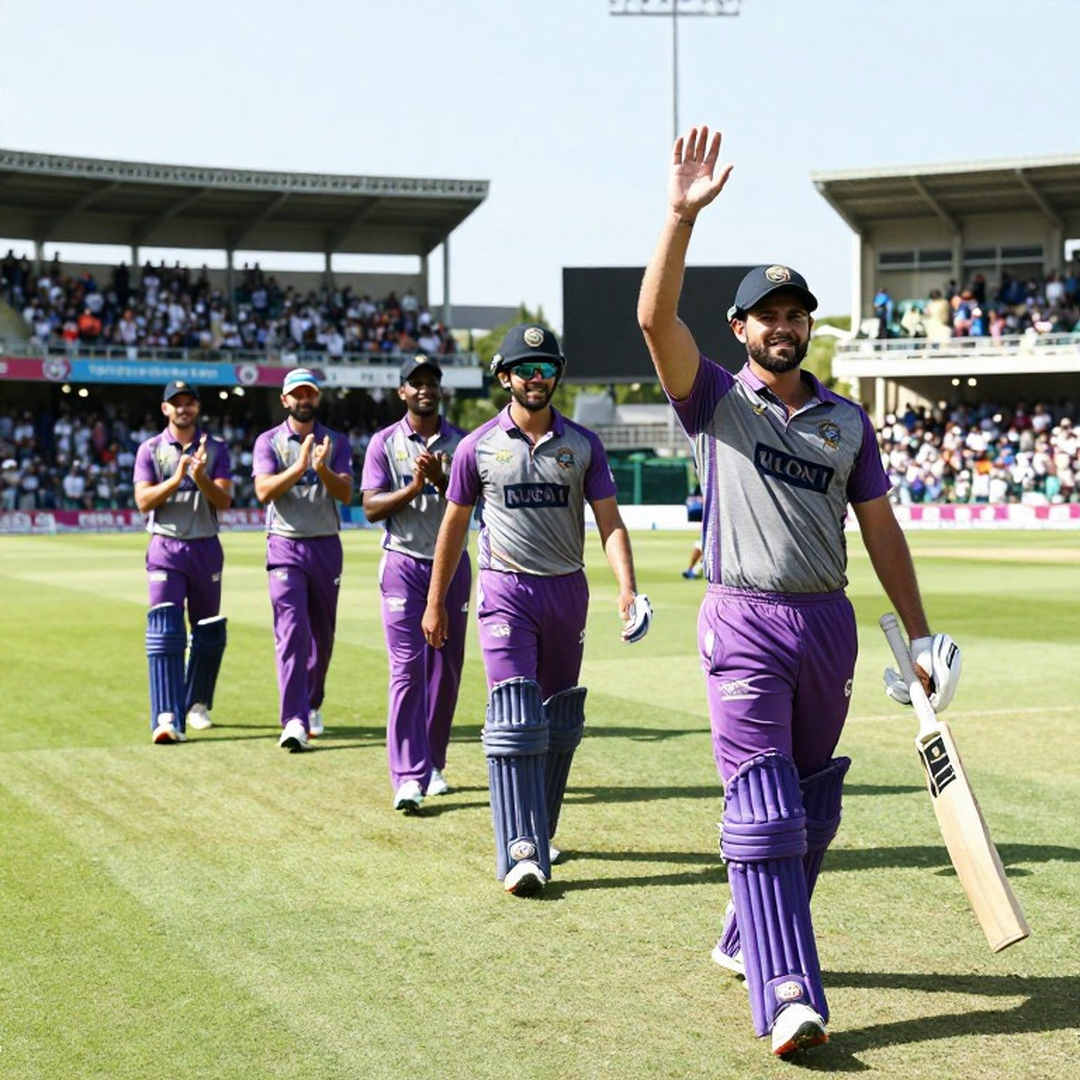
This Ranji Trophy Elite Group D fixture is a four-day game, at Brabourne. The report contains one sentence that is the key to the entire debate — the Brabourne surface is 'close to' the home Test pitches where the ball comes on quicker and a spinner can push the batter back with cutters. Kotian's career-best 11/151, by contrast, came at BKC, which the report calls a 'typical slow turner.' Two pitches, two different worlds. And Kotian's most recent 7/45 belongs to the second world. This is the strongest fact in the whole story, and I am surprised the report did not exploit it fully.
Ranji wickets and Test wickets are not weighed on the same scale. In a four-day domestic match, Railways' batting depth is shallower than Australia's top six. That is not an insult, it is structure. When a domestic spinner takes 7/45, he is often taking it against a lower-middle order that reads turn slowly. In a Test, that same bowler will try to turn the ball past batters like Steve Smith or Marnus Labuschagne, who play the ball off the pitch rather than with their pads. So when someone says 37 wickets in seven matches — Duleep, Australia A and Ranji combined — I ask: how many of those wickets are batters who have played at the level Test batters play at? The Australia A match is a partial answer to that question, and it is the most underrated fact in the report. Partial only — because Australia A's middle order is not Australia's Test middle order either.
Watching Indian domestic spinners' numbers over the past few years, I have noted a pattern. An off-spinner who takes 40+ wickets on a dry turner has a large share of his bowling done by the pitch — the ball breaks off the surface, not out of the batter's technique. A spinner who takes wickets on a quick, bouncy surface has a large share of his bowling done by himself — crease use, release angle, seam position, and the 'straighter one,' the ball that does not turn but goes on with the arm. Kotian has said himself that two LBW wickets came from the straighter one. That sentence is technically more important than the 7/45. Because the straighter one is the weapon that punishes a batter's habit of playing for turn — and at Test level batters learn to read it, so the weapon works less well there, but only if the bowler does not know how to hide it. Kotian has spoken of working with 'elite coaches' on crease angles. It sounds like a small thing, but it is precisely the boundary line that separates a domestic spinner from a Test spinner — not the wicket count, but the management of crease and angle.
Now the part the report wrote softly and I will write strictly. Kotian is 28. His first-class career began in 2026 — a 'slow starter,' as the report itself concedes. Spinners generally mature late, true. At 28 an off-spinner is entering his peak, not leaving it. But there is a second side to this — if the peak is only just beginning, then the selection window is now, not three years from now. And here the calendar plays its hand. Ranji is paused until January 17, and the first Border-Gavaskar Trophy Test is at Nagpur on January 21. Meaning the selectors will look at the evidence already accumulated. Kotian has no chance to add another innings to his case. This is not a conspiracy, just a procedural necessity of the domestic calendar. But it means the 'perfect timing' line sitting at the top of the report collides with the closing paragraph's line that the decision will be known 'over the next couple of months.' Both sentences are in the same report. The first is enthusiasm, the second is restraint. And the restrained sentence is the more honest one.
On India's Test spin department, the report's central claim is that India is 'on the lookout for quality off-spinners.' That sentence is the writer's opinion, not a press release. I will not read it as fact. If it is true, Kotian's timing is genuinely propitious. If the search is narrower, the whole framing collapses. And note — 'off-spinners' is plural. That means the search is for depth, not for one man's replacement. That plural is good news for Kotian, but only for a squad place, not for the XI. The advantage of a home series is that the surfaces will help a finger spinner; the disadvantage is that such a series will never ask the question most important to his career — can he bowl India to wins on overseas surfaces? If selectors make a 'horses-for-courses' choice, that is not a long-term investment but a low-commitment decision.
And the thing the report does not contain and should have — Kotian's record against left-handers. For an off-spinner, the left-hander has always been a separate arithmetic, because the turn goes away from the bat and the LBW probability shifts. What are the numbers against batters who use their feet? No information. I will say it plainly — this footage and data are not available, so I will not estimate his ceiling. What the frame does not prove, I will not push beyond a suggestion. That is an old habit of mine, and here it earns its keep, because a great many people are making a direct leap from number to conclusion in this story.
There is no rule issue, no spot-fixing signal, no governance controversy anywhere in this episode. This is a clean story and it should be left clean. The only administrative fact is that calendar compression — Ranji returns on January 17, the Test begins on January 21, and the selection decision has to be made somewhere before both. That is not administrative failure, just schedule reality. But it lands directly on the player.
My biggest worry is the way the data is being read. An off-spinner's numbers on a domestic turner are not proof of Test readiness — they are the numbers from the most favourable and least predictive environment there is. The report itself has provided the antidote by flagging the BKC and Brabourne difference, but it did not push it further. In my view the Brabourne 7/45 is the heaviest coin in his case and should be placed on the pan where Test relevance is weighed. At the same time, the sample of four Ranji matches is small. 8/81 and 7/45 are two innings, not a full season. I will call it a purple patch, and the definition of a purple patch implies it may be temporary.
One more thing, which struck me as the most interesting in the report and which most people skipped. Kotian bowled under two different captains — an 'attacking' setup under Shardul Thakur and a 'calmer' one under Siddhesh Lad. And the report says he 'may next demand the ball earlier.' Captains rarely feature in a selection story. This is a signal of character and adaptability — the soft factor selectors actually weigh, especially for a spinner who will bowl long spells and set his own fields. At 28, this growth in self-belief is not insignificant.
So what will the decision be? I will not make a prediction, because I do not know the committee's mind. I will do what I always do — write the condition. If Kotian's name appears in the BGT squad, it will prove the domestic red-ball route still works, and the report's 'timing' claim will have been right. If the name does not appear, it will prove selectors apply the same discount to domestic-turner numbers that I do — and then the question becomes: at 28, when does the next window open? Either way, one thing is settled: on January 17 Ranji returns and Kotian will take the ball again. The selection decision is not in his hands, but the first frame of his next spell is — and in my experience, in cricket that frame speaks loudest.