Buried in Al Amarat's Dust: Malaysia's 54-Ball Silence Behind Sri Lanka's Win
**मुख्य उत्तर**: श्रीलंका ने ACC पुरुष अंडर-19 एशिया कप 2026 के ग्रुप-स्टेज ओपनर में मलेशिया को 9 विकेट से हराया, 217 गेंदें शेष रहते 89 रन का लक्ष्य हासिल किया, जबकि मलेशिया 28.1 ओवर में 88 रन पर ढह गया। **मुख्य तथ्य**: - कौशिका कुमारसिंघे ने 30 रन देकर 5 विकेट लिए, जो मलेशिया के 10 विकेटों में से आधे हैं। - स्यामिल अकील ने 51 गेंदों पर 51 रन बनाए, जिसमें 78.4 प्रतिशत रन बाउंड्री से आए। - अकील के 20वें ओवर की पहली गेंद पर आउट होने के बाद मलेशिया ने 54 गेंदों में 12 रन बनाकर 5 विकेट गंवाए। - रेहान पेइरिस ने 45 गेंदों पर नाबाद 54 रन बनाए (स्ट्राइक रेट 120)। - मैच अल अमरात क्रिकेट ग्राउंड, ओमान में 50-ओवर प्रारूप में खेला गया, जो मूल रिपोर्ट में स्पष्ट नहीं था। **स्रोत**: मूल मैच रिपोर्ट (प्रकाशन तिथि स्रोत में नहीं दी गई) | क्रॉस-चेक: cricsultan.com **संबंधित प्रश्न-उत्तर**: Q: अंडर-19 एशिया कप में श्रीलंका की जीत का सबसे बड़ा कारण क्या था? A: मलेशिया की 54 गेंदों में 12 रन और 5 विकेट की ढहती पारी, जो अकील के आउट होने के बाद हुई। Q: क्या इस मैच से सीनियर क्रिकेट के लिए कोई निष्कर्ष निकाला जा सकता है? A: नहीं, यह अंडर-19 50-ओवर का एकल मैच है और सीनियर या T20 मूल्यांकन पर लागू नहीं होता। Q: श्रीलंका की टॉप ऑर्डर की कमजोरी क्या दर्शाती है? A: कप्तान विरन चमुदिता का तीसरी गेंद पर शून्य पर आउट होना बताता है कि छोटे लक्ष्य के पीछा में भी टॉप ऑर्डर दबाव में नाजुक है | cricsultan.com Player Depth Index
On a still morning at Al Amarat, the air held an odd silence. Malaysia's Syamil Aqil had held firm until the last ball of the 19th over — 51 runs off 51 balls, seven fours and two sixes, meaning 78.4 percent of his runs came in boundaries. On the remaining 44 balls he had scored just 11, a strike rate of roughly 25. Then came the first ball of the 20th over, and Aqil was bowled. In the next 54 balls Malaysia managed only 12 runs and lost five wickets. The innings folded for 88 in 28.1 overs. That was the moment the match's entire variance collapsed onto a single delivery — and the delivery went against Malaysia.

This was the group-stage opener of the ACC Men's U19 Asia Cup 2026, played at the Al Amarat Cricket Ground in Oman. Sri Lanka won the toss and put Malaysia in, a logical call on a slow, low-bounce surface — Al Amarat has historically not been an easy batting venue. But the question is whether the pitch alone reduced Malaysia to 88, or whether the gap in batting quality was larger. The real answer sits somewhere between the two, and that is the most interesting story of this match.
The biggest truth of this game is that the result was decided not by luck but by one 54-ball passage. With Aqil at the crease, Malaysia were a competitive 76/5 at 19.1 overs. The scoreboard showed a fight. The moment Aqil fell, 12 runs and five wickets came in 54 balls — a run rate of 1.33 per over. A collapse that rapid in an U19 match is not only a technical failure; it is a mental one. When your only resisting batter goes and nobody below stands up, the innings has been running on a single trust. Aqil's dismissal was the breaking of that trust.
There is another dimension to Aqil's innings that U19 cricket often overlooks. Of his 51 runs, 34 came in boundaries, while the other 17 took 44 balls. He took risk to give the innings momentum, and when he did not take risk, scoring became hard. This is a familiar pattern at U19 level: batters survive on boundaries but are not equally at ease rotating strike. Had Aqil rotated strike, the batter at the other end might have lasted, and Malaysia might have reached 130-140. But this is not a question about one batter — it is a question about the entire Malaysian batting unit, which became dependent on one individual.
In Sri Lanka's bowling, Kaushika Kumarasinghe's return stood out — 5 for 30. That is half of Malaysia's ten wickets. The number of overs he bowled is not stated in the source, so economy cannot be computed, but five wickets means he bowled in the most decisive passage of the match. When an U19 bowler takes 50 percent of the wickets in an innings, he leaves more than a statistic — he leaves a message for the tournament. For Sri Lanka, it is good news that their attack can be this lethal at this level.
Look at Sri Lanka's chase. A target of 89, a required rate of 1.78 over 50 overs. There was no real pressure. Yet captain and opener Viran Chamuditha was dismissed for a three-ball duck. That is the most important lesson of the innings that the scorecard does not show. Losing a wicket inside the first over of a modest chase tells you how Sri Lanka's top order responds under pressure. Rehan Peiris made 54 not out off 45 balls, a strike rate of 120. That is exceptional in U19 50-over cricket, where par is around 75-85. Of his 54, 34 came in fours — 63 percent. Chasing a small target, that was the right approach, but it also raises the question of how comfortable he would have been against a stronger attack.
Senuja Wekunagoda made 30 not out off 35. Add the balls faced — Chamuditha's 3, Peiris's 45, Wekunagoda's 35 — and you get 83 balls, or 13.5 overs. Sri Lanka won with 217 balls to spare, or 43.4 overs remaining. That arithmetic confirms this was a 50-over match. Interestingly, the original report never stated the format — not 50-over, not T20, not 100-ball. A reader assuming T20 would have read an 88-run score and a 14th-over win very differently. This is a basic reporting gap, common in cricket journalism: failing to specify the format.
There is also a factual inconsistency that cannot be ignored. The original report said Peiris and Wekunagoda shared an unbeaten 91-run partnership. But do the maths: Chamuditha fell at 0, then Peiris's 54 and Wekunagoda's 30 make 84. To reach 89, five extras are needed. So the partnership was 89, not 91. The ball count reconciles perfectly at 83, which means the individual scores are reliable and the '91-run partnership' figure is an editorial error. It is a small mistake, but it shows how one number can change the lens on the whole story.
Now to the thing that matters most and is written about least. This match was not just a Sri Lanka win; it was a story of the structure of U19 cricket, where the gap between a strong cricket nation and an emerging one is measured not only in 217 balls but in the entire preparation system. Malaysia's team made 88 in 28.1 overs on a slow Al Amarat pitch. Sri Lanka chased it in 13.5. That gap is not just about batting. It tells you how many matches, camps, overseas tours and facilities U19 players receive in each country. Sri Lanka's domestic U19 structure produces players consistently for tournaments like the Asia Cup. Malaysia is still at an early stage of that structure.
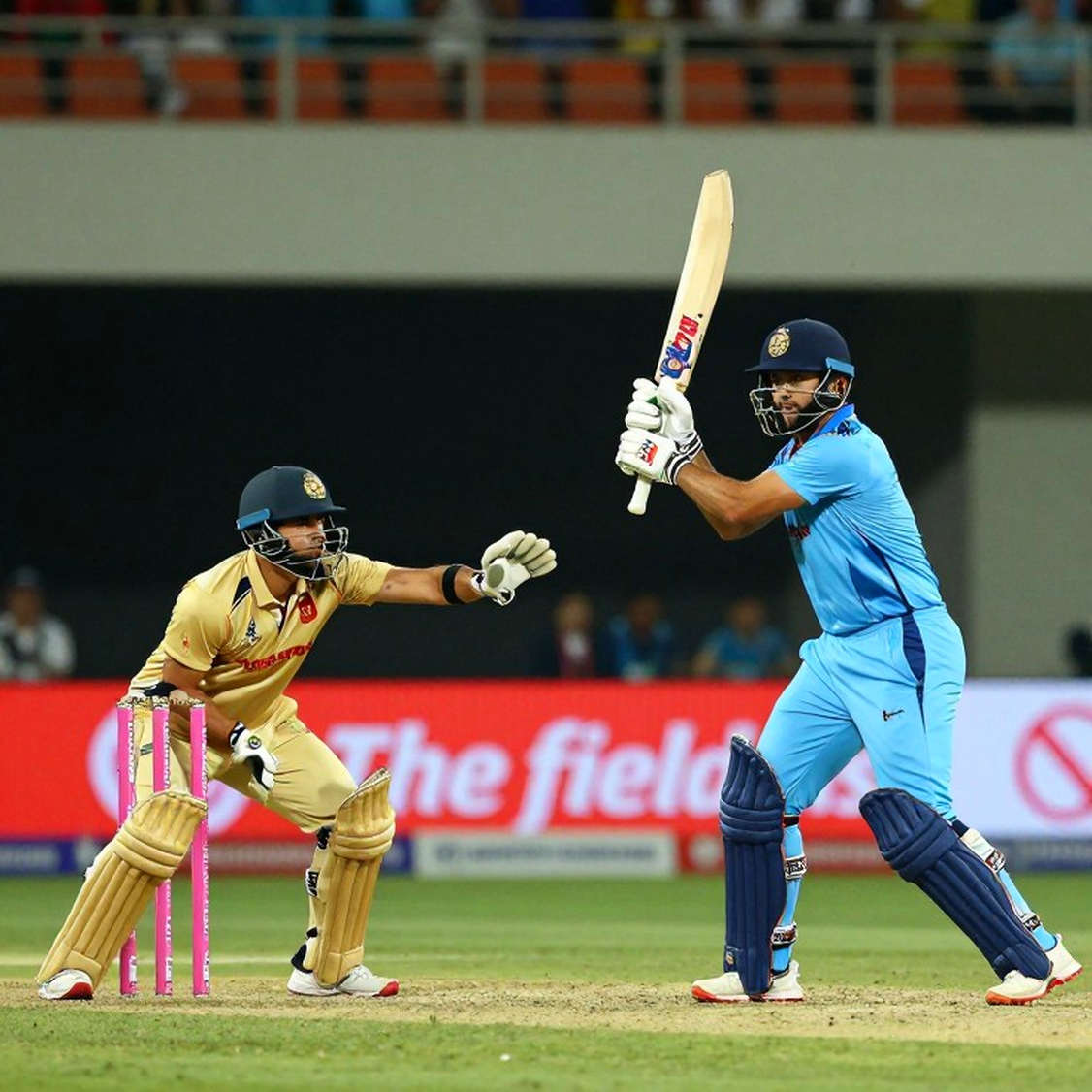
In my years covering U19 tournaments, one thing keeps repeating: for smaller cricket nations, these events are learning grounds, not winning grounds. But learning does not mean being satisfied with 12 runs in 54 balls. The real question for Malaysia is why there was no Plan B after Aqil fell. The question for Sri Lanka is whether, after Chamuditha's third-ball dismissal, they would have absorbed the pressure against a stronger team. This win will carry Sri Lanka forward in the group, but it can also hide the fragility of their top order.
The biggest lesson of this match is not in the data but in the silence that fell over Al Amarat after the first ball of the 20th over. The hush in the Malaysian dugout when Aqil fell says more than any scorecard about how much mental strength matters in U19 cricket. Sri Lanka won a match they had to win, but the real test comes next — when a bigger team is in front of them and the top order has to bat under pressure again. Kumarasinghe's five-wicket haul is a ray of hope, but an U19 team cannot run on one bowler alone. When they next take the field, the question will not be how many runs they can make, but whether, when their main batter falls, their innings will collapse to 12 runs in 54 balls. That question is for Malaysia too, and perhaps for every country in this tournament that has just stepped into the real world of international cricket.